Español
 Rusia
Rusia
What Is a Roof Panel Roll Forming Machine and How Does It Work
A roof panel roll forming machine is a continuous production line that turns flat metal coils into finished roofing panels. A lot of buyers are curious to know how the Roof Panel Roll Forming Machine works, the machinery include decoiling, guiding, roll forming, cutting and PLC control. We make the metal roof panel roll forming machine which can help roofing sheet factories to produce the metal roofing panels such as warehouse roof, workshop roof, commercial building roof, residential building roof and agricultural building roof etc.
What Is a Roof Panel Roll Forming Machine?
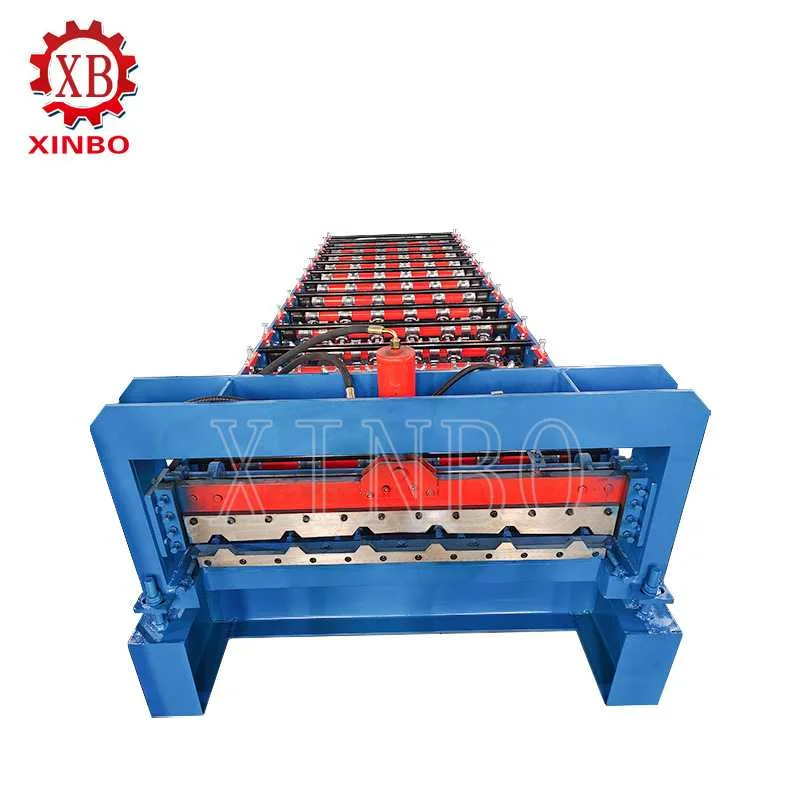
A roof panel roll forming machine is industrial equipment that forms metal strip into roof panels with a fixed profile. The machine uses paired rollers to bend the strip step by step until the required cross-section appears.
The machine usually works with pre-painted steel, galvanized steel, galvalume steel, aluminum coil, and other sheet metals.
What Products Can the Machine Make?
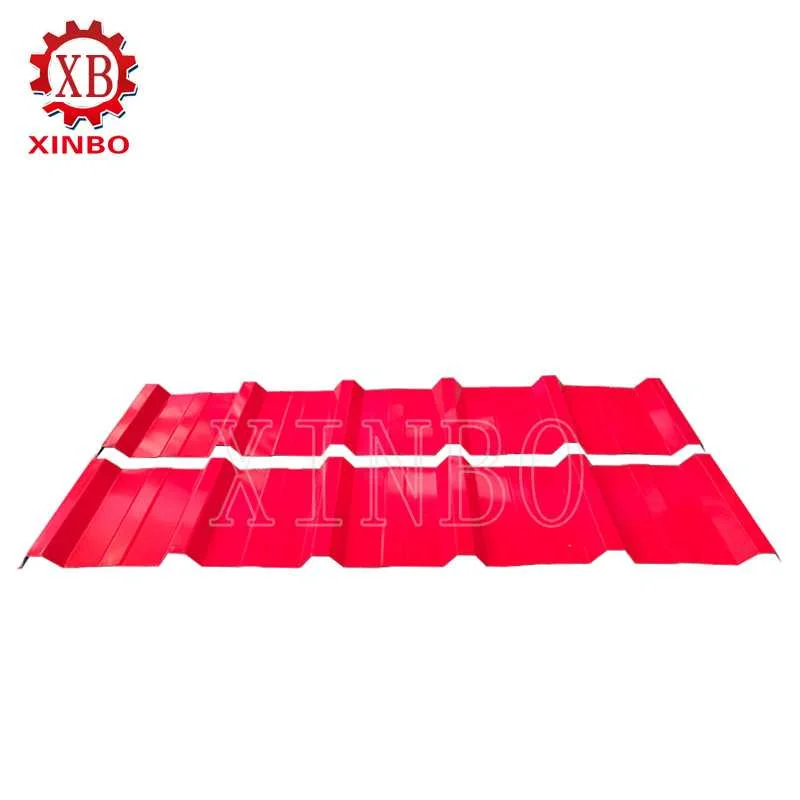
A roof panel roll forming machine can produce corrugated roof panels, trapezoidal roof panels, IBR roof sheets, standing seam panels, and glazed tile-style panels. Each panel type has its own rib shape, cover width, and edge design.
The roller tooling must match the target profile.
Why Does the Machine Matter for Roofing Sheet Production?
A roofing sheet factory needs stable panel dimensions and repeatable output. A roof panel roll forming machine helps the factory control rib height, panel width, effective cover width, and finished length.
The operator can set the order length and quantity through the control system, and the machine can repeat the same specifications for batch production.
How Does a Roof Panel Roll Forming Machine Work?
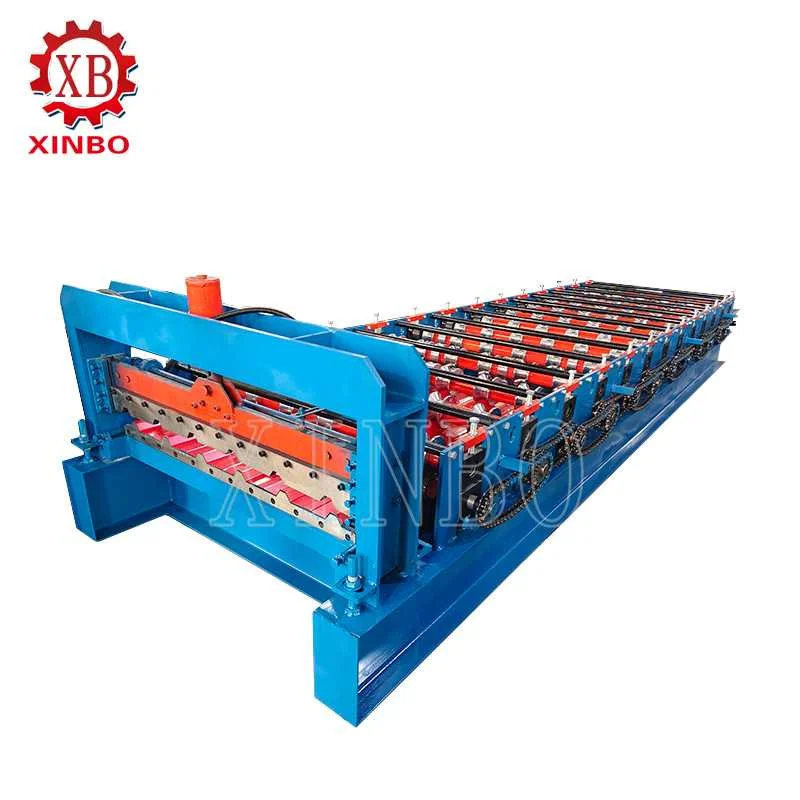
A roof panel roll forming machine works through a continuous cold forming process. The metal strip moves through the line, and each section completes a specific task.
Step 1: The Decoiler Holds the Metal Coil
The decoiler supports the coil before production starts. The decoiler releases the metal strip into the line at a stable pace.
A hydraulic decoiler can make heavy coil loading easier when the factory handles larger coils.
Step 2: The Feeding System Guides the Strip
The feeding system guides the strip into the forming section. The entry guide keeps the material aligned before the rollers shape the profile.
Correct feeding reduces profile deviation.
Step 3: The Roller Stations Shape the Profile
The roll forming section is the core part of the line. The strip passes through many roller stations, and each station bends the metal by a small amount.
Gradual forming helps the machine create a stable roof panel profile.
Step 4: The Cutting and Control Systems Finish the Order
The cutting system cuts the formed panel according to the length set on the PLC screen. Hydraulic cutting is common because the cutting force must match the profile and thickness.
The PLC control cabinet manages panel length, order quantity, cutting action, and machine operation. Automatic control helps the factory repeat customer orders.
What Are the Main Components of the Machine?
A roof panel roll forming machine includes several connected parts. Each part affects forming stability, panel accuracy, production speed, and factory operation.
Decoiler, Entry Guide, and Leveling Device
The decoiler carries the coil and releases the strip. The entry guide positions the strip before it reaches the rollers.
A leveling device can reduce coil curvature before forming. The buyer should confirm coil weight, coil width, and material thickness before choosing this section.
Roll Forming Main Machine
The main machine includes rollers, shafts, frames, transmission parts, and forming stands. This section determines the final roof panel profile.
Strong shafts and stable frames help the machine handle continuous forming. Accurate rollers help the panel maintain a consistent shape during production.
Hydraulic Cutting Device and PLC Cabinet
The hydraulic cutting device cuts the finished profile after forming.
The PLC cabinet works as the operating center of the line. The operator can set length and quantity on the screen.
What Types of Roof Panels Can the Machine Produce?
Different roof panel profiles serve different roofing markets. The buyer should select the profile based on local demand and building type.
Corrugated Roof Panels
Corrugated roof panels have repeated wave-like ribs. These panels are common in residential buildings, agricultural roofs, and storage sheds.
A corrugated roof panel roll forming machine is suitable for buyers who need a widely used and easy-to-recognize profile.
Trapezoidal and IBR Roof Panels
Trapezoidal roof panels use angular ribs to improve stiffness and drainage performance. These panels are common in industrial buildings and warehouses.
IBR roof sheets are also popular in several regional markets. An IBR roof sheet máquina de formación de rollos can help suppliers serve customers who prefer wide-coverage metal roof sheets.
Standing Seam, Glazed Tile, and Double-Layer Panels
Standing seam panels use raised seams and hidden fastening methods. These panels suit projects that need a clean appearance and strong weather performance.
Glazed tile-style panels imitate traditional roof tiles with metal sheet material. Double-layer machines can place two profile systems on one frame, and the machine usually produces one profile at a time.
How Should Buyers Choose the Right Machine?
The buyer should start with the roof panel drawing. The drawing should show total width, effective width, rib height, rib spacing, edge shape, and finished panel requirements.
The buyer should also confirm the material type, thickness range, coil width, production speed, local power supply, and workshop space. These details help the supplier design the roller system, cutting system, motor power, and control configuration.
The buyer should compare machine structure, roller material, shaft diameter, forming stations, and automation level.
What Information Should Buyers Send for a Quotation?
The buyer should send a complete inquiry package before requesting a quotation.
The inquiry should include these details:
-
The buyer should provide the roof panel profile drawing.
-
The buyer should provide the material type and thickness range.
-
The buyer should provide the coil width and final panel width.
-
The buyer should provide the expected forming speed.
-
The buyer should provide the local voltage and frequency.
-
The buyer should provide the destination country or delivery port.
Preguntas frecuentes
What is a roof panel roll forming machine?
A roof panel roll forming machine is a production line that forms metal coils into roofing panels with specific profiles. The machine usually includes decoiling, feeding, forming, cutting, and control systems.
What materials can a metal roof panel roll forming machine process?
A metal roof panel roll forming machine can commonly process pre-painted steel, galvanized steel, galvalume steel, and aluminum. The exact material range depends on the machine design.
Can one machine make different roof panel profiles?
One machine usually produces one main profile unless the machine has a double-layer, triple-layer, cassette-type, or customized multi-profile design.
XINBO is a China-based roll forming machine manufacturer that provides customized metal shaping machine solutions, including roof panel roll forming machines, corrugated roof panel machines, trapezoidal and IBR roll forming machines, double-layer roof panel machines, glazed tile roll forming machines, and related production equipment. Buyers can send the roof panel drawing, material thickness, coil width, production speed, and destination details to XINBO, and the engineering team can recommend a suitable machine configuration for the roofing sheet production project. Contacto XINBO today to discuss your roofing sheet production requirements, get professional machine configuration advice, and request a customized quotation for your project.
Publicaciones relacionadas

Buena calidad
XinBo máquina que hace CO. LTD es un fabricante profesional y exportador en la máquina de formación de rollos,
Ver más→


 Spanish
  English
  Portuguese
  Arabic
  Russian
  French
  Dutch
Dutch  Turkish
  Swahili
  Serbian
  Romanian