spaniolă
 Rusia
Rusia
What Is a Roller Shutter Door Roll Forming Machine and How Does It Work
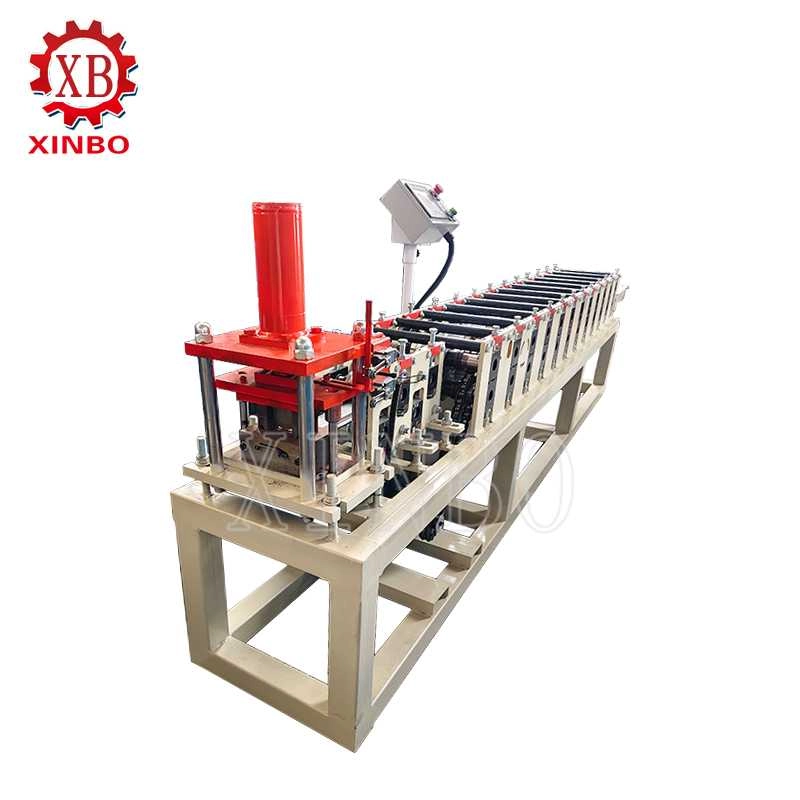
A roller shutter door roll forming machine is used to make roller shutter shutter door slats or panels. An automatic roller shutter door machine is a fully automated machine that can cut, feed, guide, bend, punch and count the finished profiles. Roller shutter slat roll forming is used in the manufacturing of slats for commercial, industrial, warehouse and garage doors.
This guide explains the machine, the working process, the material options, the slat types, and the main buying factors.
What Is a Roller Shutter Door Roll Forming Machine?
A roller rula de formare a mașinii de ușă makes a flat metal sheet into a shutter door profile by continuous forming.
This tool uses several roller stations to gradually bend the strip until the desired cross-section is achieved.
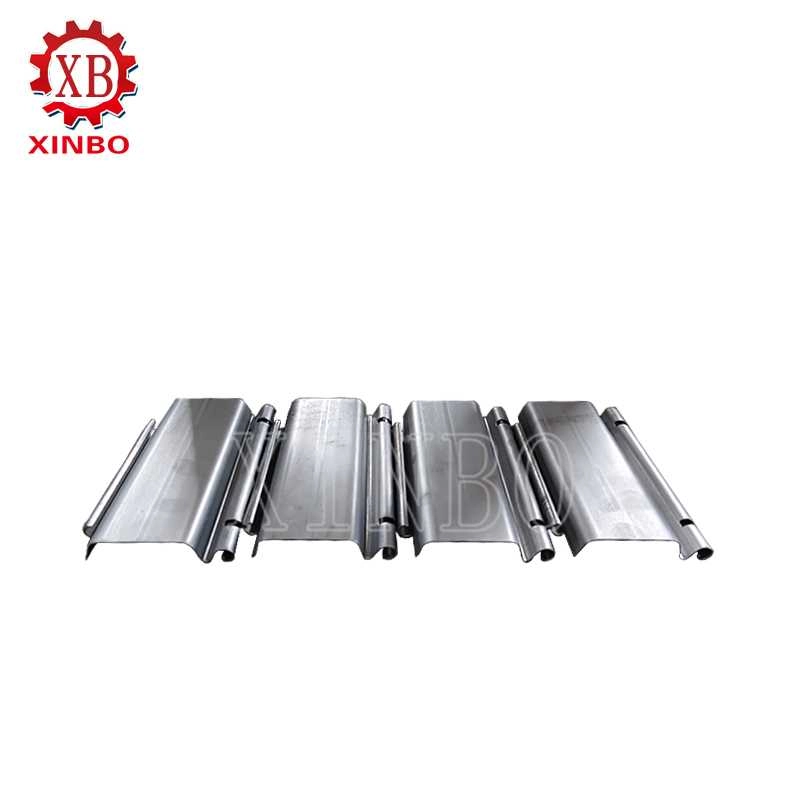
The finished slats interlock and travel within the side guide rails of the door when it is opened.
What Products Can the Machine Produce?
The machine can produce solid shutter slats, perforated shutter slats, embossed shutter panels, and customized shutter profiles.
The final product depends on the profile drawing, material thickness, roller design, and optional punching or embossing system.
Why Is Roll Forming Suitable for Shutter Door Slats?
Roll forming is suitable because shutter slats are long, narrow, and repetitive metal profiles.
The process can keep a stable cross-section through continuous production. The process can also combine feeding, forming, punching, embossing, and cutting in one line.
How Does a Roller Shutter Door Roll Forming Machine Work?
A roller shutter door roll forming machine works through a step-by-step metal forming process.
The line starts with coil material and ends with finished slats cut to length.
Step 1: The Coil Is Loaded and Fed
The operator places the metal coil on a decoiler.
The decoiler releases the strip into the machine. The feeding system guides the strip forward at a controlled speed.
Step 2: The Strip Is Guided and Leveled
The guiding system keeps the strip centered before forming.
The leveling section reduces unevenness in the strip. Stable alignment can reduce twisting, waving, and size deviation.
Step 3: The Rollers Shape the Shutter Slat
The forming section is the core of the machine.
Multiple roller stations gradually bend the strip. Each station performs one small forming action.
Step 4: The Machine Adds Holes or Surface Patterns
Some shutter slats need extra functions.
A punching unit can create installation holes. A perforating unit can create airflow and visibility openings. An embossing unit can create a textured surface.
Step 5: The Slat Is Cut to Length
The cutting system cuts the formed profile into finished pieces.
An encoder can measure the length. A PLC control system can control cutting, quantity, and production settings.
Main Components of the Machine
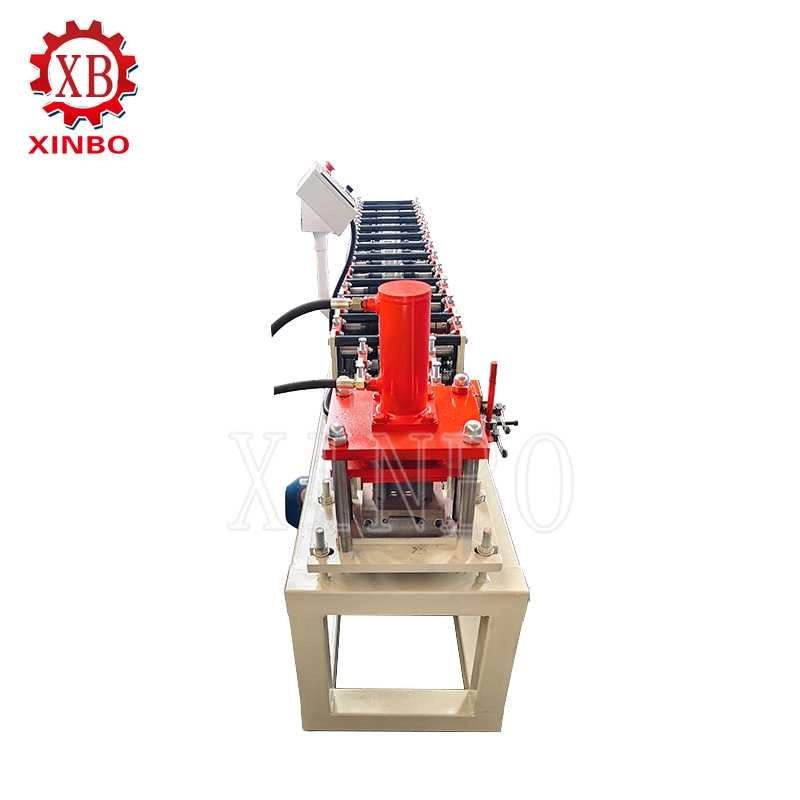
A roller shutter door roll forming machine usually includes a decoiler, guiding system, roll forming system, optional punching or embossing system, cutting system, and control system.
Decoiler and Guiding System
The decoiler supports and releases the metal coil.
The guiding system keeps the strip centered before it enters the forming rollers.
Sistemul de formare a rulelor
The roll forming system shapes the metal strip.
The roller design must match the required shutter profile. The roller stations, shaft size, and frame strength can affect profile accuracy.
Cutting and Control System
The cutting system separates the profile into the required length.
The control system manages speed, length, quantity, and operation data.
What Materials Can the Machine Process?
The machine can process different coil materials when the configuration supports them.
The buyer should confirm material type, thickness, hardness, and coil width before ordering.
Galvanized or Pre-Painted Steel Coil
Galvanized steel coil is common because the material provides strength and corrosion resistance.
Pre-painted steel coil can produce colored shutter slats when the forming system protects the coated surface.
Aluminum or Stainless Steel Strip
Aluminum strip is suitable for lighter shutter door applications.
Stainless steel strip can support projects that need stronger corrosion resistance.
What Types of Shutter Slats Can Be Made?
Different door applications require different shutter slat designs.
The buyer should choose the profile according to security, airflow, appearance, and door size.
Solid Shutter Slats
Solid shutter slats are suitable for security-focused doors.
These slats are often used for shops, workshops, warehouses, and industrial buildings.
Perforated Shutter Slats
Perforated shutter slats allow airflow and partial visibility.
These slats are useful for storefronts that need protection and display visibility.
Embossed and Custom Shutter Profiles
Embossed shutter panels have a textured surface.
Custom shutter profiles require clear drawings with width, height, bending shape, hole position, and tolerance.
Why Choose an Automatic Roller Shutter Door Machine?
Manufacturers choose an automatic roller shutter door machine because it supports efficient and consistent production.
The machine can reduce repeated manual work during forming and cutting.
Higher Production Efficiency
The continuous line can produce long runs of shutter slats.
The operator can set length and quantity through the control system.
Consistent Profile Accuracy
The roller stations create repeatable bends along the strip.
Consistent slat geometry helps the final door curtain assemble and move properly.

Customized Production
The machine can be designed around different drawings and production needs.
The buyer can request different profile sizes, thickness ranges, hole patterns, and embossing options.
What Should Buyers Confirm Before Ordering?
The buyer should prepare accurate production information before requesting a quotation.
A clear requirement helps the supplier design a suitable machine.
Material, Thickness, and Profile Drawing
The buyer should confirm the material type and thickness range.
The buyer should provide a shutter slat profile drawing with dimensions, angles, holes, and tolerance requirements.
Production Speed, Voltage, and Optional Functions
The buyer should match production speed with actual order volume.
The buyer should confirm voltage, workshop space, coil handling conditions, punching, perforating, embossing, and customized cutting needs.
Întrebări frecvente
What is a roller shutter door roll forming machine used for?
A roller shutter door roll forming machine is used to produce metal shutter slats or panels from coil material.
How does the roller shutter slat roll forming process work?
The roller shutter slat roll forming process feeds metal strip through multiple roller stations.
Each station bends the strip gradually until the final slat profile is formed.
Can one machine produce different shutter profiles?
One machine can sometimes produce similar profiles with suitable tooling.
Very different profiles usually require different rollers or customized machine design.
What information should a buyer provide before quotation?
The buyer should provide material type, thickness, profile drawing, production speed, voltage, hole requirements, and cutting length.
Call to Action: Get a Customized Machine Solution From XINBO
XINBO în provides metal shaping machine and roll forming machine solutions, including shutter door roll forming machines, perforated roller shutter door slat roll forming machines, and embossing roller shutter door panel machines. XINBO supports customized design, technical drawings, production inspection, and buyer communication, so the buyer can share the shutter slat drawing, material thickness, voltage, and speed requirement to get a suitable proposal. Contactaţi-ne XINBO today to discuss your roller shutter door production needs and get a customized machine solution for your factory.
Posturi legate

Bună calitate
XinBo mașină de fabricare CO. LTD este un producător profesionist și exportator în rula de formare mașină,
Vezi mai multe→


 Romanian
  English
  Spanish
  Portuguese
  Arabic
  Russian
  French
  Dutch
Dutch  Turkish
  Swahili
  Serbian