Испанский
 Россия
Adjustable vs. Fixed-Profile U/L Channel Roll Forming Machines: Which Is Better for Multi-Size Production?
Manufacturers running several channel sizes face a practical equipment choice: use one adjustable U channel roll forming machine for multiple sizes, or dedicate fixed-profile machines to repeat products. The answer depends on SKU count, batch size, changeover frequency, tooling, and effective output. Multi-size equipment can reduce the need for separate lines when the product family is compatible; fixed-profile equipment can make sense when one profile dominates production. Start with actual orders and profile drawings.
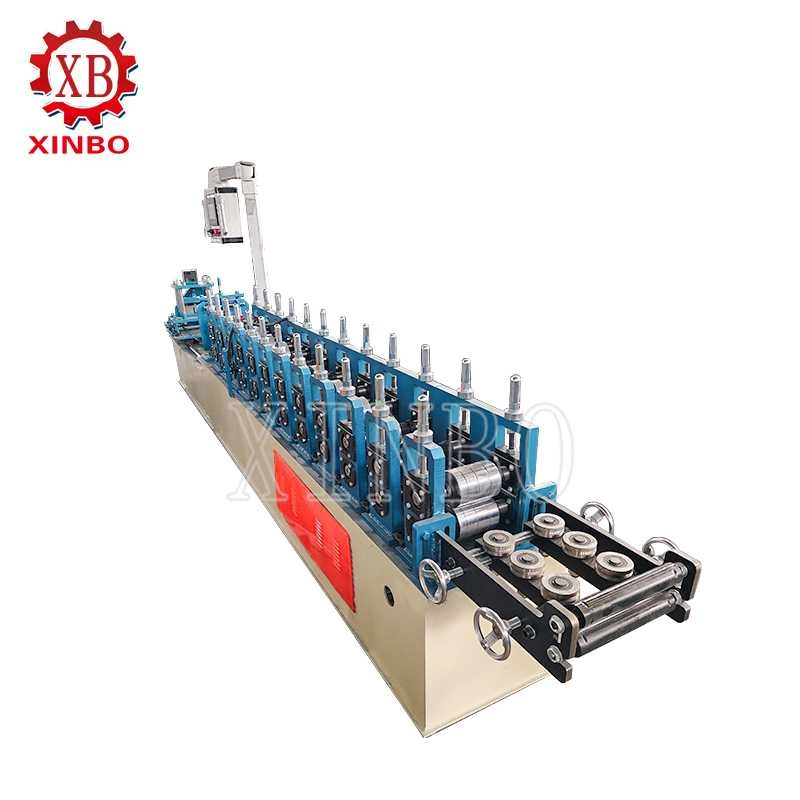
Adjustable vs. Fixed-Profile Roll Forming Machines: What Is the Real Difference?
How Adjustable and Fixed-Profile Machines Handle Production Differently
An adjustable or multi-profile roll forming machine covers more than one size or profile within a defined range. Depending on the design, flexibility may come from movable stands, adjustable tooling, interchangeable tooling, cassettes, or another changeover method. A fixed-profile machine is configured around one main cross-section, so repeat production requires little or no profile changeover.
|
Decision Factor |
Adjustable / Multi-Size |
Fixed-Profile / Dedicated |
|
SKU mix |
Multiple recurring sizes |
One or a few repeat profiles |
|
Batch pattern |
Mixed or shorter runs |
Long repeat runs |
|
Changeover |
Required |
Minimal for the same SKU |
|
Гибкость |
Higher within confirmed range |
Lower |
|
Main buying risk |
Overestimating adjustment range |
Underestimating future SKU demand |
An adjustable channel roll forming machine should not be assumed to make every U or L geometry; profile similarity, material range, punching, cutting, and tooling architecture can affect compatibility.
Which Machine Is Better for Your Multi-Size Order Mix?
Choose by SKU Count, Batch Size, and Changeover Frequency
Start with production history. List the U and L channel sizes that recur, annual volume for each SKU, average batch quantity, and how often production would switch. If several sizes generate regular orders but none justifies a dedicated line, an adjustable roll forming machine may deserve closer evaluation. If one profile represents most of the workload and runs for long periods, a dedicated line may provide a simpler production plan.
Ask, “How many profitable SKUs need this line?” rather than only, “How many sizes can it make?” Flexibility has value when it solves a real scheduling problem.
When a Fixed-Profile Machine May Be the Better Investment
A fixed-profile machine can be rational when demand is stable, batches are long, and product changes add little value.
The main risk is future inflexibility. Review whether new dimensions are appearing in quotations and whether adding another line later would be difficult. If variety is likely, compare flexibility now with future expansion cost.
How Does Changeover Affect Real Production Capacity?
Calculate Effective Throughput, Not Just Maximum Forming Speed
Maximum forming speed is only one part of capacity. A multi-size line also uses time for changeover, setup, first-piece checks, and planned stops. Roll-forming tooling guidance likewise notes that true changeover time includes more than physically swapping or adjusting tooling.
Effective production time = available shift time − changeover − setup − first-piece verification − planned stops
A faster machine with complicated size changes may deliver less usable output in a high-mix factory than a slightly slower line with a simpler setup. Ask suppliers what must be adjusted, removed, repositioned, or rechecked for every SKU. If “quick change” is offered, request the procedure for the proposed profiles.
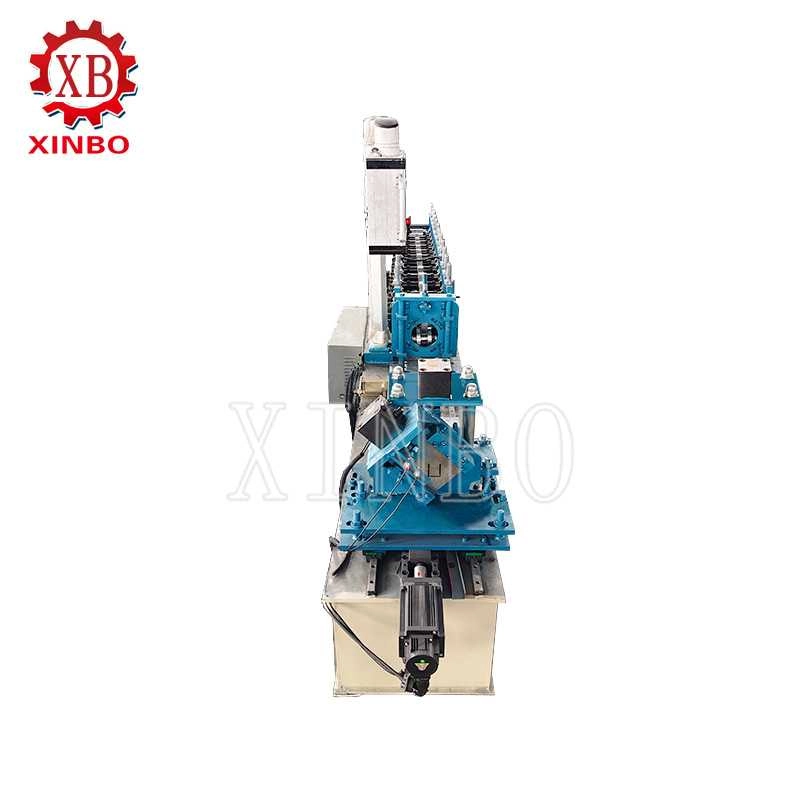
Prevent Quality Problems After a Size Change
After an adjustment, the first formed pieces should be checked against the approved profile before full-batch production. Relevant checks may include web and flange dimensions, cut length, straightness, profile fit, and, where applicable, hole position.
Ask how settings are recorded, which dimensions operators verify, and what acceptance procedure applies after changeover. Repeated trial-and-error can erode the value of multi-size capability.
What Does “Multi-Size” Really Mean on a U/L Channel Roll Forming Machine?
Verify Profile Geometry, Adjustment Range, Tooling, and Cutting Compatibility
“Multi-size” should become a written compatibility list before purchase. For every SKU, provide the profile drawing, material, thickness, coil width, finished dimensions, cut length, and any punching requirement. Then confirm which dimensions are adjustable and which changes require different tooling, guides, cutters, or settings.
Width adjustment does not mean complete profile interchangeability. Major changes in flange geometry, material thickness, or forming sequence may require different tooling or settings. Compatibility should be verified against the product specification.
Xinbo’s Универсальная U L канал рулон формирования машины is published for two shapes, U and L, four different sizes, automatic running, and quick size changing. Its page also lists PPGI/GI, formed width according to the required drawing, hydraulic profile cutting, encoder length measurement, and PLC control. The exact four dimensions, adjustment mechanism, and U-to-L change procedure should still be confirmed for a specific project.
Can One Roll Forming Machine Produce Both U and L Channels?
It can when the machine and tooling are designed for the required geometries. It should not be assumed that every U channel roll forming machine can produce an L channel, or that one roller set covers any combination of sizes. Multi-profile capability varies by machine architecture and profile similarity.
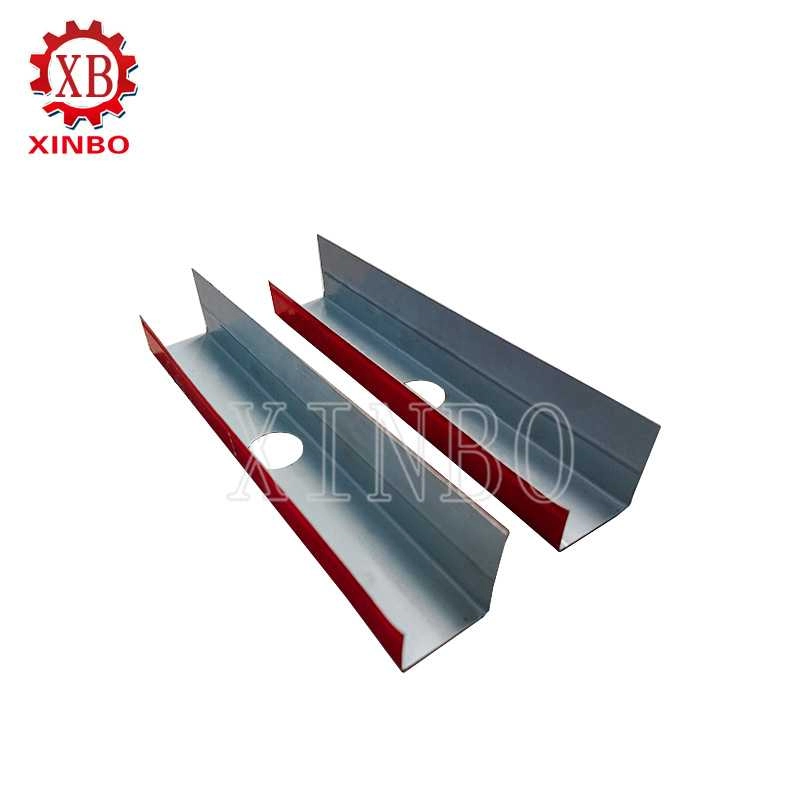
Send all required drawings at the start. The supplier should identify which profiles share tooling and what changes between shapes.
Adjustable Machine vs. Multiple Fixed-Profile Machines: Which Costs Less in the Long Run?
Compare Total Cost, Downtime, Floor Space, Tooling, and Future SKUs
Purchase price alone cannot answer this question. Compare machine and tooling cost with floor space, operator time, changeover losses, maintenance, scheduling, and future SKUs. Multi-profile equipment can reduce the need for multiple dedicated machines, while dedicated lines minimize setup for repeat production. Industry guidance describes the same tradeoff.
Use the factory’s actual order mix, including changeover time, idle capacity, and high-volume SKU requirements. An adjustable vs. fixed-profile roll forming machine cost comparison is useful only when both alternatives are evaluated against the same production demand.
What Should You Confirm Before Requesting a Multi-Size U/L Channel Machine Quote?
Send All Profile Drawings and Production Requirements Before Comparing Quotes
A useful RFQ should include every target profile drawing, U or L shape, finished dimensions, material, thickness range, coil width, cut-length range, batch size by SKU, annual volume, changeover frequency, punching or cutting requirements, electrical standard, and likely future profiles.
Xinbo states that roll forming equipment can be designed around customer profile requirements and describes in-house engineers, designers, workshop production, and CNC machining. The broader Xinbo roll forming machine manufacturer portfolio also includes light steel keel and stud-and-track equipment relevant to channel production.
Compare suppliers on the same profiles, tooling scope, material range, cutting method, controls, and changeover expectations—not only quotation value.
How to Choose an Adjustable U/L Channel Roll Forming Machine Supplier
Evaluate Engineering Review, Changeover Verification, and Acceptance Criteria
A suitable supplier should treat multi-size capability as an engineering requirement. Before ordering, confirm adjustment range, tooling, materials, controls, and what changes between SKUs. Before shipment, define how the agreed profiles will be checked.
В About Xinbo page describes engineers and designers working from customer profile requirements, along with an in-house workshop and CNC machining capability. Xinbo also publishes a process covering technical drawings, production, inspection, logistics follow-up, and after-sales service. Acceptance criteria, spare-parts scope, warranty, training, and support should still be documented for the order.
Conclusion: Adjustable or Fixed-Profile — Which One Should You Choose?
An adjustable U/L channel roll forming machine is worth investigating when several recurring sizes must share one production resource and changeover flexibility has measurable value. A fixed-profile machine may make more sense when one profile has stable, high-volume demand and dedicated capacity matters more than variety.
Before deciding, compare SKU volumes, batch sizes, changeover frequency, materials, and every required profile drawing. For a project-specific review, use Свяжитесь с Xinbo to submit these details and request a configuration discussion based on the required U/L profiles rather than assuming that a standard machine fits every multi-size application.
FAQs About Adjustable and Fixed-Profile U/L Channel Roll Forming Machines
Can one U channel roll forming machine make different sizes?
Yes, if the machine is designed for multi-size production. The available range and tooling compatibility depend on the profiles, material, thickness, cutting requirements, and machine design. Confirm every size with dimensioned drawings.
Is an adjustable roll forming machine better for small-batch multi-size production?
It can be a strong option when several sizes recur, but also consider changeover complexity, batch quantity, annual volume, and dedicated-capacity needs.
Does changing channel size reduce production capacity?
It can reduce effective output because changeover, setup, and verification use time that would otherwise be available for forming. Compare effective production time rather than maximum line speed alone.
What information should I send before ordering a multi-size U/L channel machine?
Send drawings for every profile, material and thickness range, coil width, cut lengths, batch quantities, annual volume, changeover frequency, cutting or punching requirements, electrical standard, and future profiles.
Связанные посты

Хорошее качество
XinBo машина, делающая CO. LTD является профессиональным производителем и экспортером в машине для формирования рулона,
ПРОСМЕТЬ БОЛЬШЕ→


 Russian
  English
  Spanish
  Portuguese
  Arabic
  French
  Dutch
Dutch  Turkish
  Swahili
  Serbian
  Romanian