Испанский
 Россия
Nail Plate Making Machine Production Line: From Steel Strip to Timber Truss Plates
A nail plate making machine produces toothed metal connector plates used to join timber members in roof trusses, wall frames, floor systems, and prefabricated wood structures. Unlike a wire nail machine, it does not form individual nails from steel wire. Instead, it feeds steel strip through a stamping process that cuts the plate shape and presses rows of teeth into the metal.
The XINBO machine shown in the supplied images is designed around this punching and forming principle. Its visible configuration includes a strip-feeding unit, a mechanical press, a customized stamping die, and finished toothed plates. For manufacturers serving timber construction, the main value of this type of equipment is repeatable plate production with consistent tooth layout and accurate plate dimensions.
What Is a Nail Plate Making Machine?
A nail plate, also called a truss plate, gang plate, or metal connector plate, is a flat steel component with integral teeth. The teeth are pressed into timber members to create a structural connection. In factory-made trusses, connector plates help join chord and web members before the completed assembly is transported to the construction site.
A nail plate making machine normally combines four functions:
- Steel strip feeding
- Plate blank positioning
- Punching and tooth forming
- Finished plate collection
The exact layout depends on the plate design, material thickness, tooth pattern, and required production volume. A simple machine may use a single stamping station, while a more complete production line can include decoiling, straightening, servo feeding, die protection, automatic counting, and collection.
For buyers, the important distinction is that the machine must be selected around the finished connector plate rather than around a generic “nail” specification.
How the Production Process Works
The production process begins with a coil or strip of suitable steel. The strip is placed on a feeding device and guided toward the press. Depending on the line design, the material may pass through a straightening or tension-control section before entering the stamping area.
1. Steel Strip Feeding
Stable feeding is essential because the stamping die must receive the material at a repeatable position. Poor alignment can create uneven margins, incomplete teeth, or shifted holes. The feeding system should be matched to the strip width, thickness, surface condition, and required production speed.
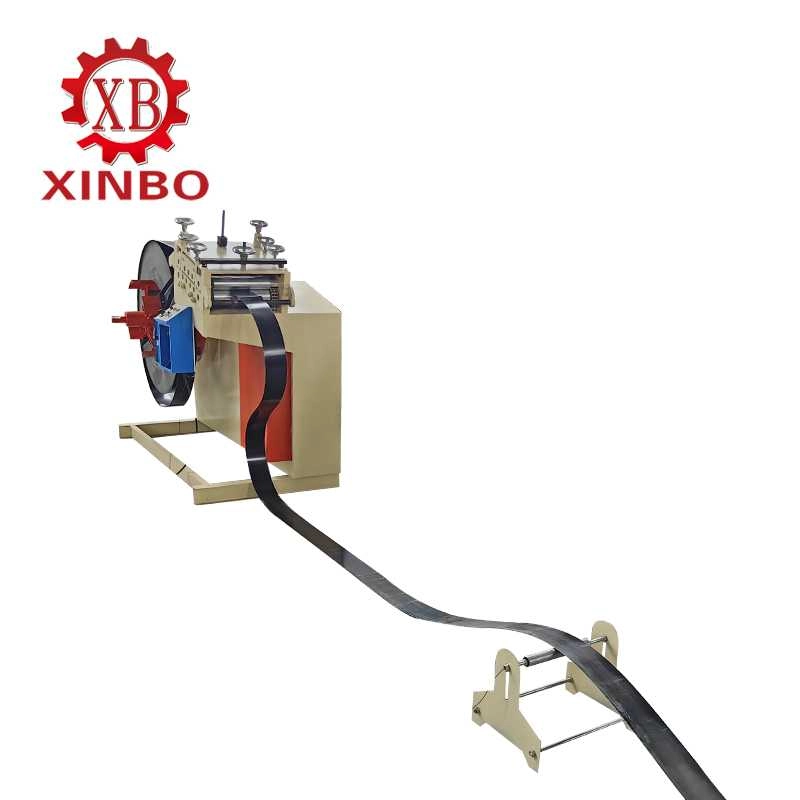
The operator should also verify whether the machine is intended for coil-fed production, pre-cut blanks, or both. This affects the layout of the workshop and the amount of auxiliary handling required.
2. Die Positioning and Stamping
The stamping die defines the external plate shape and the tooth arrangement. When the press cycles, the die cuts or forms the plate while forcing the teeth out of the metal surface. The die is therefore one of the most important parts of the entire line.
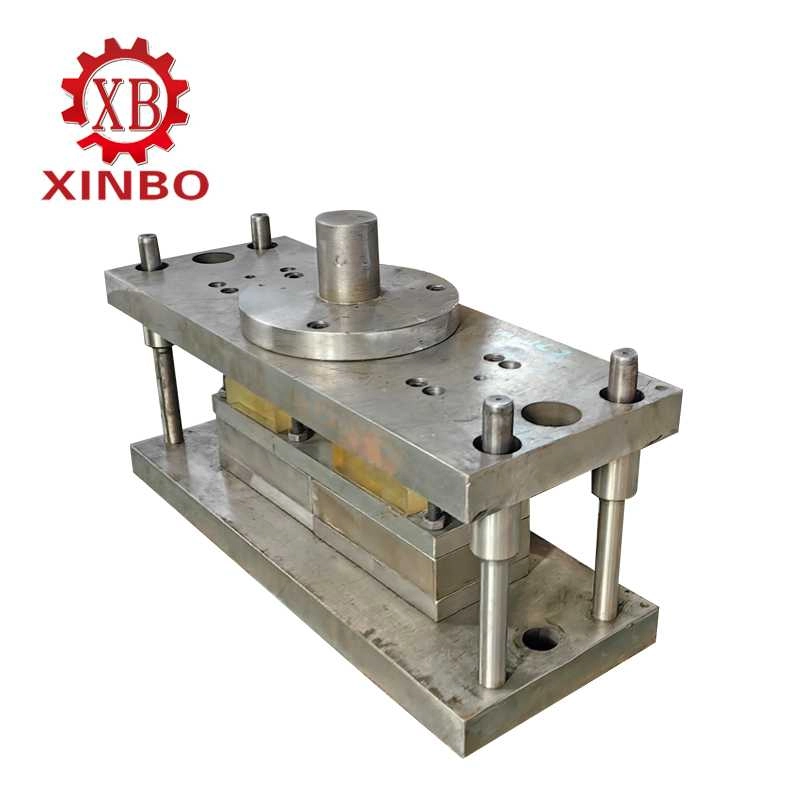
A plate design may require:
- Straight or angled edges
- Multiple tooth rows
- Different tooth lengths
- Symmetrical or asymmetrical patterns
- Special corner geometry
- Pre-punched holes or locating features
A customized die should be checked against the final drawing before production. The die must also be installed and aligned carefully to avoid premature wear and inconsistent tooth height.
3. Finished Plate Collection
After stamping, the finished plates are collected for inspection, stacking, or packaging. Depending on the machine configuration, the operator may remove plates manually or use a collection system.
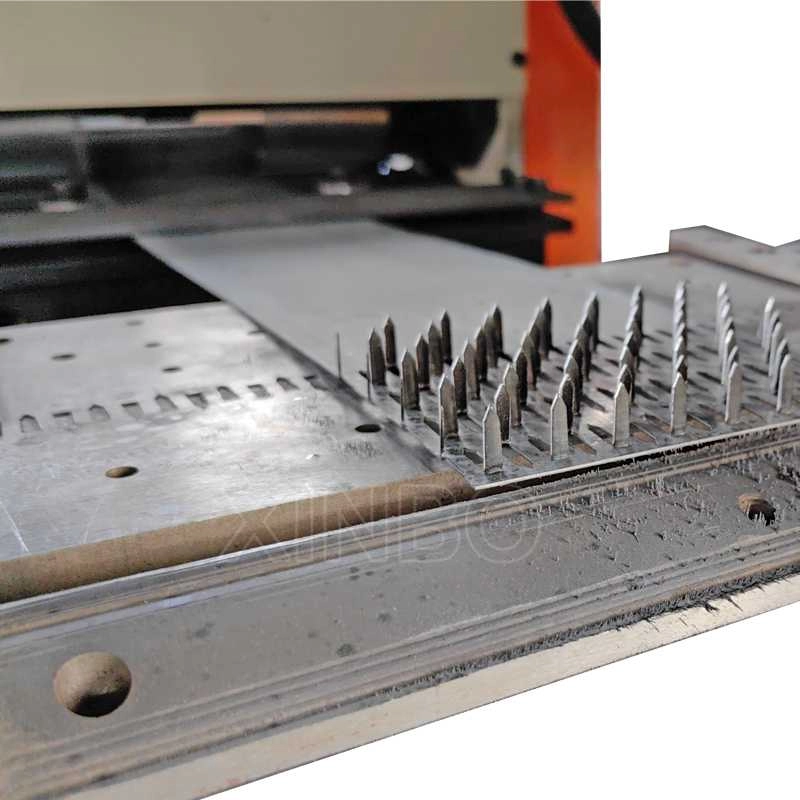
At this stage, quality checks should include plate length and width, tooth count, tooth orientation, edge condition, and visible deformation. If the plates will be used in engineered timber assemblies, dimensional consistency is more important than simply achieving a high cycle rate.
Key Machine Components to Evaluate
When comparing a nail plate making machine, buyers should examine the complete working system rather than focusing only on the press body.
Press Frame and Drive System
The press must provide sufficient force for the selected material and die. A rigid frame helps reduce vibration and protects alignment during repeated cycles. The drive system should be evaluated for operating stability, adjustment access, lubrication requirements, and maintenance support.
The machine in the supplied images uses a large mechanical press structure with flywheel-driven operation. The actual working capacity should be confirmed from the supplier’s technical specification because press force, stroke, and usable die area vary by configuration.
Feeding and Guiding System
The feeding section determines how accurately the strip enters the die. Important points include guide adjustment, feed length control, strip support, and access for threading the material.
If several plate sizes are required, ask whether the feeding system can accommodate different widths and whether changeover requires manual repositioning or replacement components.
Stamping Die
The die should be treated as a production tool with its own service requirements. Buyers should confirm:
- Which plate drawings the die supports
- Whether one machine can use multiple dies
- How die replacement is performed
- What components are considered wear parts
- How tooth height and pattern accuracy are checked
A low-cost press with an unsuitable die may create more scrap and downtime than a properly matched system.
Electrical and Control Cabinet
The control cabinet should provide clear start, stop, emergency, and fault functions. Operators also need practical access to settings for feed length, stroke timing, and production counting where applicable.
Before purchase, confirm the required power supply, control voltage, safety arrangement, and factory installation conditions. These details can affect commissioning even when the mechanical machine itself is suitable.
Applications in Timber Construction
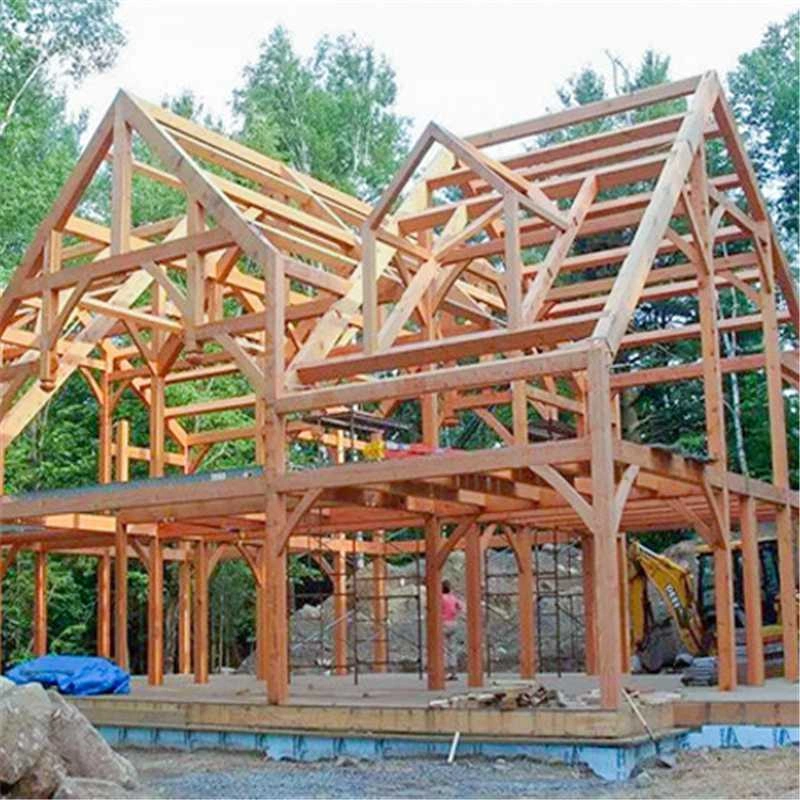
Nail plates are widely associated with prefabricated timber trusses, but their use can extend to other wood-framing applications. Potential applications include:
- Roof truss joints
- Wall frame connections
- Floor joist assemblies
- Timber frame components
- Prefabricated wood panels
- Repair and reinforcement plates
- Light structural wood systems
The final application determines the plate geometry, steel selection, tooth pattern, and required pressing force. The machine should not be specified only by the phrase “truss plate machine.” A supplier needs the intended plate drawing and application details before recommending a die or production layout.
For background on the manufacturer’s broader forming equipment, buyers can review the XINBO product range and compare how the company approaches customized metal forming systems.
How to Select the Right Configuration
A practical selection process starts with the finished product.
Confirm the Plate Design
Prepare drawings showing the plate length, width, thickness, tooth arrangement, edge profile, and any holes or special features. If several designs are required, list the expected production share for each one.
Match the Material
Steel grade, thickness, coating, hardness, and surface condition all affect forming behavior. The supplier should confirm whether the proposed press and die are suitable for the selected strip material. For non-standard plate dimensions or production requirements, buyers can discuss custom machine solutions with the technical team before finalizing the configuration.
Define Production Requirements
Estimate the required plates per shift, number of working hours, changeover frequency, and acceptable scrap rate. A factory producing one high-volume plate design may prioritize stable automatic feeding. A job-shop producer may prefer faster die changeover and broader size flexibility.
Check Factory Conditions
Confirm floor space, power supply, material storage, ventilation, operator access, and lifting arrangements. The production line should leave enough room for coil loading, die maintenance, inspection, and finished-product handling.
Request a Trial Run
A trial using the buyer’s material and approved drawing is one of the most useful purchasing checks. The trial should verify plate dimensions, tooth formation, surface condition, feed stability, and repeatability over multiple cycles.
Common Production Problems
Several problems can reduce output quality even when the machine is mechanically functional.
Uneven tooth height may result from die wear, incorrect clearance, poor material positioning, or insufficient alignment.
Incomplete tooth formation can be related to unsuitable steel hardness, excessive strip movement, or a die that does not match the material thickness.
Plate dimensional variation may come from inaccurate feed length, loose guides, sensor errors, or inconsistent strip tension.
Burrs and rough edges can indicate worn cutting sections, incorrect die clearance, or poor sharpening and maintenance practices.
Frequent stoppages may be caused by material feeding problems, loose fasteners, inadequate lubrication, or incorrect operating settings.
A maintenance routine should include die inspection, guide cleaning, lubrication, fastener checks, electrical inspection, and regular measurement of finished plates.
Why the Die Matters as Much as the Press
Many buyers compare machines by press capacity or advertised speed, but the die often has a greater effect on the final product. The die controls the tooth pattern, edge profile, plate shape, and changeover requirements.
A well-designed die can improve consistency and reduce adjustment time. It can also make future product changes easier when the manufacturer needs to produce several connector plate designs. For this reason, the die drawing, material, expected service life, and replacement plan should be included in the quotation.
В XINBO company profile can help buyers understand the manufacturer’s engineering and production background before discussing a customized nail plate project.
Вывод
A nail plate making machine converts steel strip into toothed connector plates for timber trusses and other prefabricated wood structures. The production system depends on coordinated feeding, stamping, die design, alignment, and finished-plate inspection.
For a reliable investment, buyers should define the plate drawing, material, output target, number of product sizes, factory conditions, and quality requirements before selecting the press. XINBO can evaluate the application more accurately when the inquiry includes plate dimensions, material details, drawings, expected quantity, and preferred automation level.
For a project-specific recommendation, send XINBO the plate drawing, steel strip information, required sizes, estimated production volume, and intended timber-framing application through the request a project-specific quotation from XINBO page.
Часто задаваемые вопросы
Is a nail plate making machine the same as a wire nail machine?
No. A wire nail machine forms individual nails from steel wire. A nail plate machine stamps toothed metal connector plates from steel strip.
What information is needed for a nail plate machine quotation?
Provide the plate drawing, dimensions, material thickness, tooth pattern, expected output, number of plate sizes, and required automation level.
Can one machine produce different nail plate sizes?
It may be possible when the press, feeding system, and die arrangement support multiple designs. Each size should be confirmed against the machine’s working area and die-change method.
What industries use toothed metal connector plates?
They are commonly used in timber truss manufacturing, prefabricated wood framing, roof construction, floor systems, and other engineered wood applications.
What should be tested before shipment?
The buyer should check plate dimensions, tooth formation, feed accuracy, machine cycling, safety functions, and trial output using the agreed material and die.
Связанные посты

Хорошее качество
XinBo машина, делающая CO. LTD является профессиональным производителем и экспортером в машине для формирования рулона,
ПРОСМЕТЬ БОЛЬШЕ→


 Russian
  English
  Spanish
  Portuguese
  Arabic
  French
  Dutch
Dutch  Turkish
  Swahili
  Serbian
  Romanian