Испанский
 Россия
Retractable Banner Stand Top Bar Roll Forming Machine: How to Reduce Aluminum Scrap and Unit Cost
Manufacturers of retractable banner stands often focus on machine price first, but aluminum scrap and rework can determine the real unit cost. A retractable banner stand top bar roll forming machine reduces avoidable cost when its entry width, roller tooling, guides, cutting control, and changeover method are matched to the finished profile. The objective is not simply to run faster. It is to convert each coil into saleable top bars with predictable dimensions and minimal handling loss.
This article shows where scrap comes from, which machine decisions affect it, how to calculate cost per usable part, and what a buyer should include in an RFQ.
Where Aluminum Scrap Is Created in Top-Bar Production
Scrap is rarely caused by one component alone. It usually accumulates across setup, feeding, forming, cutting, and packing.
Coil-start and setup loss
The first section of a coil may be used for threading, alignment, and trial forming. If the incoming strip is not centered or the guide is not adjusted to the actual width, more material may be rejected before stable production begins. Repeated setup after every profile change increases this loss. A forming line with clear adjustment references and a documented first-piece check can reduce unnecessary trial length, although the achievable reduction depends on operator practice and profile complexity.
Forming defects
Twisting, edge wave, springback, dents, and roller marks turn otherwise usable aluminum into rework or scrap. These defects can result from unsuitable pass design, uneven pressure, incorrect guide position, or material variation. Adding stations is not automatically a solution. The roller layout must support the profile cross-section and the material condition; the design should be validated with the buyer’s drawing and sample.
Cutting and end-trim waste
Top bars are normally cut to a fixed length. Incorrect encoder settings, unstable feed, or a poorly timed cut can create short parts, long parts, or damaged ends. A PLC-controlled cutting sequence helps coordinate length settings and counting, but the final tolerance still needs to be agreed and checked during acceptance. End-trim waste also grows when the line cannot keep the strip straight before the cutter.
Machine Features That Influence Material Utilization
Adjustable input and guided feeding
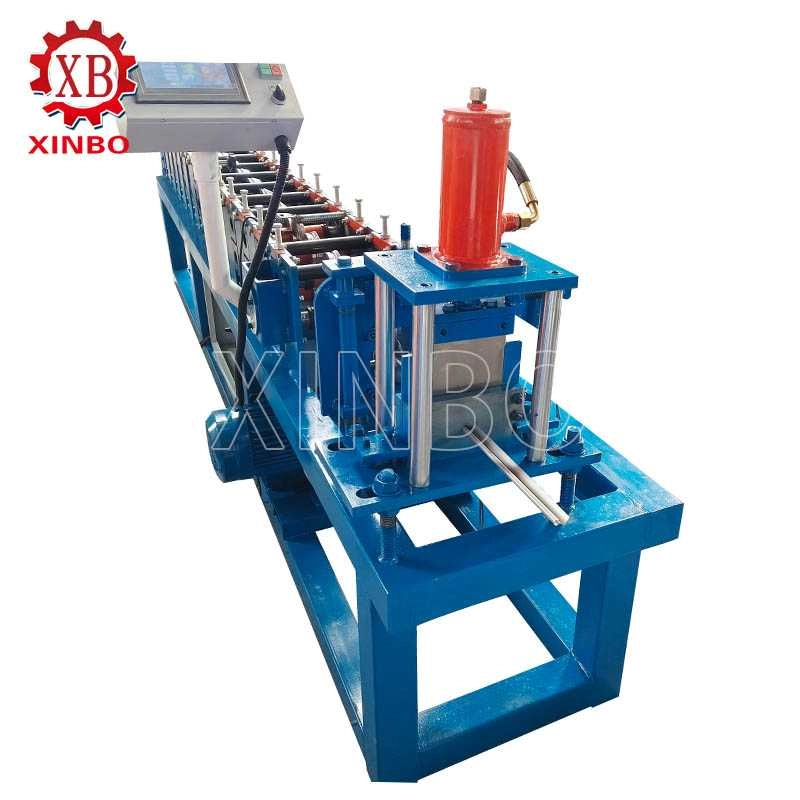
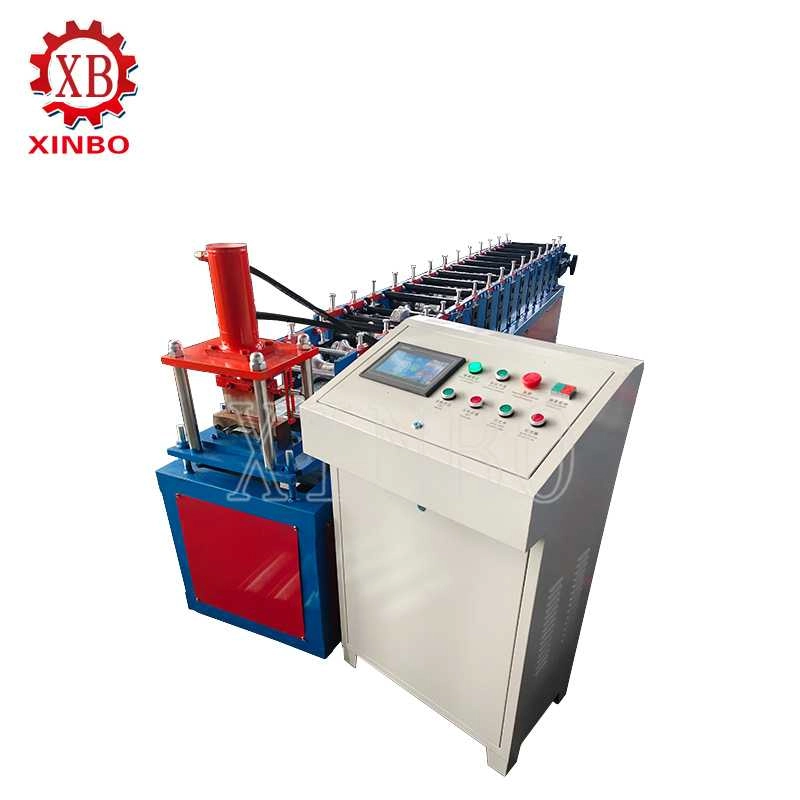
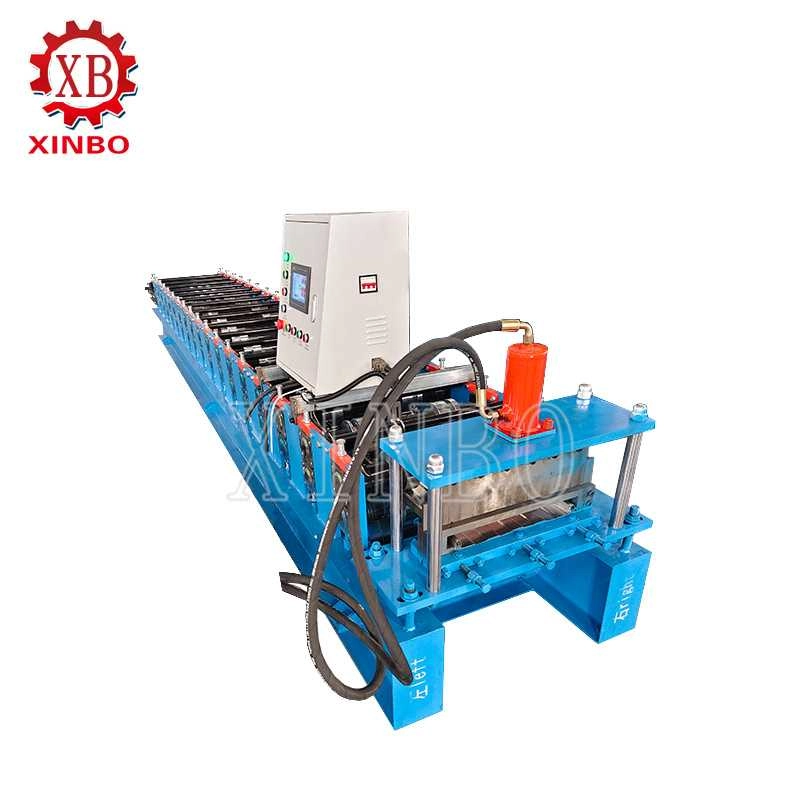
Xinbo’s product page describes an input section that can adjust for different raw-material widths. In procurement terms, this feature should be linked to the approved material-width range, guide adjustment procedure, and changeover time. The supplier should state which widths can be handled without replacing major components and whether a new width requires different tooling. A stable, centered strip enters each pass with less lateral movement, reducing the risk of edge damage and asymmetric forming.
Profile-specific roller tooling
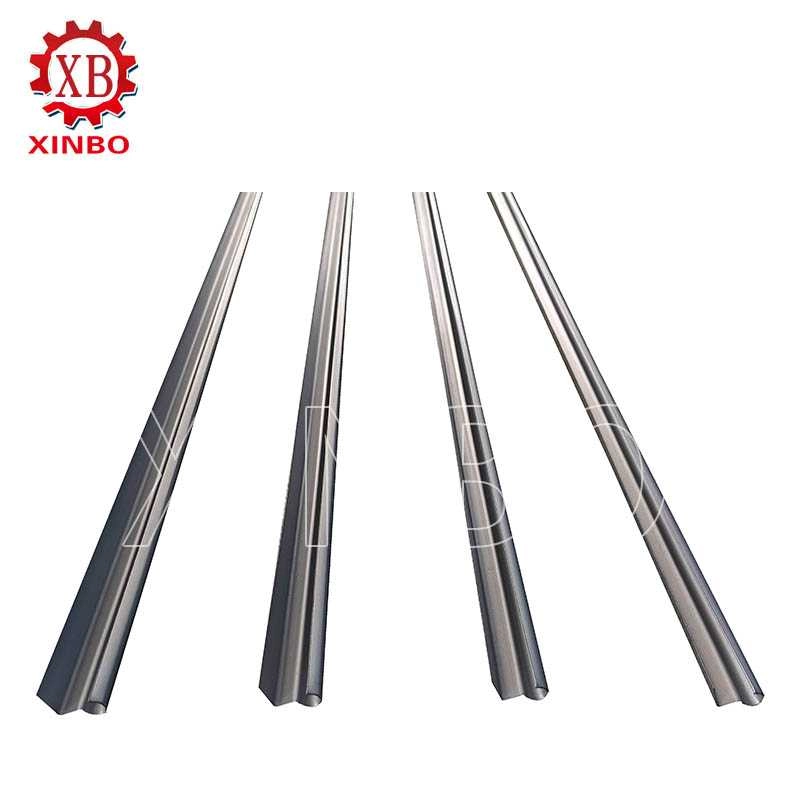
The roller set determines how gradually the aluminum becomes the top-bar profile. Ask for a pass schedule showing where critical lips, slots, or clamping surfaces are created. Tooling cost should be compared with scrap, rework, and future profile additions. A low initial price can be unfavorable if the tooling leaves marks or cannot hold the required tolerance.
Straightening and guide control
Straightness affects appearance and assembly. Guides should keep the profile aligned without rubbing finished surfaces. If a straightener is proposed, confirm its effect on the actual cross-section. Check the acceptance sample for bow, twist, and fit with mating parts.
PLC length control and production counting
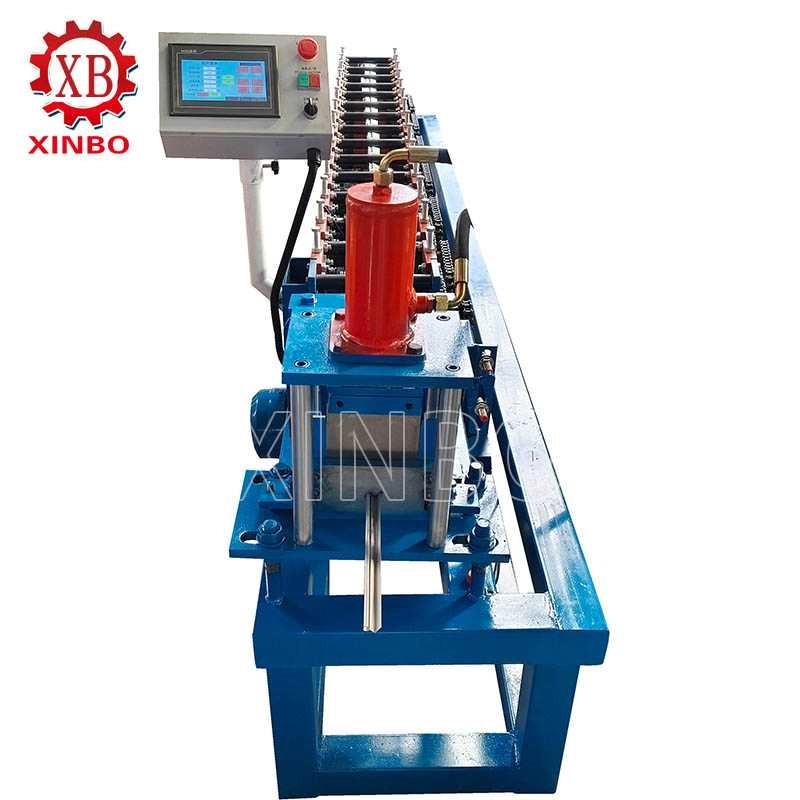
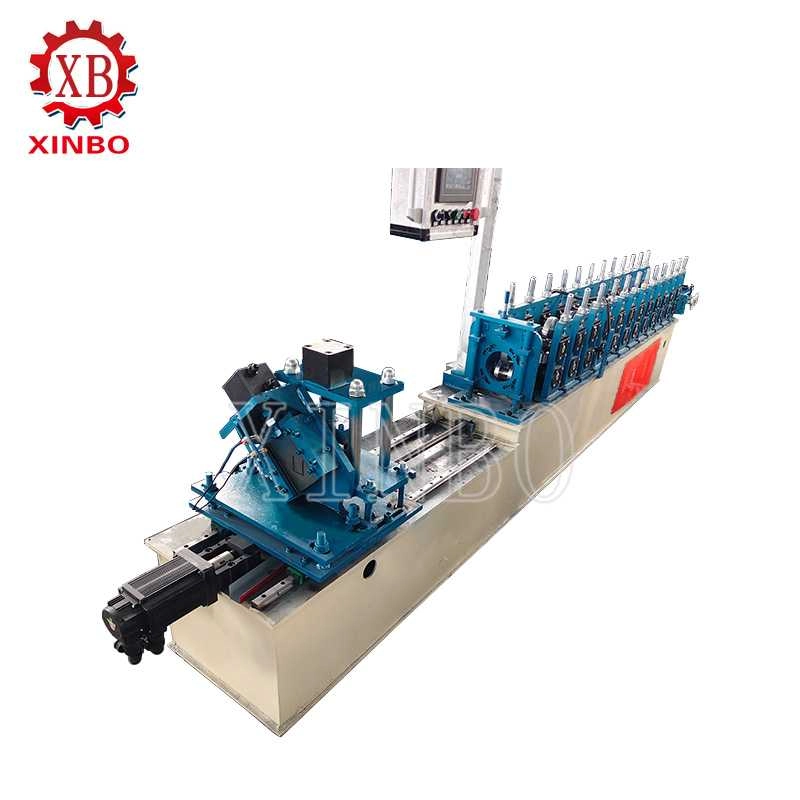
The official product description states that PLC control is used for precise, customizable cutting lengths. Request the length-setting method, counting logic, alarm handling, and restart procedure. A counter that distinguishes good pieces from trial or rejected pieces is more useful than a total count. Confirm behavior when the coil ends or the target length changes.
Semi-automatic versus integrated automation
A semi-automatic line may suit short runs, frequent profile changes, or factories with downstream labor. An integrated line can reduce manual transfers when demand is stable. Compare labor, setup, collection, maintenance, and floor-space costs together. Automation does not remove scrap by itself; incorrect recipes or sensors can extend defective runs.
A Practical Method to Calculate Cost per Usable Top Bar
Use a cost model that counts only accepted parts. The basic relationship is:
Unit cost = (aluminum consumed + direct labor + energy + tooling allocation + maintenance + packaging + scrap handling) / accepted parts.
Record the following during a representative trial:
- Coil weight or strip length issued to the line.
- Setup and trial material separated from production material.
- Accepted length and quantity after inspection.
- Rejected parts classified by cause: feeding, forming, cutting, surface, or handling.
- Labor time for setup, operation, inspection, and packing.
- Tooling and consumable costs allocated to the planned production quantity.
Show both mass yield and first-pass yield. Mass yield reveals how much aluminum becomes product; first-pass yield reveals labor and energy spent on rework. Run the calculation for the expected product mix because changeover burden varies by profile count.
Process Controls That Reduce Scrap Before It Happens
Approve the material and profile together
The RFQ should identify material designation where known, thickness, strip width, coil dimensions, surface finish, and protective-film requirements. These inputs affect roll pressure and guide clearances. If material is not finalized, state assumptions and require a trial with the final material before acceptance.
Use a first-piece approval gate
At the start of each run, inspect critical dimensions, straightness, clamping fit, cut length, and visible surface. Keep the approved sample with the production traveler. Define measuring tools, sampling frequency, and the approval owner.
Monitor defect causes, not just scrap weight
A weekly scrap total does not show what to change. Record defect categories and the station or condition associated with each rejection. Scratches after a guide adjustment require a different correction from an encoder length error. Alarms and traceable records improve supplier support.
Protect the finished surface
Keep rollers, guides, tables, and collection supports free of chips and burrs. Confirm protective-film handling at the cutter. Packaging should prevent bars from sliding against one another.
Procurement Checks for a Low-Total-Cost Machine
Request evidence, not broad promises
Ask for a layout, utility requirements, profile review, tooling list, control description, inspection plan, and clear supply boundary. Xinbo presents custom design and ODM support through its machine service team, relevant when the top bar has special clamping geometry. Require written confirmation of every included component and interface.
Define acceptance criteria before ordering
Acceptance should cover profile dimensions, cut-length tolerance, straightness, surface condition, restart repeatability, and accepted parts in the trial. Agree on material, speed condition, sample quantity, inspection method, and treatment of nonconforming parts. Do not accept a maximum-speed claim without a usable-part result.
Compare lifecycle and integration costs
Include spare rollers, cutters, sensors, lubrication, electrical components, training, and preventive maintenance. Check tooling identification and recipe backup. Confirm packaging, installation responsibility, shipping scope, and warranty boundaries. Delivery timing and import costs may vary by destination and configuration, so keep them contractual.
Review the supplier’s product fit
Xinbo lists this equipment in its roll forming machine product center. Confirm that the proposed line matches the aluminum strip, top-bar drawing, target lengths, product mix, and workshop space. Related experience is not a substitute for a profile-specific trial.
RFQ Checklist for a Responsible Quotation
Send the supplier:
- Profile drawing or physical sample, including critical clamping and mating dimensions.
- Material type, thickness range, strip width, coil weight, inner and outer diameter, and surface requirements.
- Finished length, tolerance, expected daily or monthly quantity, and product-mix schedule.
- Required operations such as feeding, roll forming, cutting, counting, collection, punching, labeling, or packing.
- Available voltage, phase, workshop dimensions, coil-handling limits, and operator arrangement.
- Quality standards, inspection tools, sample-approval method, and documentation required for internal release.
- Target installation location, delivery terms, training expectations, spare-parts list, and support contacts.
Precise inputs reduce assumptions that can later create rework or integration expense.
Вывод
Reducing aluminum scrap requires a process view. Adjustable feeding, profile-specific rollers, controlled guides, accurate cutting, surface protection, and first-piece approval work together. Compare cost per accepted top bar over the planned product mix, not purchase price or headline speed alone. Use a documented trial and complete RFQ before purchase.
Часто задаваемые вопросы
Can one line produce several banner top-bar profiles?
It may be possible when the machine structure and interchangeable tooling are designed for the profile family. Confirm changeover steps, tooling limits, and dimensional validation for each profile before ordering.
Does higher forming speed always lower unit cost?
No. Higher speed can increase defects, setup instability, or inspection burden. Compare accepted parts per hour and total operating cost under the agreed quality criteria.
What is the most important information for pricing?
The profile drawing, aluminum material data, finished length, tolerance, output target, automation scope, and factory conditions provide the basis for a responsible quotation.
How should surface quality be checked?
Define the visible faces, allowable marks, lighting or inspection method, protective-film condition, and sample-approval process before the trial. Requirements should match the finished banner stand’s appearance.
How can I request a fit review?
Prepare the drawing, material details, target quantity, line-layout constraints, and acceptance requirements for an application review.
Xinbo can discuss profile-specific options through its retractable banner stand top bar machine page. To begin a fit check, contact Xinbo’s technical team and share only the information needed to review configuration and quotation scope.
Связанные посты

Хорошее качество
XinBo машина, делающая CO. LTD является профессиональным производителем и экспортером в машине для формирования рулона,
ПРОСМЕТЬ БОЛЬШЕ→


 Russian
  English
  Spanish
  Portuguese
  Arabic
  French
  Dutch
Dutch  Turkish
  Swahili
  Serbian
  Romanian