Шпански
 Русија
Embossing Machine Buying Guide: How to Choose the Right Rollers, Patterns, and Production Setup
Choosing an embossing machine for industrial metal sheet or coil work starts with the finished product, not a catalog model. Define the material, thickness range, usable width, pattern purpose, finish, and output format first. These inputs determine the rollers, drive, feeding method, controls, and downstream equipment.
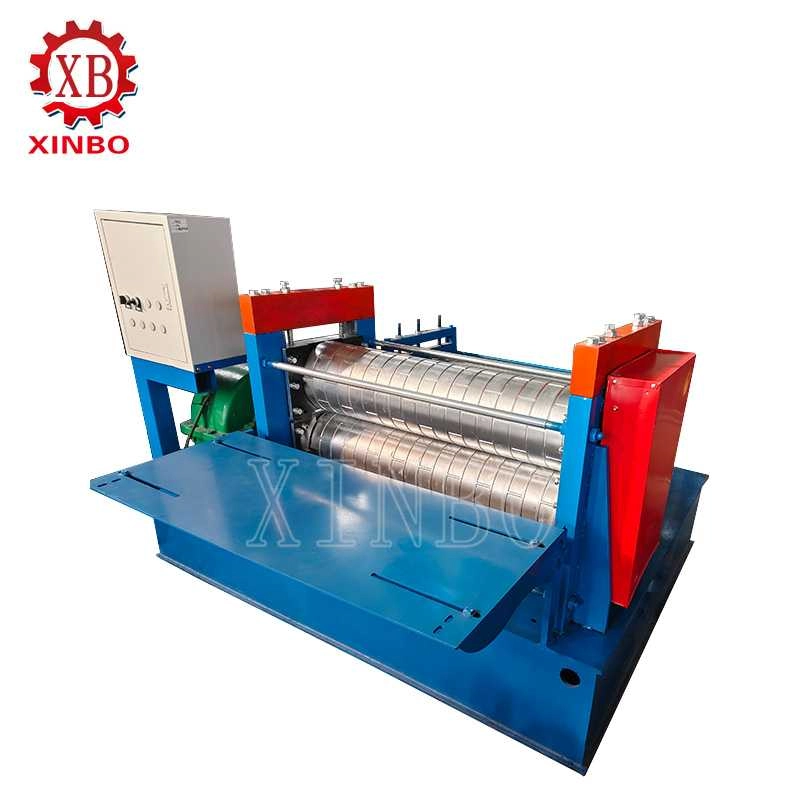
Start With a Clear Production Requirement
An embossing line must apply a repeatable raised or recessed pattern without unacceptable distortion, surface damage, or variation. Prepare a sample, drawing, or specification covering:
- Metal type, grade, coating, and surface condition
- Minimum and maximum thickness
- Coil or sheet width and usable finished width
- Coil weight or sheet length
- Pattern image, pitch, depth, orientation, and tolerance
- Decorative or functional purpose
- Output as rewound coil, cut sheet, or feedstock for another process
- Target production rate and typical batch size
Do not describe the input simply as “steel” or “aluminum.” Hardness, yield behavior, coating sensitivity, and thickness tolerance affect how material flows through the rollers. The supplier should review the actual material specification and, where possible, test a representative sample before final tooling approval.
Choose Embossing Rollers Around the Material and Finish
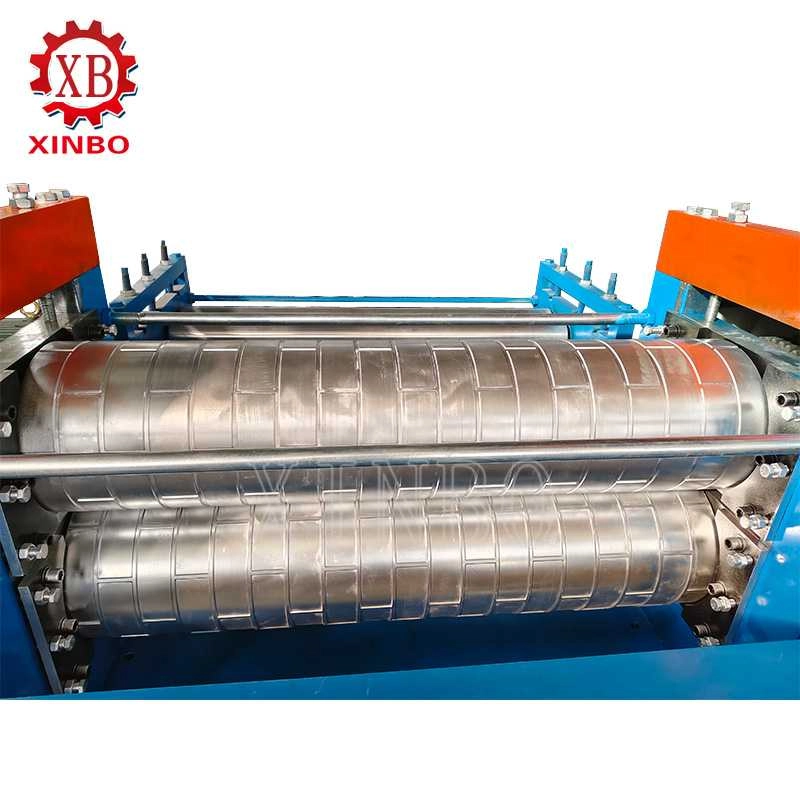
The rollers are the core of a metal embossing machine. Their geometry, diameter, material, hardness, machining quality, alignment, and finish influence pattern consistency and service requirements.
Match Roller Geometry to the Pattern
Continuous embossing commonly uses a matched roller pair. The engraved surfaces displace material as the sheet passes through a controlled gap. Pattern depth depends on the artwork, material thickness, strength, ductility, applied pressure, and springback.
Fine textures require accurate engraving and stable alignment. Larger patterns may require more forming force and closer control of material flow. If a design repeats across the width, ask how transitions between engraved sections will be managed. For directional designs, establish feed direction before roller manufacture.
The XINBO industrial metal sheet embossing machine uses paired CNC-machined rollers in a cold-forming process and offers variable-frequency speed control. The final roller and drive specification should still be matched to each buyer’s material and pattern.
Plan for Roller Life and Changeovers
Ask the supplier to state the proposed roller material, heat treatment, surface finish, and tolerances for runout and pattern alignment. Also clarify cleaning procedures and which bearings, seals, or other wear parts should be stocked.
For multiple patterns, compare complete roller sets with replaceable sleeves or cassettes. Consider roller weight, lifting requirements, alignment methods, changeover time, and the cost of spare tooling—not just the initial roller price.
Select a Pattern for Function and Manufacturability
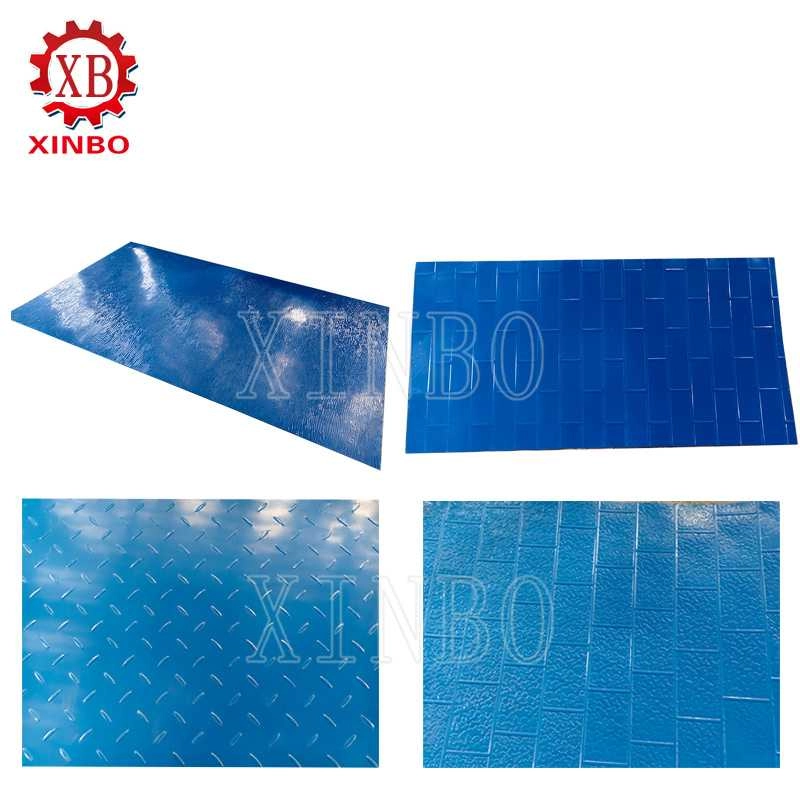
Pattern choice must balance appearance, function, formability, coating behavior, cleaning, and downstream operations.
Distinguish Decorative and Functional Goals
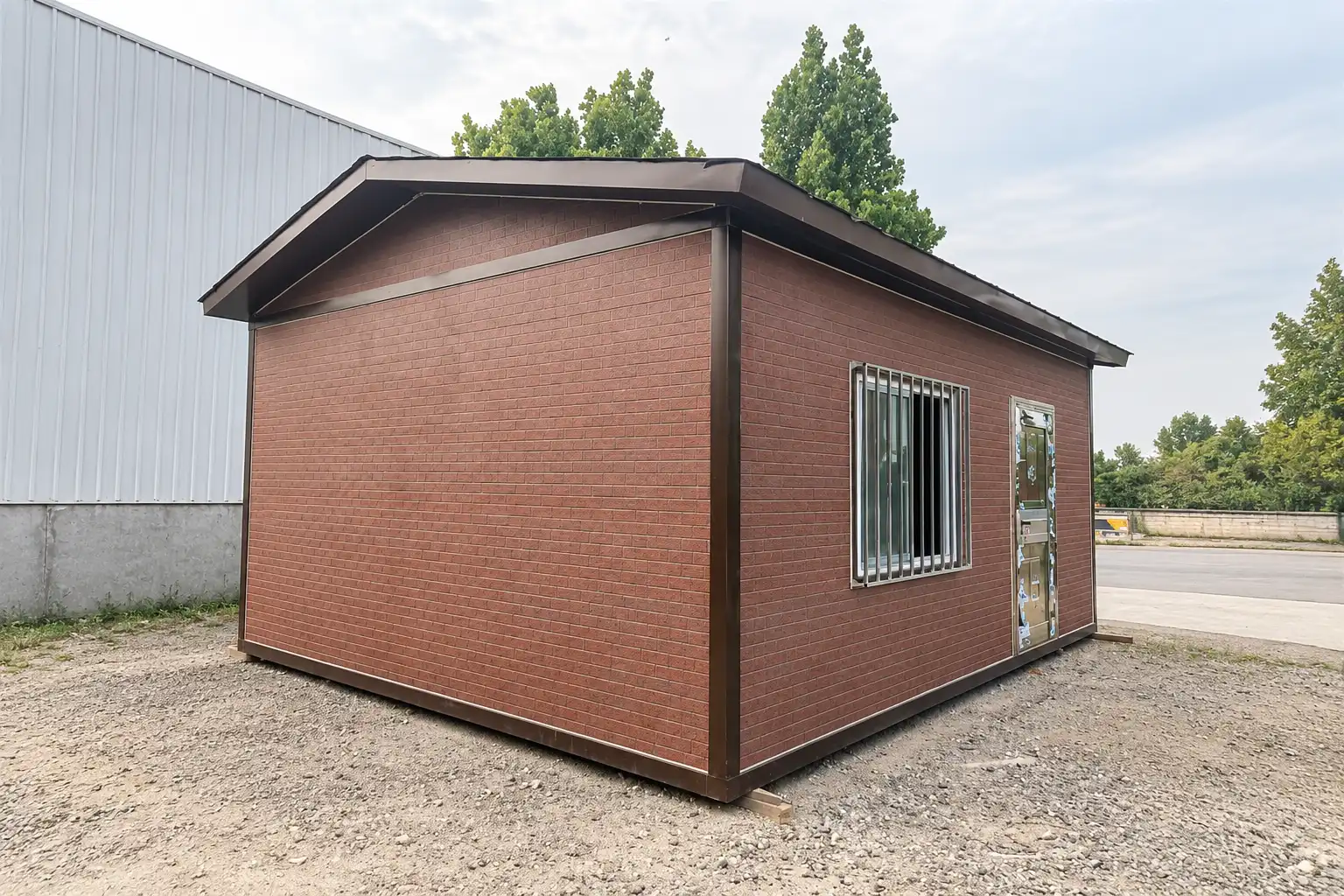
Decorative textures can create a distinct appearance for wall cladding, ceiling panels, or architectural sheet. Functional patterns may be intended to improve grip, increase apparent panel stiffness, control reflectivity, or conceal minor surface variation. These results are application-dependent and should be tested on the intended material.
A deep or dense pattern can also affect flatness, edge condition, and later bending. Tell the supplier if the embossed material will be roll formed, punched, cut, laminated, or coated. The design may need unembossed margins around edges, holes, seams, or bend lines.
XINBO’s special-pattern embossing line shows a configuration in which the roller design is customized to the required image or shape. For this type of project, the approved artwork and physical sample should become controlled project documents.
Approve a Representative Sample
A rendering cannot show every forming effect. Define sample acceptance before tooling release or the factory test. Check:
- Pattern depth, repeat pitch, and visual uniformity
- Registration between upper and lower rollers
- Flatness, camber, and edge wave
- Scratches, coating cracks, or gloss changes
- Performance during downstream forming or finishing
Use production-grade material whenever practical. Agree in writing on how tooling corrections will be handled if the sample misses the approved criteria.
Configure the Complete Production Setup
An embosser rarely works alone. The surrounding modules determine whether material enters consistently and leaves in a usable form.
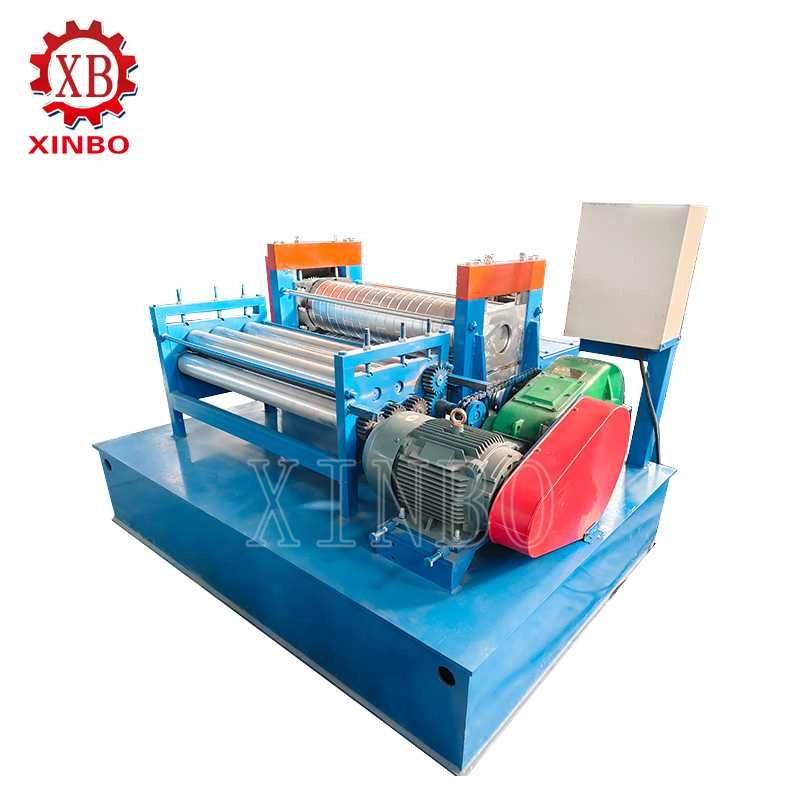
Choose Coil-Fed or Sheet-Fed Operation
Coil-fed production supports continuous output and can reduce manual handling. A line may include a decoiler, guide, flattening unit, embosser, control system, and a recoiler, cutting unit, or receiving table. Specify coil weight, inner and outer diameter, strip width, tension needs, and floor-space limits.
Sheet-fed operation can suit prepared blanks or shorter batches. It needs a reliable infeed reference and adequate support on both sides of the machine. Compare labor, safe handling, changeover frequency, and the risk of marking finished surfaces.
Define Every Module and Interface
Flattening helps manage coil set or incoming waviness. Guides must keep the strip centered without damaging its edges or coating. Gap or pressure adjustment should provide a repeatable reference so operators can return to an approved setting.
Select downstream equipment according to the required deliverable. Cutting produces defined sheet lengths; recoiling preserves continuous output. If the embosser feeds another roll-forming line, confirm line speed, pass height, control signals, and buffering between machines.
The layout should also cover guarding, emergency stops, cleaning access, lifting provisions for roller changes, utilities, and the installation site’s electrical standard. Resolve these points during technical review rather than after delivery.
Compare Performance With Production Evidence
Maximum speed does not equal usable output. The meaningful rate is the speed that maintains the approved pattern on the specified material. Ask what material, width, thickness, pattern, and operating conditions support any quoted performance figure.
A factory acceptance test should reproduce a defined product when practical. Record settings, run long enough to observe stability, and inspect samples from the beginning, middle, and end. Check both widthwise uniformity and consistency along the feed direction.
Compare setup time, adjustment scrap, cleaning access, roller change time, and operator needs as well. A faster machine can deliver less practical capacity if pattern changes require lengthy realignment.
Use a Procurement Checklist for Comparable Quotes
Send each supplier the same material data, pattern file, output requirement, layout limits, and acceptance criteria. Request a process flow, line layout, utility list, component schedule, control description, maintenance plan, and tooling scope.
Confirm what documentation, training, installation assistance, remote support, and spare parts are included. List required electrical and safety provisions explicitly. Review XINBO’s machine-building background as part of supplier qualification, then place every project-specific commitment in the technical agreement and purchase contract.
Evaluate price together with included modules, tooling, freight dimensions, commissioning, consumables, and startup spares. Clarify whether sample tests, one roller set, guarding, cutting equipment, and handling devices are included. The quotation should also define the buyer’s responsibilities for utilities, lifting equipment, foundations, raw material, and operators.
Закључак
The right embossing machine is engineered around a verified material-and-pattern combination and integrated into a workable production flow. Select rollers for forming performance and maintainability, approve samples on representative material, and specify every module from infeed through collection.
XINBO provides metal shaping equipment and customizable embossing configurations for sheet and coil applications. To obtain a relevant proposal, request a configuration review with your material grade, thickness and width ranges, coil or sheet format, pattern drawing, downstream process, target output, and sample requirements.
ФАК
What information is needed to select a metal embossing machine?
Provide the metal grade, coating, thickness range, width, coil or sheet dimensions, pattern file, target depth, output format, batch size, production goal, and downstream operations. Include material hardness when available and send physical samples when appearance is critical.
Can one machine produce several embossing patterns?
It may be possible by changing complete roller sets, sleeves, or cassettes. Feasibility depends on the machine design, roller weight, alignment method, lifting equipment, and acceptable changeover time. Ask for a documented changeover procedure.
Should a line use a cutting unit or a recoiler?
Use cutting when the final product requires defined sheet lengths. Use recoiling when continuous embossed coil is needed for storage or another process. A project may require both, but the controls and handling method must be specified.
How should buyers evaluate embossing quality?
Use approved production material and measure pattern depth, repeat pitch, alignment, flatness, edge condition, and surface damage. Inspect samples across the width and during a sustained test, then verify performance in any downstream operation.
Сродни постови

Добар квалитет
КсинБо машина која производи ЦО. ЛТД је професионални произвођач и извозник у машини за обликовање ваљака,
ВИЕВ МОРЕ→


 Serbian
  English
  Spanish
  Portuguese
  Arabic
  Russian
  French
  Dutch
Dutch  Turkish
  Swahili
  Romanian