İspanyolca
 Rusya
Rusya
How to Compare Door Frame Roll Forming Machine Quotations Beyond the Purchase Price
A door frame roll forming machine quotation should never be evaluated by the headline equipment price alone. Two suppliers may quote different totals because their machines include different tooling, punching systems, cutting methods, automation levels, testing arrangements, and after-sales responsibilities.
For a fair comparison, buyers should first define the required door frame profile, material, thickness, hole pattern, output target, and delivery conditions. Then, each quotation should be converted into the same technical and commercial scope. This approach helps manufacturers identify the real investment, avoid missing-cost surprises, and select equipment that fits long-term production needs.
1. Start With an Identical Technical Scope
A quotation is only comparable when every supplier is pricing the same product and production requirements. Before requesting offers, prepare a technical brief containing:
- Profile drawings with dimensions, bend angles, radii, flanges, and returns
- Material type, grade, coating, and thickness range
- Coil width, coil weight, and outside diameter
- Finished profile length and tolerance
- Hole shape, position, pitch, and quantity
- Required production volume and expected changeover frequency
- Factory voltage and installation conditions
- Destination country and delivery terms
Without this information, suppliers may make different assumptions. One quotation may cover a fixed single profile, while another may include several related profiles. One may include pre-punching, while another may exclude punching entirely. The lower number may simply reflect a smaller scope.
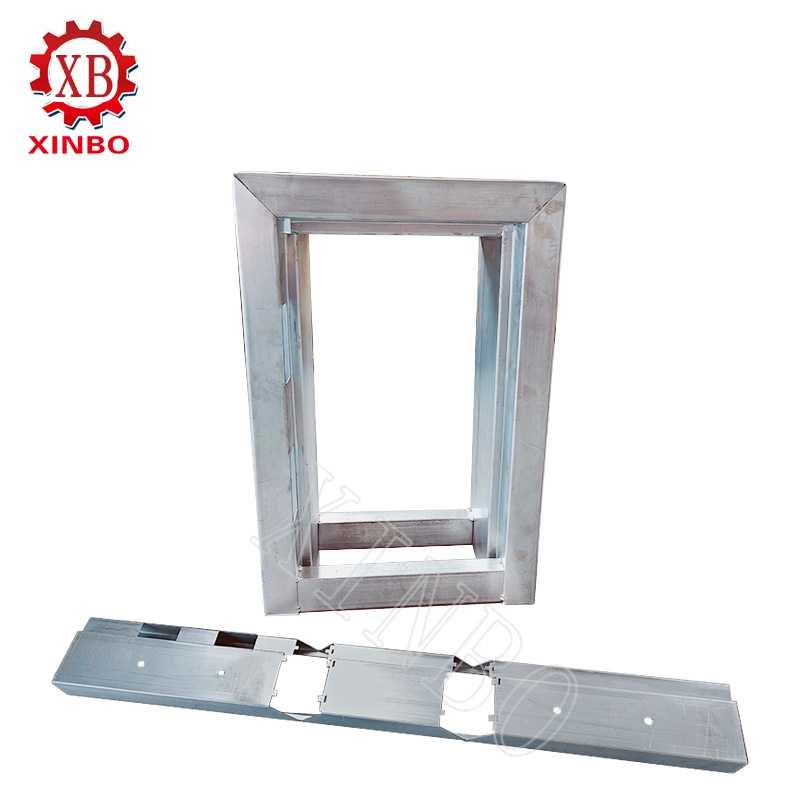
XINBO’s published door frame equipment information indicates that formed width can be designed according to the drawing, while processing materials may include PPGI, galvanized steel, and aluminum. Buyers should therefore submit the approved profile and material details before comparing prices. More information about the product configuration is available on the XINBO door frame roll forming machine page.
2. Separate the Quotation Into Cost Categories
A useful comparison sheet should divide the quotation into separate cost categories instead of treating the machine as one package.
|
Cost category |
Questions to ask |
|
Main forming equipment |
Are the decoiler, guide system, forming stations, and receiving table included? |
|
Tooling |
Is the quoted roller tooling for one profile or several profiles? |
|
Punching |
Is punching included, and is it before or after forming? |
|
Kesme |
What cutting method is included, and are dies or blades supplied? |
|
Electrical control |
Are the PLC, encoder, touch screen, sensors, and electrical cabinet included? |
|
Testing |
Is factory testing based on the buyer’s material and actual profile? |
|
Logistics |
Are packaging, inland transport, freight, insurance, and destination charges included? |
|
Support |
Does the price include installation guidance, training, documentation, and spare parts? |
This structure prevents buyers from comparing a complete production line with a basic forming mill. It also makes negotiation more objective because every difference can be assigned to a specific function.
Şu XINBO door frame machine category can be used as an internal reference when identifying the main equipment family and related configurations.
3. Evaluate Tooling and Profile Capability
Tooling is one of the most important parts of a door frame roll forming machine. The rollers determine how the flat strip is gradually bent into the required frame section. A machine that can produce one narrow profile may not be suitable for a wider or more complex frame.
Ask each supplier to confirm:
- The exact profile drawings covered by the quotation
- The number of forming stations
- Roller material and surface treatment
- Whether interchangeable rollers or tooling cassettes are included
- The adjustment method for different profiles
- The permitted material thickness and strength range
- Responsibility for correcting profile errors during commissioning
XINBO lists 45# steel rollers with hard chrome coating for one published door frame machine configuration. It also lists a processing thickness of 0.6–1.5 mm for that configuration. These figures should be treated as model-specific reference information, not as a universal range for every project.
A quotation that promises “multi-profile production” requires additional clarification. Buyers should request a written list of the profiles that can be produced, the changeover procedure, the expected changeover time, and any additional tooling charges.
4. Compare Production Capacity by Finished Output
Nominal line speed is not the same as usable production output. A quotation may state a forming speed of 15 m/min, but actual output can be lower when the line includes punching, cutting, coil changes, inspection, and manual handling.
Compare suppliers using the following questions:
- Is the stated speed measured without punching and cutting?
- Does the output calculation use the buyer’s actual profile length?
- How frequently must coils be changed?
- Does the punching cycle limit the line speed?
- How much time is required for setup and profile changeover?
- Is the output based on acceptable finished parts or only material movement?
For example, a profile with frequent holes may require a slower punching cycle than a plain frame section. Long finished parts may also require additional support and handling time. The correct comparison is therefore the number of accepted profiles produced per shift, not the highest number printed in the quotation.
A supplier should be able to explain the production calculation and identify which operation is the bottleneck. If the quotation only provides a maximum speed without a cycle explanation, the capacity claim remains incomplete.
5. Check Automation and Electrical Scope
Automation can reduce labor requirements, but it also affects the purchase price, commissioning process, and maintenance needs. Buyers should identify which functions are automatic and which require operator intervention.
A typical door frame line may include:
- Decoiling and strip feeding
- Entry guiding and leveling
- Optional punching
- Progressive roll forming
- Length measurement
- Hydraulic profile cutting
- PLC kontrolü
- Receiving and product collection
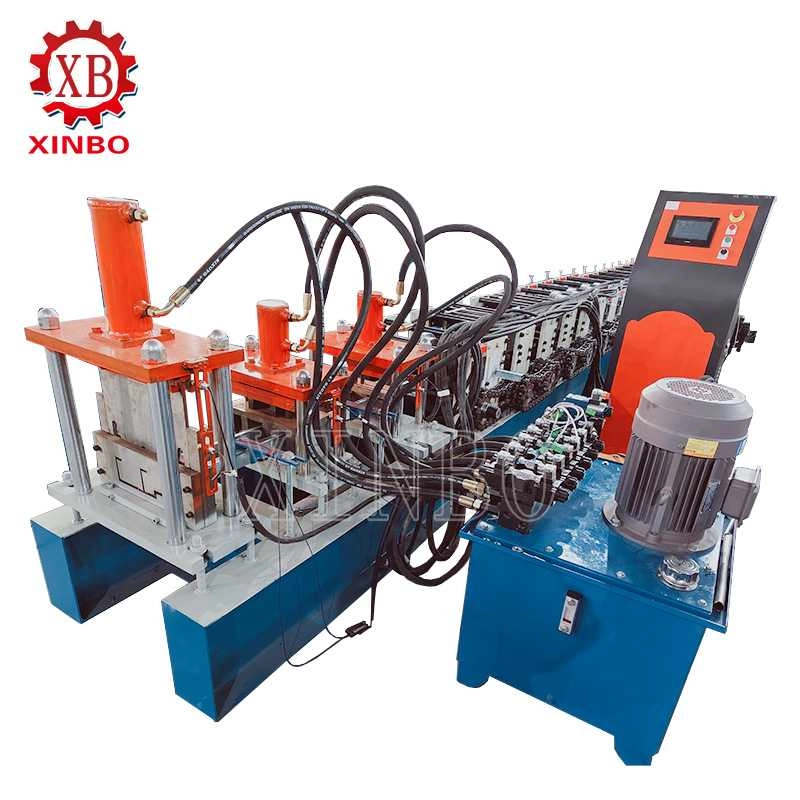
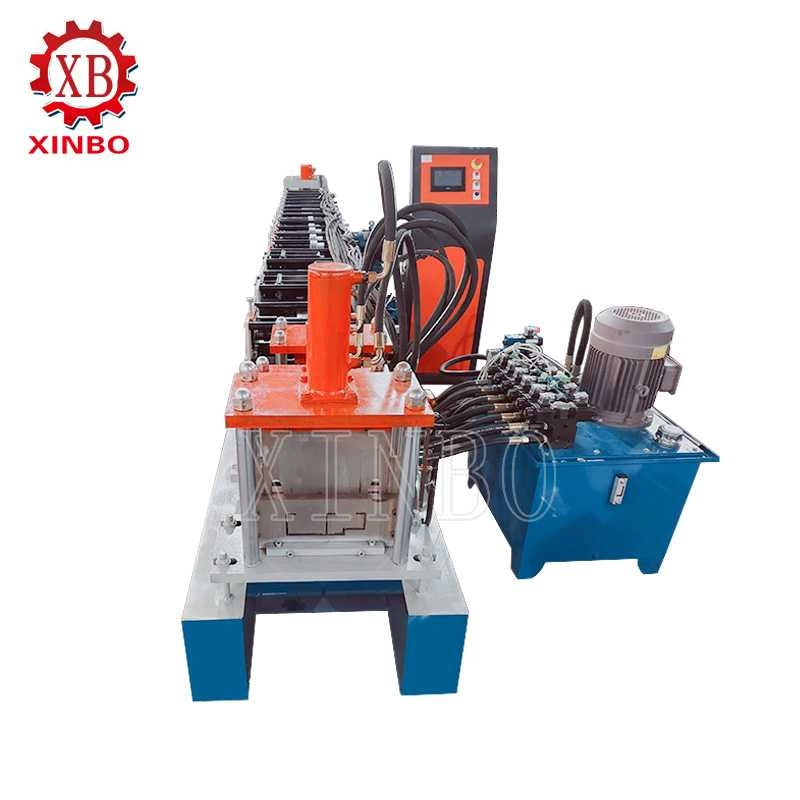
XINBO’s published configuration includes encoder-based length measurement, PLC control, hydraulic profile cutting, and button-plus-touch-screen operation. It also lists a decelerating motor with chain transmission. These details help buyers compare the control and drive scope, but the final configuration should still be confirmed against the approved profile.
Ask whether the quotation includes electrical drawings, operating instructions, fault codes, spare sensors, and remote troubleshooting support. Also verify whether the proposed voltage and frequency match the factory power supply. XINBO lists 380 V, 50 Hz or a buyer-requested voltage for the referenced configuration.
6. Add the Costs That Appear After the Order
The purchase price is only one part of the project budget. A realistic total-cost comparison should include:
- Export packaging
- Inland transportation
- Ocean or air freight
- Cargo insurance
- Import duties and customs charges
- Unloading and positioning at the factory
- Electrical connection
- Installation and commissioning
- Operator training
- Trial material
- Additional rollers or punching dies
- Recommended spare parts
- Future tooling for new profiles
Buyers should also clarify payment milestones and the documents supplied before shipment. A low machine price may become less attractive if commissioning, extra tooling, or shipping costs are excluded.
For customized projects, ask the supplier to issue a revised quotation after technical confirmation. The final document should reference the approved drawing, material range, production target, included components, testing standard, and delivery responsibilities.
7. Use Factory Testing to Validate the Quotation
A factory acceptance test is one of the strongest ways to check whether the quoted machine matches the promised scope. Whenever possible, testing should use the buyer’s actual material and profile drawing.
The test plan should define:
- Material type and thickness
- Profile dimensions and tolerances
- Hole pattern and punching accuracy
- Finished length and cut quality
- Straightness, twist, and surface condition
- Continuous production duration
- Quantity of accepted samples
- Measurement method and acceptance limits
Do not rely only on photographs of a machine running without the buyer’s material. A short demonstration may not reveal feeding variation, hole distortion, profile drift, or cutting deformation. A longer continuous run provides more useful evidence.
Buyers should request sample measurements, test videos, and a signed acceptance record. These documents can later support installation, training, and warranty discussions.
How Should Buyers Choose Between Similar Quotations?
When two quotations appear technically similar, compare the supplier’s clarity and risk allocation. A stronger quotation normally identifies the exact profile scope, lists included components, explains exclusions, and provides a realistic testing method.
Review the supplier’s ability to support customization, technical drawing confirmation, quality inspection, and shipment coordination. XINBO describes itself as a metal-shaping and roll-forming equipment manufacturer and publishes customized door frame machine configurations. Buyers can also review the company’s OEM and ODM service information before requesting a project-specific proposal.
Sonuç
Comparing door frame roll forming machine quotations requires more than checking the lowest purchase price. Buyers should normalize the technical scope, separate tooling and automation costs, verify actual output, include logistics and commissioning expenses, and require testing against the real profile.
A quotation becomes useful only when it clearly defines what the buyer will receive, what performance will be tested, and which costs remain outside the machine price. This method makes supplier discussions more transparent and reduces the risk of selecting equipment that cannot meet the intended production requirements.
FAQs
What information is needed for an accurate quotation?
Provide the profile drawing, material type, thickness, hole layout, finished lengths, production target, factory voltage, and delivery destination.
Is a higher forming speed always better?
No. Actual output also depends on punching, cutting, coil changes, inspection, and product handling.
Can one machine produce several door frame profiles?
It may be possible for related profiles when the tooling and adjustment system are designed for them. Every required drawing should be reviewed before confirmation.
What is the difference between pre-punching and post-punching?
Pre-punching creates holes while the strip is flat. Post-punching creates holes after forming. The better option depends on profile geometry, hole location, deformation risk, and tooling design.
What should be included in a factory acceptance test?
The test should define the material, profile, tolerances, hole pattern, cut quality, production duration, sample quantity, and acceptance limits.
To request a project-specific quotation, contact XINBO’s technical team with your profile drawing, material specification, thickness range, hole layout, target output, voltage, and delivery destination.
İlgili Yazılar

İyi kaliteli
XinBo makine yapma CO. LTD rulo şekillendirme makinesinde profesyonel bir üretici ve ihracatçıdır,
Daha Fazlasını Görüntüle→


 Turkish
  English
  Spanish
  Portuguese
  Arabic
  Russian
  French
  Dutch
Dutch  Swahili
  Serbian
  Romanian