espagnol
 Russie
Square Tube Punching Machine: Features, Applications, Benefits, and Selection Guide
A square tube punching machine produces repeatable holes through coordinated feeding, positioning, clamping, and die punching. An automatic square tube punching machine reduces repeated manual measurement when a factory needs consistent holes along long workpieces. A square tube hole punching machine can create several opening shapes when its tooling and force match the tube material and wall thickness.
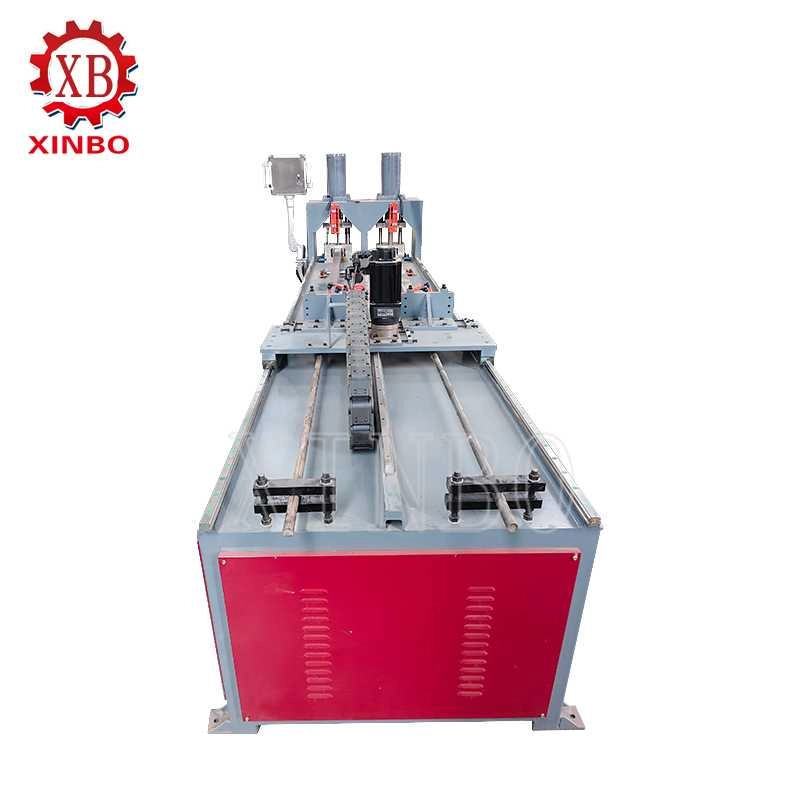
The pictured machine has a long support bed, adjustable guides, a central indexing assembly, rear punching stations, and an electrical cabinet.
What Is a Square Tube Punching Machine?
A square tube punching machine uses a punch and matched die to shear an opening through hollow tubing. A power press moves the punch through the workpiece while the lower die supports the material around the cutting area.
How Does the Punch-and-Die Process Work?
The feeding unit moves the tube to a defined position, and the fixture controls sideways movement, rotation, and lifting. The punching head drives the punch into the tube wall, separates the slug, and retracts before the next movement.
External guides, clamps, shaped dies, or internal supports can limit wall collapse when the workpiece has thin walls, large holes, or short edge distances.
How Does an Automatic Square Tube Punching Machine Work?
An automatic system combines tube support, programmed indexing, workpiece clamping, and repeated punching.
Automatic Feeding Controls Hole Position
The operator enters the first-hole position, hole pitch, and hole quantity when the controller supports those functions. The feeding mechanism then advances the tube by the specified distance between punching strokes.
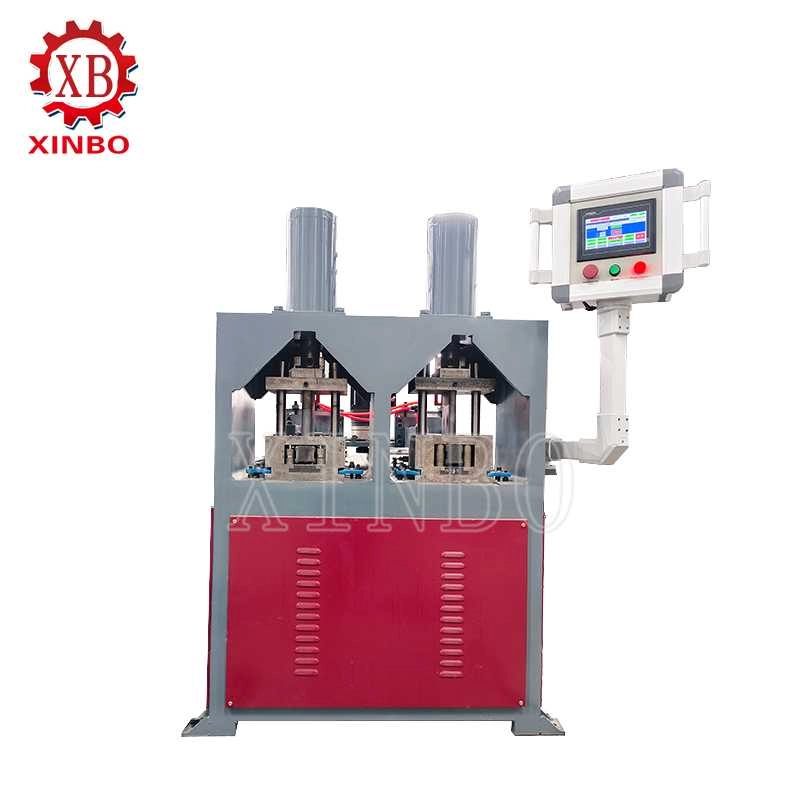
The pictured long bed supports extended workpieces and helps the tube remain aligned. The clamps stabilize the workpiece before each punching cycle.
Key Features of a Square Tube Hole Punching Machine
Long-Bed Feeding, Guides, and Clamps
The long bed supports the square tube during processing. Adjustable guides accommodate approved tube widths, while correctly designed clamps maintain the positioning datum without causing unacceptable surface marks.
The feeding unit should control individual hole pitch and accumulated error across a long pattern. The supplier should state a verified positioning tolerance instead of using a general accuracy claim.
Multiple Stations, Tooling, and Controls
Matched punches and dies can produce round, square, rectangular, or slotted openings. Each tool set must match the material, wall thickness, hole geometry, and available punching force.
A multi-station layout can reduce workpiece repositioning or tooling changes. The supplier must confirm whether the punching stations work sequentially, independently, or simultaneously.
What Materials and Holes Can the Machine Process?
A configured machine may process carbon steel, stainless steel, aluminum, or coated tubing. Each material changes the required force, tool clearance, workpiece support, and clamping method.
Research shows that material type, thickness, punching speed, hole size, and die clearance can influence hole dimensions and burr formation.
Capacity and Hole Configuration
The machine specification should state the approved tube-width range, wall-thickness range, input length, feeding length, maximum hole size, and supported material grades.
The buyer should provide the hole shape, pitch, first-hole position, end distance, processed face, and weld-seam location. The tooling layout determines whether the machine can complete single-face, opposite-face, or adjacent-face punching.
What Determines Hole Accuracy and Edge Quality?
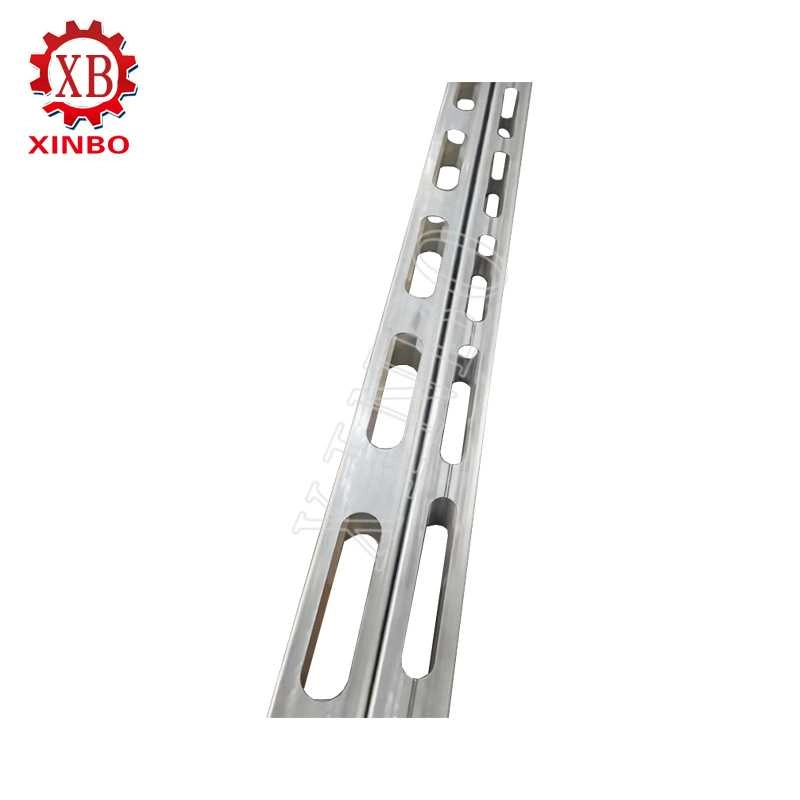
The machine frame and feeding system influence repeatability, but the final hole also depends on the material, tooling, tube support, and production setup.
Die Clearance, Clamping, and Sample Testing
Punch-to-die clearance is the space between the cutting edges of the punch and die. Incorrect clearance can increase burrs, change the cut edge, increase material deformation, or accelerate tool wear.
Reliable clamping prevents the square tube from rotating or shifting. A sample test should check hole size, hole pitch, burrs, wall collapse, surface marks, face orientation, and repeatability.
Common Square Tube Punching Machine Applications
Furniture, Shelving, and Display Frames
Furniture factories use punched square tubes in tables, chairs, beds, cabinets, and modular frames. Rack and display producers use repeated holes for shelf adjustment, brackets, braces, hooks, and bolted connections.
Consistent hole positions allow matching components to align more easily during assembly. Automated punching also reduces the need for workers to mark every hole manually.
Fences, Fitness Equipment, and Support Frames
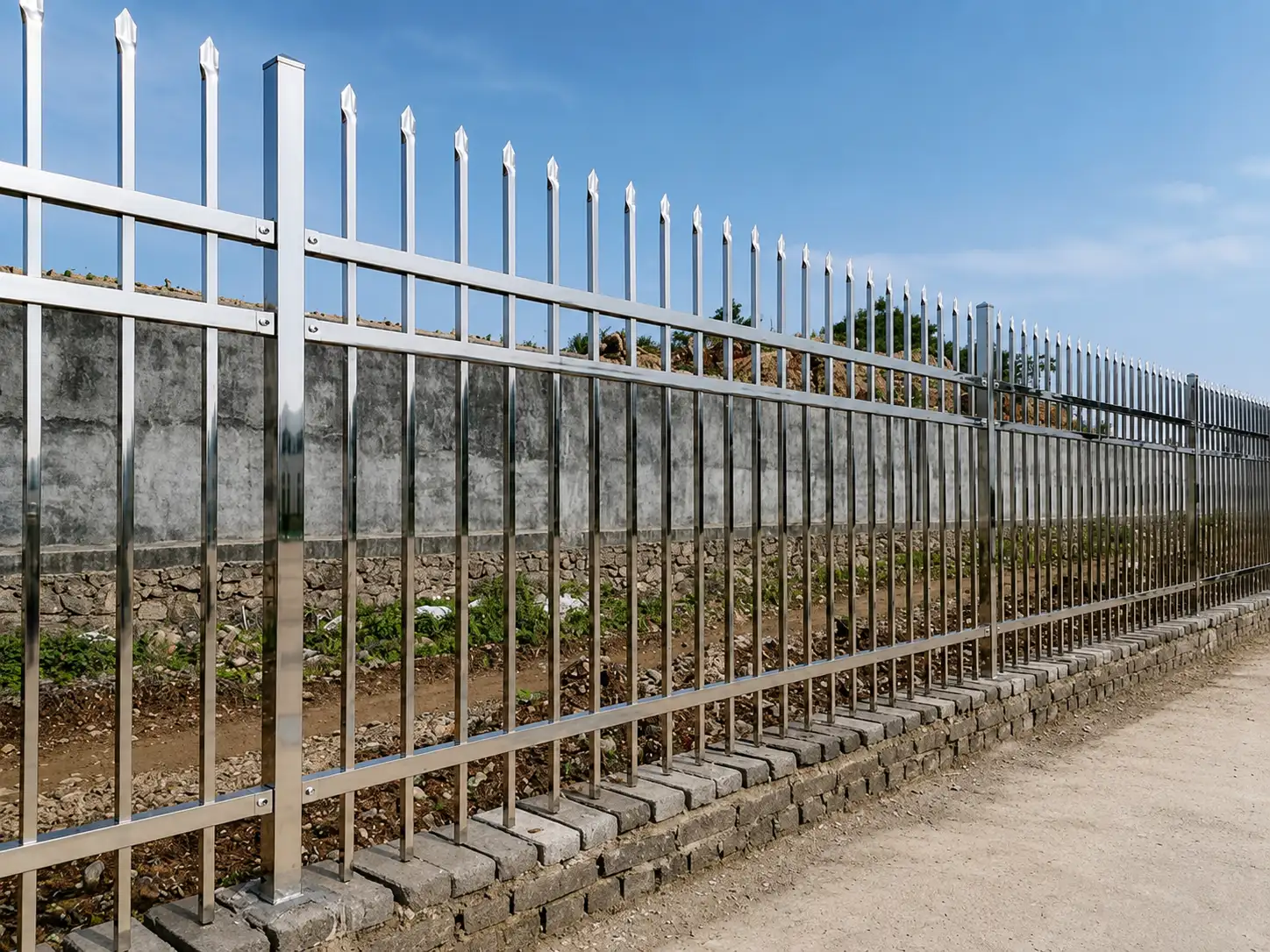
Fence and gate producers use punched holes for rails, hinges, brackets, and frame connections. Fitness-equipment factories use repeated holes for adjustable seats, locking pins, and movable frame sections.
Fabricators also use square tube punching for greenhouse frames, mounting structures, equipment stands, and welded assemblies. Each application requires verification of component strength, hole location, and acceptable deformation.
Benefits of an Automatic Square Tube Punching Machine
Faster Cycles and Consistent Spacing
Programmed indexing can replace repeated marking, measuring, clamping, and manual repositioning. One loading operation can therefore support several holes along the same square tube.
Controlled feeding can improve spacing consistency across a production batch. Proper clamping, calibrated movement, and suitable tooling remain necessary for reliable results.
Lower Unit Cost and Flexible Production
Reduced handling can lower the cost per accepted part in medium- or high-volume production. Buyers should calculate cycle time, direct labor, tooling allocation, scrap, and rework instead of relying on unsupported savings claims.
Replaceable tooling can support several hole shapes within the machine’s capacity. A multi-station configuration may also reduce changeovers when recurring products require different openings.
How Does Punching Compare with Other Hole-Making Methods?
Punching often suits stable hole patterns and repeated production because one stroke removes the slug. Drilling can remain practical for prototypes, low quantities, or simple round holes that do not justify dedicated punching dies.
Laser cutting offers flexibility for complex contours and frequently changing profiles. However, laser cutting is a thermal process that introduces heat into the cutting area, while punching relies on mechanical shearing.
The best process depends on the part geometry, order volume, tooling cost, edge-quality requirements, and expected changeover frequency.
How Should a Buyer Choose the Right Machine?
The buyer should select the machine around the finished component rather than a generic equipment name. A complete request for quotation should include:
- The buyer should provide the tube size, wall thickness, length, material, and surface condition.
- The buyer should provide the hole drawing, tolerances, pitch, processed faces, and weld-seam position.
- The buyer should state the required output, batch size, product variations, and automation level.
- The buyer should confirm the voltage, installation space, loading method, and safety requirements.
- The buyer should request a sample test, tooling list, measured results, and specification sheet.
The punching point creates a serious hazard because the punch, die, clamps, and feeding components move with high force. Applicable safeguards should prevent operators from accessing the danger zone during the machine cycle.
FAQ (questions fréquentes)
Can One Machine Punch Different Tube Sizes?
One machine can process different sizes when its guides, clamps, tooling, punching force, and feeding system cover the required range. Each tube-size change may require fixture adjustment or another die set.
Can the Machine Produce Round, Square, and Slotted Holes?
The machine can produce different hole shapes when compatible punches and dies are available. Every opening must remain within the approved tooling and machine capacity.
What Determines the Machine Price?
The machine price depends on punching force, feeding length, station quantity, automation level, control functions, tooling, tube capacity, safety configuration, and customization requirements.
Request a Custom Square Tube Punching Solution from XINBO
XINBO provides customized square tube punching machine solutions for manufacturers that require stable feeding, accurate hole positioning, flexible tooling, and efficient batch production. The engineering team can evaluate your tube dimensions, material grade, wall thickness, tube length, hole shape, hole spacing, processing sides, production capacity, and factory power supply before recommending a suitable machine configuration. XINBO can also assist with technical drawings, punching die selection, sample testing, production inspection, shipment coordination, installation guidance, and after-sales support.
To receive a more accurate proposal, please prepare your square tube drawing, hole layout, required tolerances, expected daily output, and any special automation requirements. Click the XINBO Contact Us page to send your project details and request a tailored machine recommendation, sample punching plan, and quotation.
Articles connexes
+

Bonne qualité
XinBo machine faisant CO. LTD est un fabricant professionnel et exportateur dans la machine de formation de rouleau,
Voir plus→


 French
  English
  Spanish
  Portuguese
  Arabic
  Russian
  Dutch
Dutch  Turkish
  Swahili
  Serbian
  Romanian