Espanhol
 Rússia

C Purlin vs Z Purlin for Manufacturers and Roll Forming Buyers
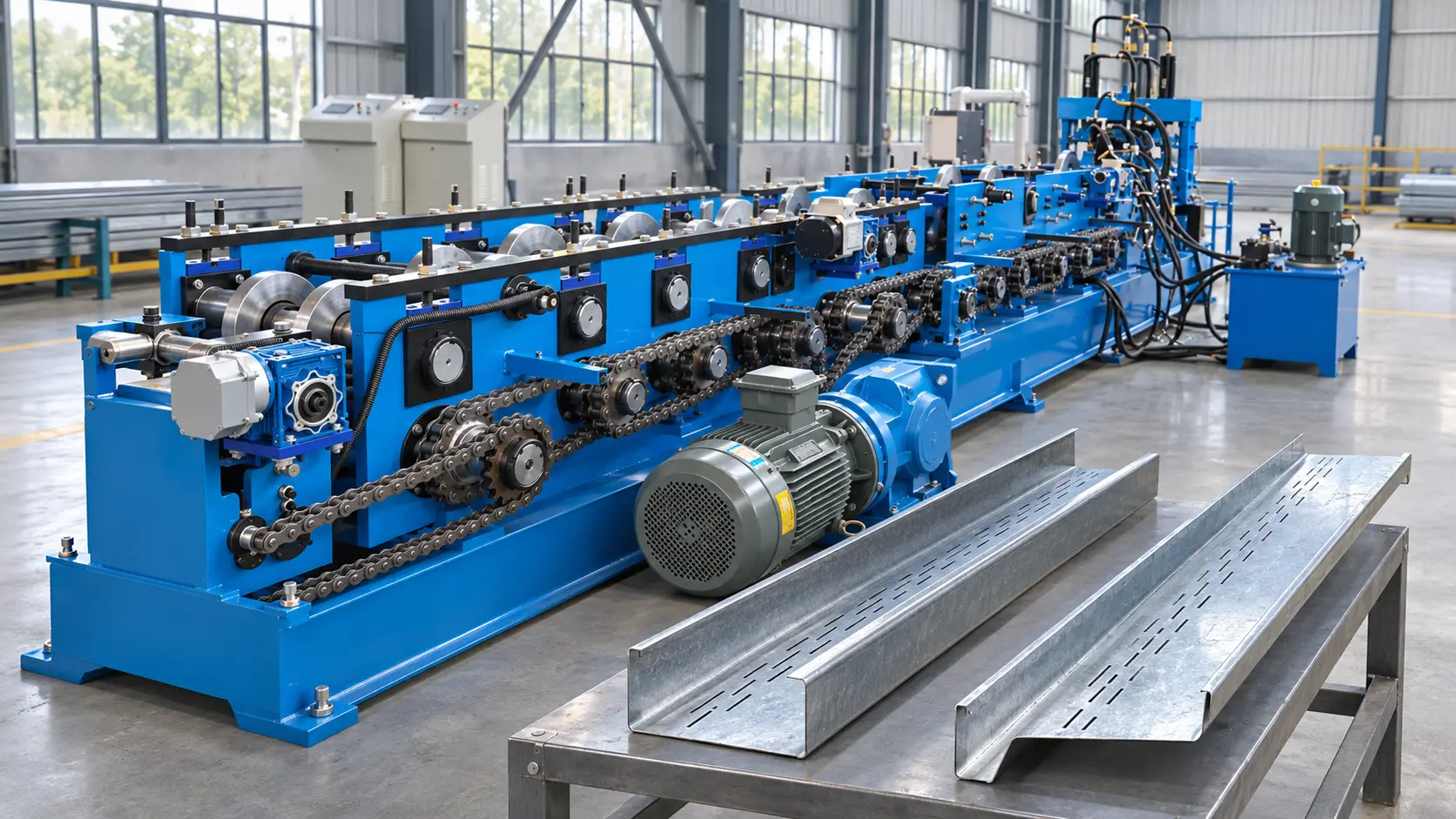
For manufacturers, the C purlin vs Z purlin comparison starts with flange direction. A C section has both flanges facing the same way, while a Z section has flanges facing in opposite directions. That geometry affects lapping, nesting, punching datums, stacking and roll forming changeover. Structural selection still belongs to the project engineer, but manufacturers need to understand how the chosen profile changes the production line.
The Basic Geometry Difference
C and Z purlins are both cold formed open sections used in secondary framing. The broader functions and material options are covered in this introduction to purlins. For manufacturing, the main distinction is how each profile is oriented and connected after it leaves the line.
|
Decision point |
C purlin |
Z purlin |
|
Flange direction |
Both flanges face the same direction |
Flanges face opposite directions |
|
Typical continuity |
Often used as a simple individual member |
Can be designed to lap at supports |
|
Production datum |
One consistent open side is easy to identify |
Asymmetry requires clear orientation control |
|
Stacking |
Sections can nest when oriented consistently |
Nesting depends on flange and lip geometry |
|
Changeover |
Dedicated tooling is straightforward |
Combined lines need controlled C to Z adjustment |
Lapping and Nesting Change the Production Task
The opposing flanges of a Z section allow adjacent members to overlap when the structural design calls for continuity. The lap length, bolt pattern and orientation are engineering decisions, not generic properties that a machine supplier should assume. Once approved, however, they directly affect part length and punching. A production schedule may require different end patterns for interior laps, end bays and special connections.
C sections are often simpler to identify because the open side remains consistent. They may suit individual members, end wall framing or applications where lapping is not required. That does not make one section universally stronger or more economical. Capacity depends on the complete dimensions, thickness, steel grade, bracing, connections and project loads.
How C and Z Geometry Affects Roll Forming
A roll forming line must guide the strip through a stable sequence while controlling the web, flanges and lips. For C sections, the tooling forms both flanges toward the same side. For Z sections, the opposing geometry changes roll positions and the way the strip is supported. An interchangeable line therefore needs a defined method for moving or switching the relevant tooling rather than relying on an informal operator adjustment.
Thickness and yield strength remain important for both profiles. A shape that forms correctly in one material may show different springback in a stronger grade. The machine quotation should cover the complete material range and every required section, including unequal flanges or lips if they appear in the product program. General process background is available in the guide to accurate purlin forming.
Punching Datums and Part Orientation
Hole drawings should identify a physical datum rather than rely only on left and right. On a C section, the open side, outside web face or leading end can provide a clear reference. On a Z section, the drawing must also define flange direction and whether the part is viewed from the entry or exit end. Without that convention, a correct numerical pitch can still produce a mirrored part.
Each part number should connect profile orientation, length and hole pattern. The list should include hole and slot sizes, end distances, pitch, web or flange location and any pattern that changes between laps and end connections. During acceptance testing, the inspection report should record the same datum system used on the drawing.
Dedicated Lines and Automatic C Z Changeover
A dedicated line can be appropriate when a plant produces one stable profile family at high volume. A combined C/Z line can be more useful when orders change between both shapes and the available profile range is known. The business case depends on order mix, batch size, setup labor, required output and the risk of setup errors. Buyers should compare total changeover time and repeatability, not the adjustment method alone.
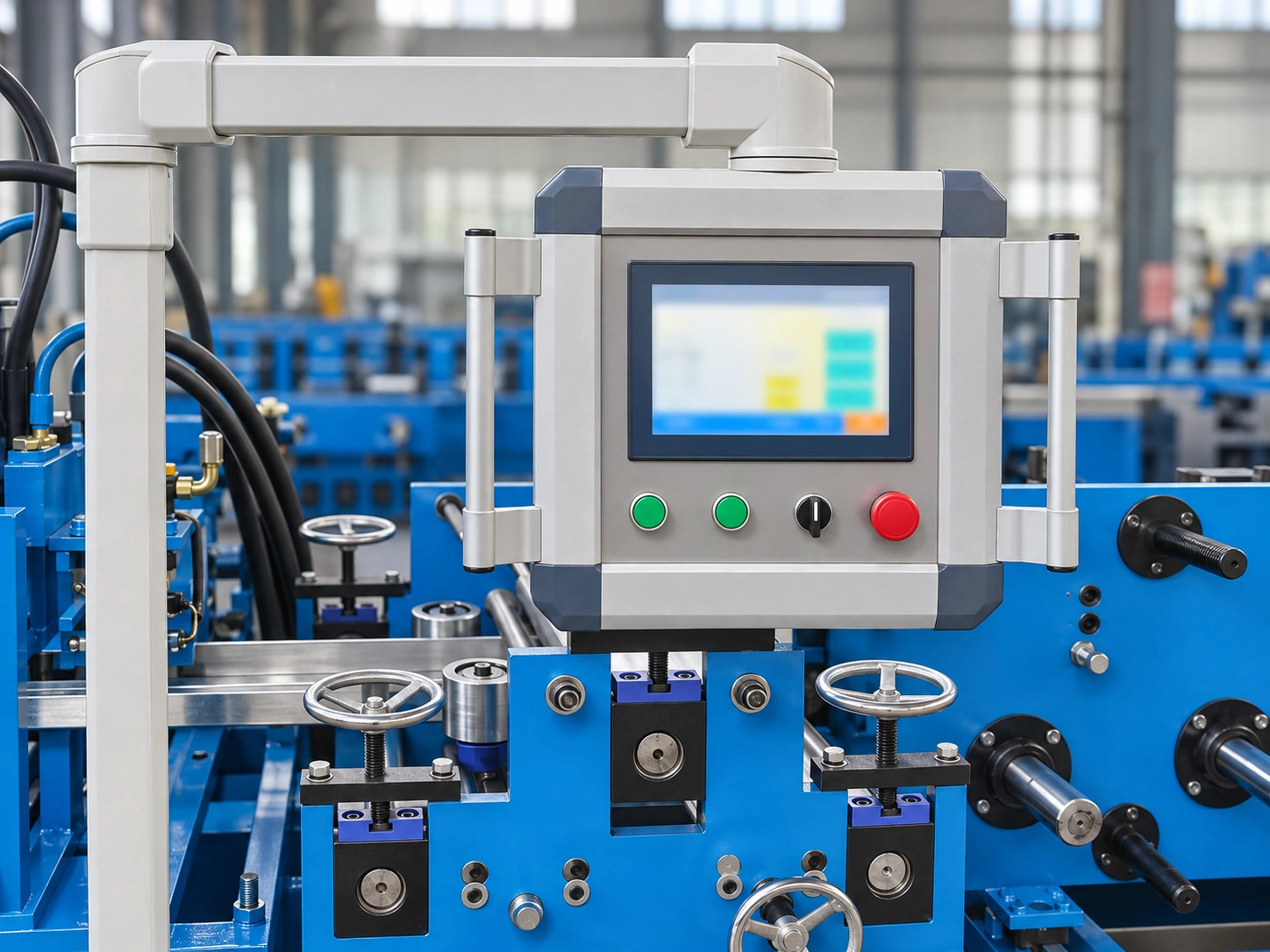
Xinbo presents an automatic interchangeable C Z purlin roll forming machine for buyers who need both profiles on one line. The profile drawings, material range and punching requirements should still be reviewed before the configuration is accepted. A separate overview of automatic adjustable C Z production explains the one line concept in more detail.
Cutoff Stacking and Packaging Differences
Cutoff tooling has to support the actual profile without crushing the lips or leaving unacceptable end distortion. A universal statement about pre cut or post cut performance is not enough; the supplier should test the required section and material. If C and Z profiles use different cutoff positions or blade arrangements, that change belongs in the setup procedure.
Finished sections also need a practical discharge and bundling plan. C profiles may nest efficiently when their open sides are aligned. Z profiles can also be arranged compactly, but unequal flanges, lips and hole projections may affect bundle orientation. Part identification is important when similar lengths carry different mirrored or lap hole patterns.
What to Include in a C Z Machine RFQ
- Dimensioned C and Z cross sections with drawing revision numbers
- Minimum and maximum thickness plus steel grade and yield strength
- Part lengths quantities and required production speed
- Punching drawings with datums orientation and pattern families
- Changeover target based on actual batch sizes and staffing
- Inspection tolerances sample plan and factory acceptance criteria
A buyer can then compare the proposed line against the real production mix. Xinbo’s Z purlin machine buyer guide provides additional procurement questions, but the final decision should be tied to approved drawings and representative samples.
How to Test Both Profiles Before Shipment
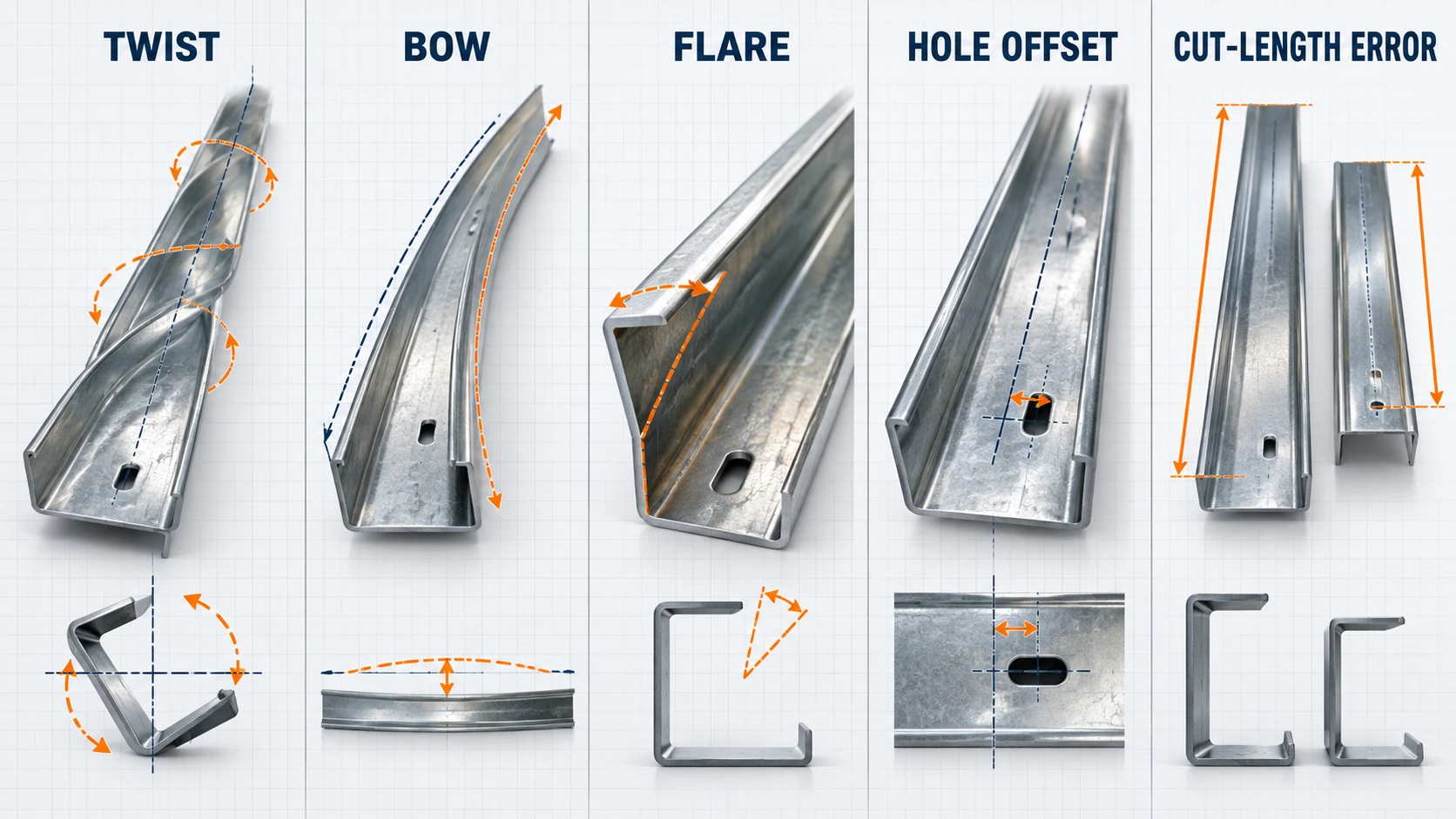
Factory acceptance should include representative C and Z profiles, not one easy setup. Test a useful combination of minimum and maximum sizes, thicknesses and material strengths. Run the punching patterns that are most sensitive to orientation, then measure the cross section, hole locations, cut length, twist and bow with agreed methods. Repeat a changeover to confirm that the approved recipe can reproduce the result.
The accepted samples and inspection records should identify the drawing revision, coil material and machine settings. This creates a reference for installation and future troubleshooting. If production requirements later move outside the accepted range, the new section should be reviewed instead of assuming that a similar profile will run without changes.
Conclusão
The C purlin vs Z purlin decision affects more than structural geometry. It changes lapping, orientation, hole datums, tooling adjustment, discharge and packaging. Manufacturers should obtain the engineered profiles first, then specify the machine around the complete production range. Xinbo can review those inputs against available purlin roll forming solutions and identify which details require configuration confirmation.
Frequently Asked Questions
What is the main difference between C and Z purlins? C purlin flanges face the same direction. Z purlin flanges face opposite directions, which can allow engineered lapping at supports.
Can one roll forming machine produce both shapes? An interchangeable line may produce both when the required profiles, materials, punching and cutoff fall within its verified configuration range.
Why does a Z purlin drawing need an orientation datum? Its opposing flanges make mirrored interpretation possible. A clear datum prevents holes and end patterns from being produced on the wrong side.
Which profile is better for a building? There is no universal answer. A qualified engineer should select the section from project loads, spans, bracing, connections and applicable codes.
For a configuration review, send both profile drawings, material specifications, thickness range, hole layouts, lengths, tolerances, batch sizes and target output. These documents allow the changeover, punching, cutoff and inspection plan to be checked before quotation.
Postos relacionados

Boa qualidade
A máquina XinBo que faz CO. LTD é um fabricante profissional e exportador em máquina de formação de rolos,
Vê mais→


 Portuguese
 English
 Spanish
 Arabic
 Russian
 French
 Dutch
 Turkish
 Swahili
 Serbian
 Romanian