spaniolă
 Rusia

How to Read C Purlin Sizes and Specify a Roll Forming Machine
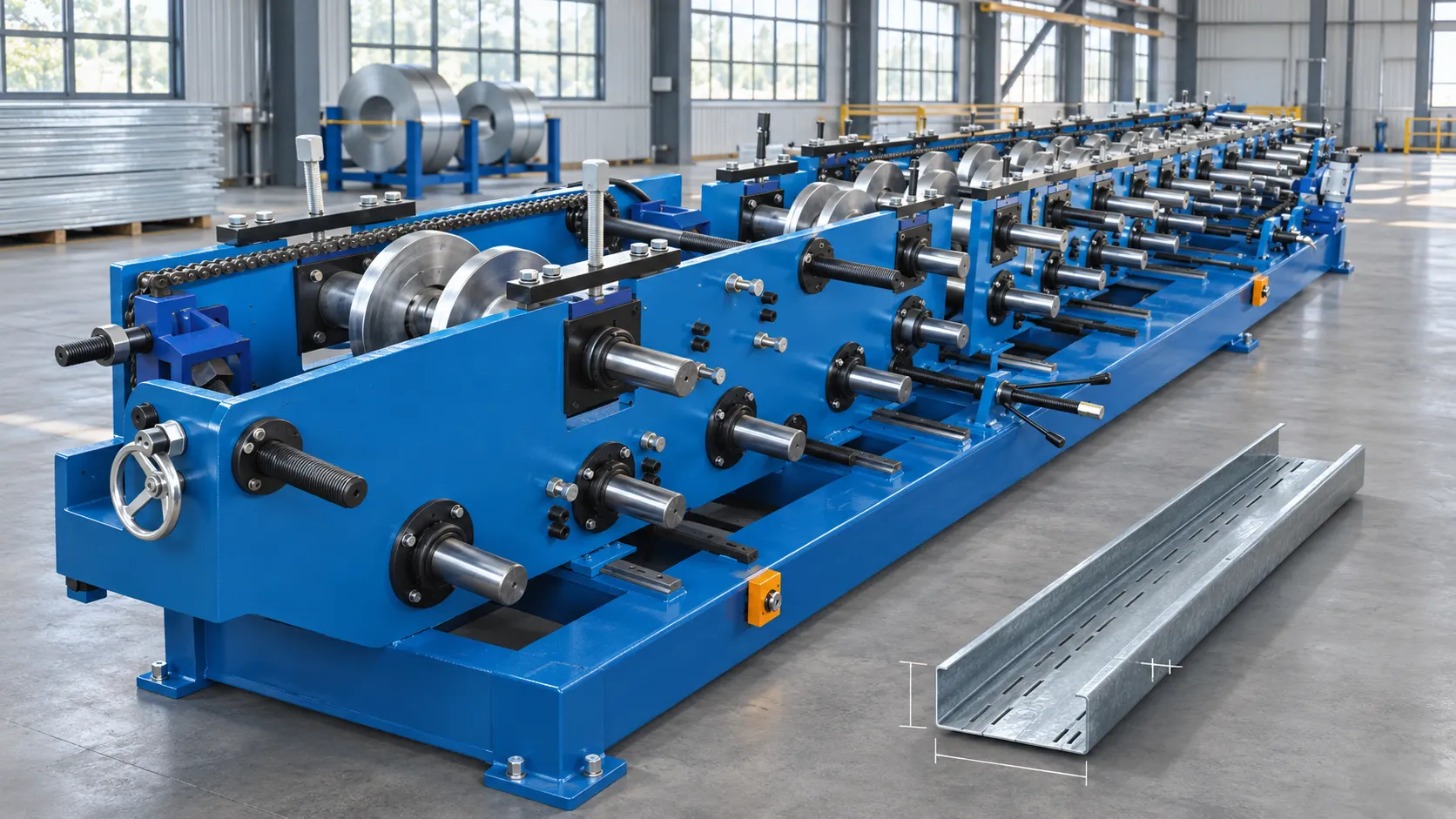
C purlin sizes describe more than a single web depth. A usable manufacturing specification identifies the web, both flanges, both lips, material thickness, finished length, bend radii, hole pattern and tolerances. Buyers should translate those values into a complete profile drawing before selecting a roll forming line. That step prevents a machine quotation from being based on an incomplete size name and makes sample approval more objective.
What a C Purlin Size Describes
The letters and numbers used for C purlin sizes vary by market and supplier. The safest reference is a dimensioned cross section. C purlin dimensions should be shown from a defined datum rather than inferred from a product name. Readers who need the broader construction context can first review what purlins do in roof framing. For equipment selection, the drawing should identify each dimension separately.
|
Profile item |
What it means |
Why the machine supplier needs it |
|
Web depth |
The vertical face of the C section |
Sets the main adjustable profile range |
|
Flange width |
The top and bottom horizontal legs |
Affects roll position and cross section geometry |
|
Lip length |
The short return at each flange edge |
Affects edge forming and tooling clearance |
|
Grosimea |
The nominal sheet thickness |
Influences tooling, drive load and springback |
|
Length |
The finished part length |
Defines measuring and cutoff requirements |
Why Standard C Purlin Sizes Are Not Universal
A label such as C150 does not always describe the complete section. It may indicate a nominal web depth while leaving the flange, lip, thickness and inside radius unspecified. Inch based markets may use a depth and gauge description, while metric markets often use a sequence of dimensions. Stock sizes also reflect local building practice and the catalog of an individual steel supplier. A buyer should therefore treat a C purlin size chart as a starting point, not as a machine specification.
The same caution applies to thickness. Gauge numbers do not convert to one universal millimeter value across all materials and conventions. State the nominal thickness in millimeters or inches, identify the steel grade or minimum yield strength, and confirm whether a coating is included in the stated thickness. These details influence forming behavior even when the finished profile dimensions are unchanged.
How to Read Common Profile Notation
An expression such as C150 x 60 x 20 x 2.0 may be used to describe a 150 mm web, 60 mm flanges, 20 mm lips and 2.0 mm nominal thickness. This example is illustrative, because the order and meaning must be confirmed on the drawing. A complete drawing should also show whether the two flanges and lips are equal, the direction from which dimensions are measured, the bend radii and the applicable tolerances.
Finished length belongs in the part schedule rather than the cross section alone. The schedule should connect each length with its hole pattern, quantity and identification mark. If several profiles share one production line, list every required combination. The machine supplier can then check the full operating envelope rather than one representative section.
How Profile Dimensions Affect the Roll Forming Line
Roll forming changes the strip gradually through multiple stations. Web, flange, lip, thickness and material strength affect how the roll tooling must guide and bend the strip. The general sequence is explained in how a purlin machine forms the profile, but a specific line still has to be matched to the buyer’s profile family.
A wider adjustment range can reduce the need for separate machines, but adjustability does not remove every tooling boundary. The supplier should verify the minimum and maximum web, flange and lip dimensions together with the complete thickness and yield strength range. Punching position, cutoff geometry and straightening also have to remain valid at the extremes of that range.
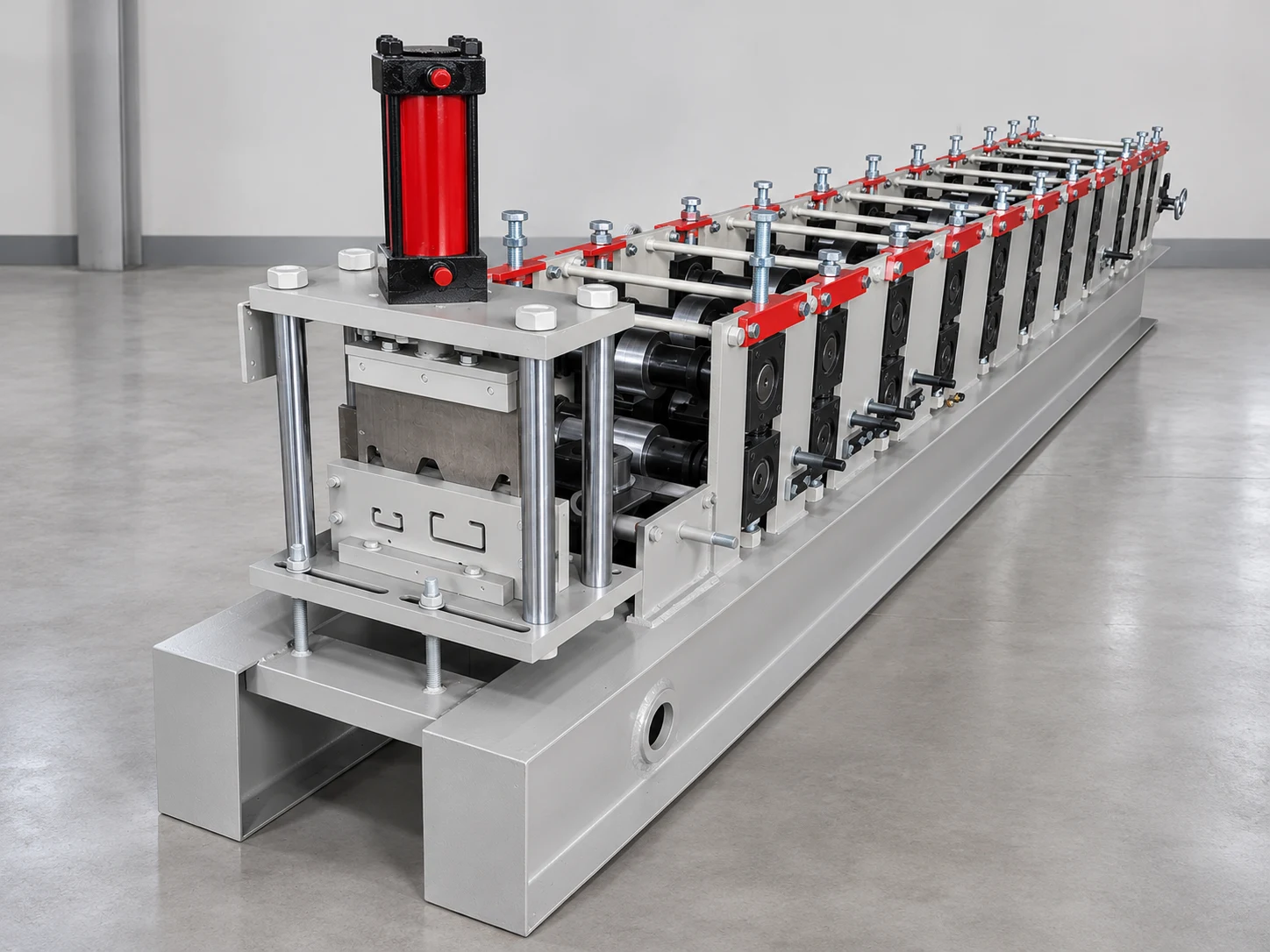
For a product family that includes both C and Z sections, Xinbo offers an automatic interchangeable C Z purlin roll forming machine that may reduce manual setup. The exact changeover method and compatible profile range should be confirmed against the drawing. Buyers who also need U channels can review the separate C Z U channel purlin roll forming machine as another configuration reference.
Which Drawing Details Control Machine Design
A useful request for quotation includes more than the cross section. It should give the material specification, minimum yield strength, coating, thickness range, finished lengths, annual or shift volume, acceptable length tolerance and required line speed. If holes or slots are needed, provide a separate punching drawing with the datum edge, hole size, pitch, end distances and pattern changes by part number.
The drawing should distinguish critical dimensions from reference dimensions. It should also state how the part will be inspected. For example, web depth, flange width, lip angle, twist, bow and cut length may require different gauges and sampling methods. An agreed inspection method makes factory acceptance testing more useful than a general statement that the profile must look correct.
How to Separate Structural Selection From Machine Specification
A roll forming machine can reproduce an approved section, but it does not determine whether that section is suitable for a building. Span, spacing, wind, snow, connection design, corrosion exposure and the applicable code belong to structural design. A qualified engineer should approve the profile and material before the equipment order is finalized. The machine specification should then focus on producing that approved design consistently.
This separation is especially important when a size table is found online. A published depth or thickness may describe one supplier’s stock range, not a safe substitute for project calculations. It can still help a manufacturer define a commercial product family, but structural capacity must come from verified section properties and project specific design.
How to Validate a New Profile Before Production
- Freeze the revision of the cross section and punching drawings used for the order.
- Run samples at representative minimum and maximum sizes and thicknesses.
- Measure the agreed critical dimensions, holes, straightness and cut length.
- Record the setup or recipe so the approved result can be reproduced.
- Retain a signed sample or inspection report as the production reference.
Testing only the easiest profile can hide problems at the limits of the range. Representative samples should include the combinations most likely to challenge forming, punching or cutoff. Material supplied for the test should match the agreed grade and thickness closely enough to make the result meaningful.
Concluzie
C purlin sizes become useful for equipment procurement only when the labels are converted into controlled drawings and production requirements. Define the full profile family, material, holes, lengths and inspection method before comparing machines. Xinbo can use that information to check whether existing Xinbo roll forming equipment fits the application or whether the configuration needs to be adjusted.
Frequently Asked Questions
What dimensions define a C purlin? The main dimensions are web depth, flange width, lip length, material thickness and finished length. Bend radii, angles, tolerances and holes should also appear on the manufacturing drawing.
Is C150 a complete machine specification? No. It may describe nominal web depth, but the flange, lip, thickness, radius, material and tolerances still need confirmation.
Can one machine make several C purlin sizes? An adjustable line may cover multiple sizes, subject to its verified web, flange, lip, thickness, material and tooling limits.
What should be sent with an RFQ? Send profile and punching drawings, material grade, thickness range, lengths, tolerances, required speed, quantities and the expected changeover method.
To request a fit check, provide the latest profile drawing, hole layout, material specification, thickness range, finished lengths and expected output. These inputs allow the machine configuration and sample test plan to be reviewed against the actual production task.
Posturi legate

Bună calitate
XinBo mașină de fabricare CO. LTD este un producător profesionist și exportator în rula de formare mașină,
Vezi mai multe→


 Romanian
 English
 Spanish
 Portuguese
 Arabic
 Russian
 French
 Dutch
 Turkish
 Swahili
 Serbian