Испанский
 Россия
How a Hydraulic Roof Sheet Curving Machine Creates Large-Span Arch Buildings
A large-span arch building depends on accurately curved roof panels that can connect into a stable, continuous shell. A hydraulic roof sheet curving machine helps manufacturers produce these panels by bending preformed PPGI and galvanized steel sheets in controlled directions. Instead of relying on manual adjustment or separate bending operations, the machine applies hydraulic force through adjustable rollers to create consistent roof-panel curvature.
For contractors, steel-building manufacturers, and metal-forming businesses, understanding how this process works is important before selecting equipment. The right machine must match the required panel profile, material, arch radius, production method, and building application.
What Is a Hydraulic Roof Sheet Curving Machine?
The basic forming process
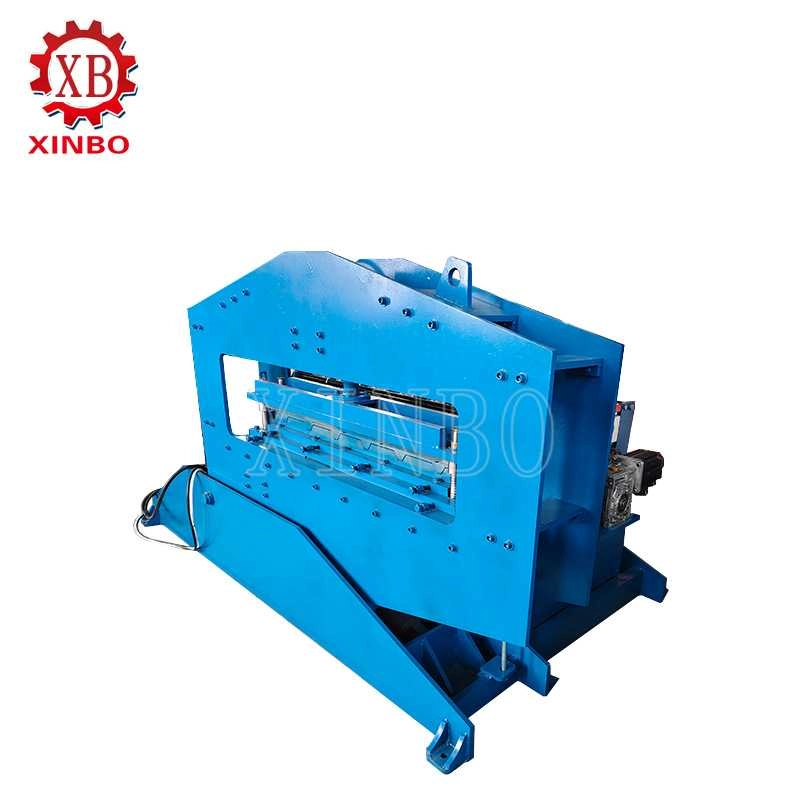
A hydraulic roof sheet curving machine is designed to curve preformed metal roof panels after the panels have been produced by a roll-forming line. The roofing sheet enters the forming section, where rollers guide and bend the panel progressively. Hydraulic power supplies the force required for the operation.
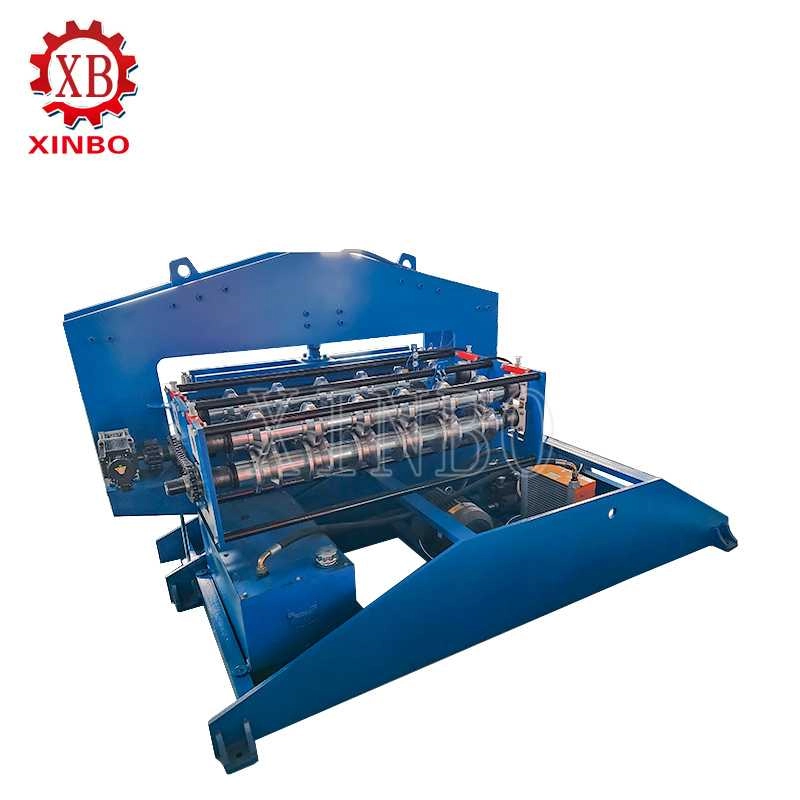
The term “two-way” or “vertical-horizontal” refers to the machine’s ability to perform bending in more than one direction. This configuration is useful when a project requires a complete arch rather than a simple one-direction curve.
The machine does not construct the entire building by itself. Its role is to create the curved roof panels used in the building assembly. The final structure still depends on panel connections, foundation design, installation procedures, sealing, and structural engineering.
Why hydraulic force matters
Hydraulic operation can provide controlled and consistent pressure across the panel. This is especially important when working with coated steel sheets, because excessive or uneven pressure may cause deformation, visible marks, or coating damage.
The forming result depends on several factors, including:
- Sheet thickness and material grade
- Panel profile and width
- Required arch radius
- Roller adjustment
- Hydraulic pressure
- Feeding alignment
- Operator settings
These factors should be confirmed before ordering a machine. A configuration suitable for one roof profile may not be appropriate for another.
How the Machine Supports Large-Span Arch Buildings
Producing curved panels for self-supporting shells
Large-span arch buildings commonly use curved panels that interlock or connect to form a continuous roof shell. In some designs, the curved panels provide both roofing coverage and part of the building envelope. This can reduce the need for conventional internal beams or trusses, depending on the engineering system and project design.
The roof sheet curving machine supports this process by converting flat or preformed panels into the required arch shape. Accurate curvature helps panels align during installation and supports a more uniform appearance across the roof.
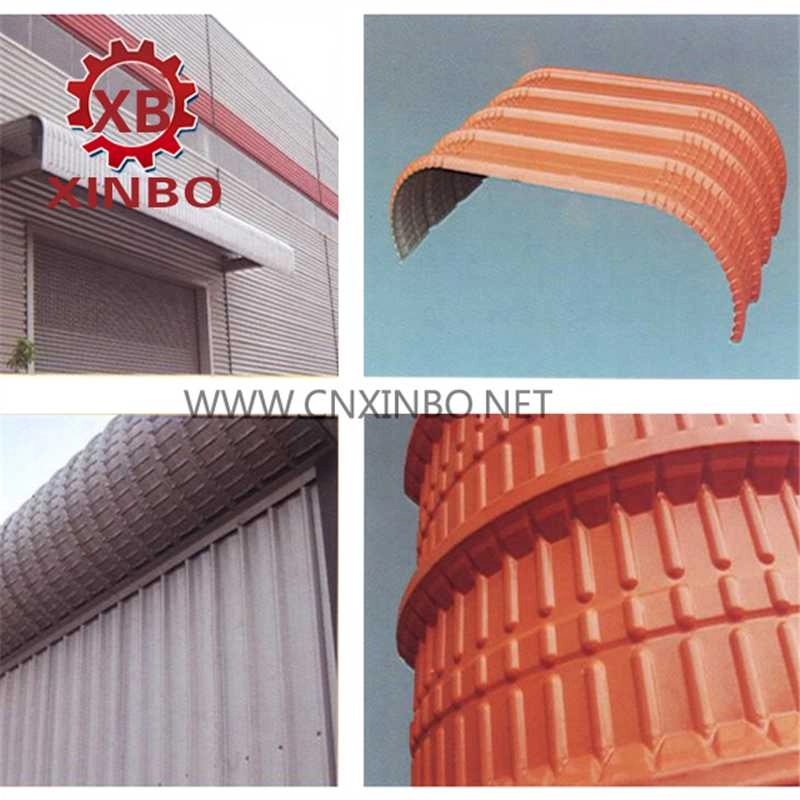
The official XINBO product description associates this type of equipment with large-span beamless steel arch buildings in the range of approximately 30–40 meters. Actual span capacity must be verified against the selected machine configuration, panel specification, structural design, and local engineering requirements.
Maintaining continuity across the roof
A large arch roof is made from many connected panels or panel sections. If the curvature varies significantly from one panel to another, installers may face alignment problems at the seams. Uneven curvature can also increase adjustment work on site.
A controlled bending process helps manufacturers maintain a repeatable radius. However, repeatability is not determined by the machine alone. Material consistency, roller setup, feeding speed, maintenance, and operator training also influence the finished panel.
For this reason, buyers should evaluate sample production before approving a machine for a large project.
The Role of Vertical and Horizontal Bending
Matching the building’s required geometry
Different arch-building designs may require different forming directions or curvature patterns. A vertical-horizontal machine gives the operator more flexibility than equipment limited to a single bending direction.
Adjustable rollers allow the forming setup to be adapted to project requirements. The exact adjustment range, compatible profiles, and achievable radii should be confirmed in the technical quotation rather than assumed from the general machine name.
For manufacturers handling different customers or building sizes, this flexibility may be useful. It can support a broader product offering, provided that the machine is correctly configured for the materials and profiles being processed.
Protecting coated steel surfaces
PPGI and galvanized sheets are often selected for their corrosion-resistant surface treatment and finished appearance. During bending, the forming system must apply pressure in a way that limits scratching, marking, or excessive distortion.
The XINBO product page describes adjustable rollers and a forming process intended to create smooth arches without damaging the coating. Buyers should still request details about roller materials, adjustment procedures, testing methods, and the types of coated sheets used during commissioning.
Surface protection is not only an aesthetic issue. Damage to the coating may affect downstream quality control, customer acceptance, and the handling requirements for finished panels.
Important Machine Features for Buyers
Hydraulic system and control
A hydraulic system should deliver stable force throughout the bending process. Buyers should ask how pressure is adjusted, how the system is maintained, and which components require regular inspection.
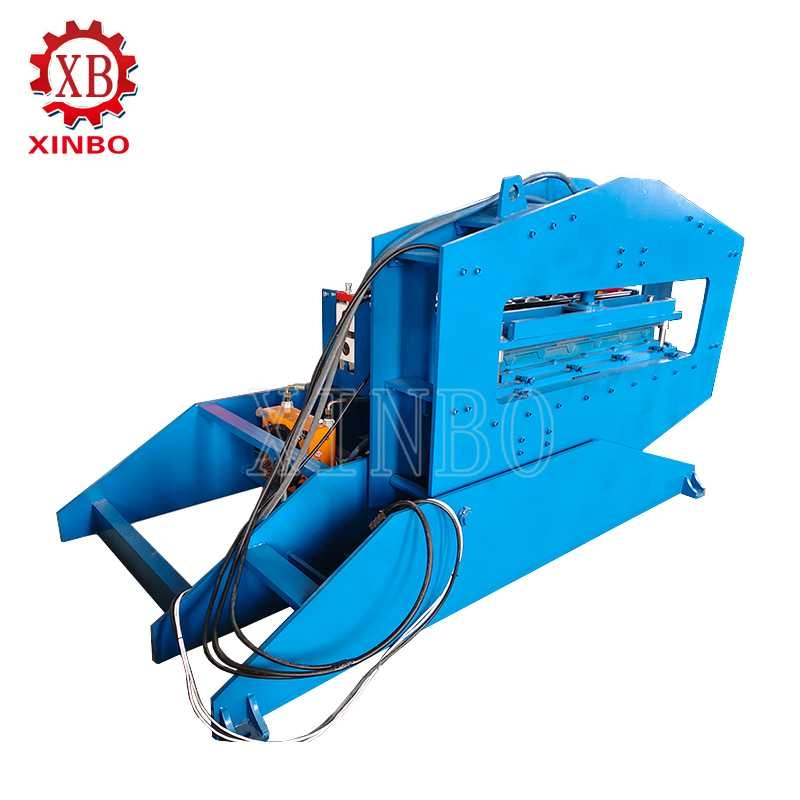
A PLC control system can help operators manage machine actions through a defined control process. The practical value depends on the control functions provided, such as parameter adjustment, operating sequence, emergency controls, and fault indications.
The control interface should be evaluated by the actual operators who will use the machine. Clear controls can reduce setup errors, but they do not replace training or process documentation.
Roller adjustment and radius control
Roller adjustment is one of the most important areas to review. The equipment should be matched to the panel profile and the required arch geometry. Questions for the supplier include:
- Which roof-panel profiles are compatible?
- What sheet materials and thicknesses can be processed?
- How is the bending radius adjusted?
- Can the machine handle more than one radius?
- What setup information is required before production?
- How is panel alignment maintained during feeding?
A technical drawing or sample panel is often more useful than a general description. It allows the supplier to assess whether the requested configuration is technically suitable.
Production workflow
A roof sheet curving machine is normally part of a broader production process. The workflow may include coil preparation, decoiling, roll forming, cutting, panel inspection, curving, stacking, transport, and installation.
Manufacturers should consider how the machine will connect with existing equipment. Floor space, panel handling, power supply, operator access, and maintenance clearance can affect the installation plan.
В broader metal-forming product range can help buyers compare related forming equipment when planning a complete production line.
Applications for Curved Steel Roof Panels
Warehouses and industrial buildings
Large-span curved roofs can be used for warehouses, workshops, factories, and other industrial structures where open interior space is important. The absence of numerous internal supports may simplify the use of cranes, storage racks, vehicles, or production equipment.
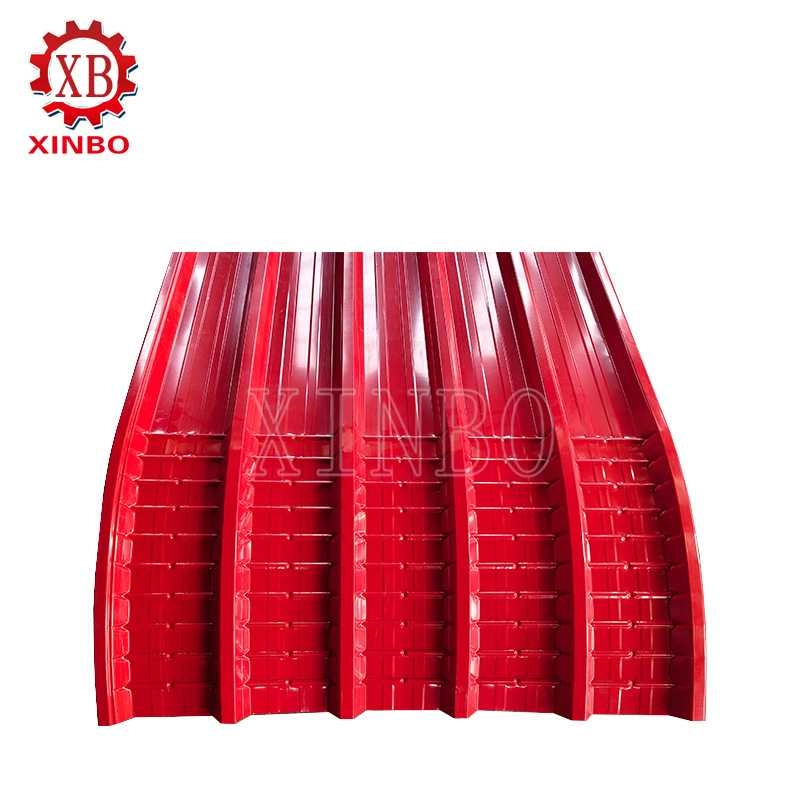
The building design must still account for wind, snow, drainage, insulation, ventilation, fire protection, and local construction requirements. The curving machine only addresses the panel-forming stage.
Agricultural and storage structures
Curved steel panels may also be used for agricultural buildings, storage facilities, and equipment shelters. These applications often require practical weather protection and efficient use of interior space.
Material selection is particularly important in environments exposed to moisture, dust, chemicals, or temperature changes. Buyers should verify whether the selected panel coating and thickness suit the intended service conditions.
Hangars and other open-span spaces
Hangars and similar structures may require wide, unobstructed interiors. A curved-panel production system can support these projects when the building design is based on compatible arch geometry and panel dimensions.
For these applications, manufacturers should review transportation and installation requirements early. Panel length, handling equipment, site access, and lifting procedures may affect the final production plan.
How to Evaluate an Arch Roof Panel Machine Supplier
Verify technical compatibility
Before requesting a final quotation from XINBO, prepare the information needed for a technical assessment. This should include the roof-panel drawing, material type, thickness, panel width, required radius, estimated quantity, and intended building application.
If the project includes multiple panel profiles or arch sizes, list them separately. A supplier can then clarify whether one machine configuration can support the full production range or whether additional tooling or adjustments are required.
The machine product page should be reviewed together with the XINBO company profile so that buyers can understand the supplier’s broader metal-forming capabilities.
Review commissioning and support
A machine purchase involves more than the equipment itself. Buyers should ask about installation guidance, operator training, documentation, troubleshooting procedures, spare parts, and after-sales support.
В XINBO service information provides a useful starting point for reviewing the support process. The final quotation should clearly identify which services are included and which responsibilities remain with the buyer.
It is also advisable to request sample production or a test run using the intended material. This can reveal potential issues with panel alignment, surface marking, radius consistency, or handling before the equipment enters full production.
Estimating the Business Value
The business value of a hydraulic roof sheet curving machine depends on the customer’s project mix and production workflow. A manufacturer can evaluate the investment using practical variables such as:
- Expected monthly panel volume
- Current labor and handling costs
- Outsourcing expenses
- Required panel profiles
- Setup and changeover time
- Material waste
- Installation schedule
- Maintenance and operating costs
A simple comparison between in-house production and outsourced curving can help clarify the purchase decision. The calculation should use actual company data rather than an assumed payback period.
For XINBO customers, the most useful inquiry will include the target application, panel drawings, material details, quantity, and operating conditions. This gives the technical team enough information to recommend a suitable configuration.
Вывод
A hydraulic roof sheet curving machine helps transform preformed steel roof panels into the curved components required for large-span arch buildings. Its hydraulic drive, adjustable rollers, and vertical-horizontal bending capability can support more controlled production of PPGI and galvanized panels.
The machine should be evaluated as part of the complete building and manufacturing process. Panel geometry, material protection, radius control, operator training, structural design, and installation requirements all influence the final result.
If you are planning to produce curved panels for warehouses, factories, hangars, agricultural buildings, or other open-span structures, contact the XINBO technical team with your panel drawing, material specification, required radius, estimated quantity, and project application for a configuration review.
Часто задаваемые вопросы
What does a roof sheet curving machine do?
It bends preformed metal roof panels into curved shapes for applications such as arch roofs and large-span steel buildings.
Can the machine process coated steel sheets?
The product is described for PPGI and galvanized panels. Material thickness, coating, profile, and forming suitability should be confirmed before purchase.
What is the benefit of two-way bending?
Two-way bending allows the machine to form panels in vertical and horizontal directions, which can support more complex arch geometries.
Does the machine build the complete arch structure?
No. It produces curved roof panels. Structural engineering, panel connection, foundation work, sealing, and installation remain separate project activities.
What information should be included in an RFQ?
Provide the panel drawing, material type, thickness, panel width, required radius, quantity, building application, and any existing production-line requirements.
Связанные посты

Хорошее качество
XinBo машина, делающая CO. LTD является профессиональным производителем и экспортером в машине для формирования рулона,
ПРОСМЕТЬ БОЛЬШЕ→


 Russian
  English
  Spanish
  Portuguese
  Arabic
  French
  Dutch
Dutch  Turkish
  Swahili
  Serbian
  Romanian