Kihispania
 Urusi

From Flat Steel Sheet to Embossed Plate How the Metal Embossing Process Works
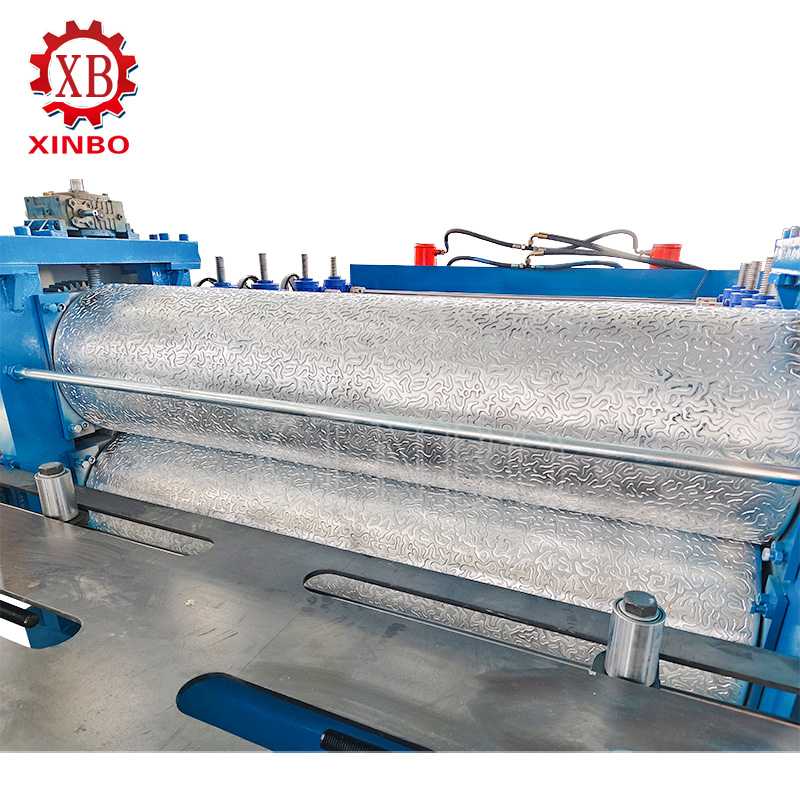
An embossed metal plate begins as a comparatively plain sheet. Its raised and recessed surface appears when the sheet passes through matched or coordinated pattern rollers under controlled pressure. The rollers do not print ink or add a separate coating. They reshape the surface so that the pattern becomes part of the metal itself.
This industrial metal embossing process can produce decorative textures, identification patterns, or a more pronounced surface for traction-oriented applications. The sequence is to guide the sheet, transfer the roller pattern, support the exiting material, and inspect the result. Pattern, material, thickness, and settings must be considered together.
What Industrial Metal Embossing Changes
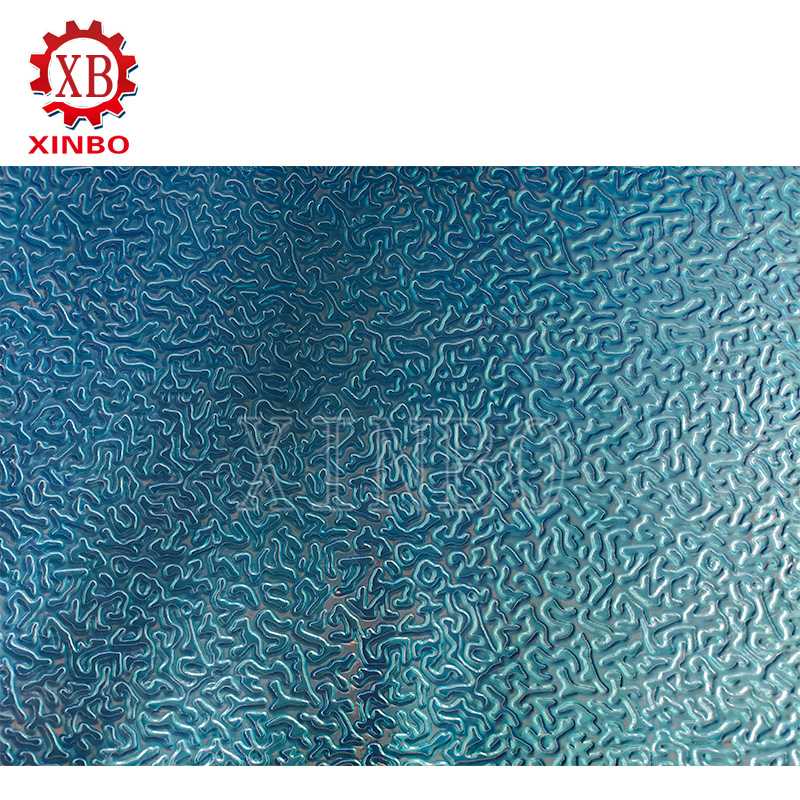
Embossing changes the local surface geometry of sheet or plate. High areas on one roller press the metal into corresponding spaces on the opposing roll, creating a repeating relief as the material advances. Depending on the tool design, the finished sheet may show a clear raised pattern on one face and a related impression on the other.
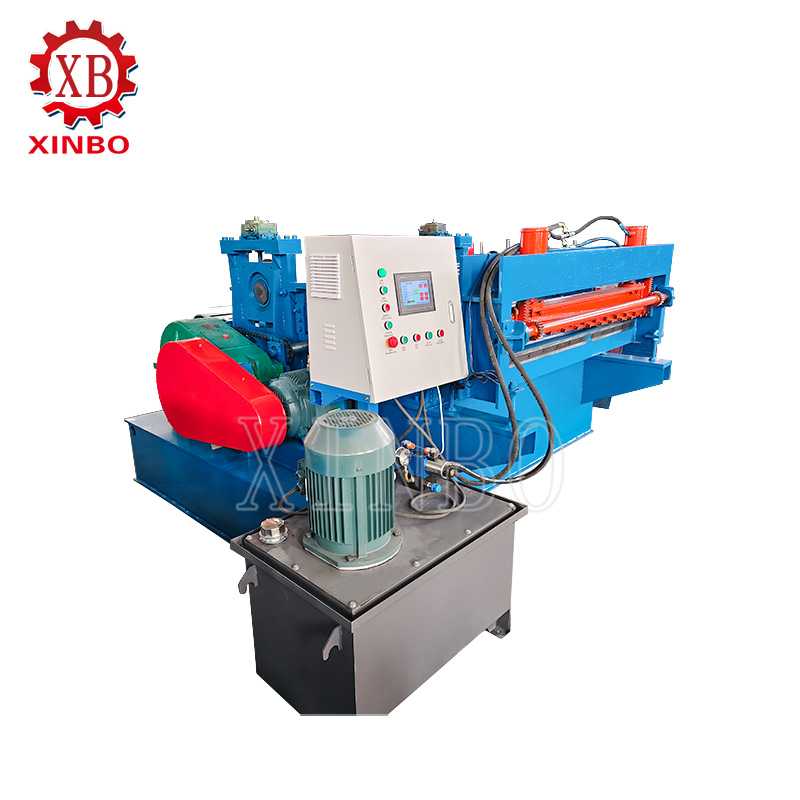
The process does not print a design or cut holes into the sheet. Rotary embossing transfers the pattern continuously across moving material. Xinbo describes its metal embossing machine as equipment for making different logos or pattern types according to customer requirements.
From Flat Sheet to Embossed Plate Step by Step
The visible transformation happens at the roller gap, but stable production also depends on entry and exit handling.
Material Entry and Alignment
The starting material must match the agreed grade, thickness, width, hardness, and surface condition. Coil-fed lines may use a decoiler, while other arrangements accept prepared sheets. Guides establish the path and help the sheet enter square to the rollers.
Misalignment can shift the pattern sideways, create uneven margins, or make the sheet track toward one side. The operator checks guide position, sheet condition, and freedom of movement before increasing speed. Debris must stay out of the roller gap to protect the sheet and tooling.
Pattern Transfer Between Rollers
The sheet then enters the patterned roller pair. The rolls rotate together and pull the material through the working gap. As pressure is applied, the sheet conforms locally to the roller surfaces and leaves with a repeating embossed texture. Roller geometry establishes the motif and repeat, while gap, pressure, speed, and material response influence how clearly the relief develops.
Xinbo’ ya metal steel sheet plate embossing cold roll forming machine is described with precision CNC-machined, high-hardness alloy-steel rollers and variable-frequency speed adjustment. Those features support pattern tooling and controllable operation, but the required depth and appearance still need to be validated with the actual production sheet.
Exit Support and Downstream Handling
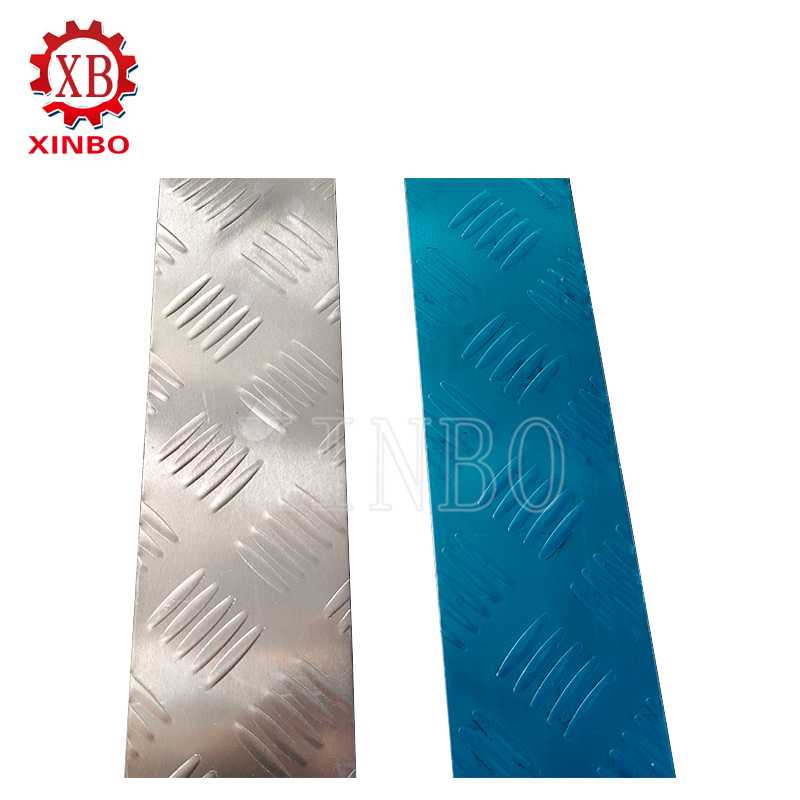
Once formed, the sheet must leave without being dragged, bent sharply, or rubbed across a hard edge. Exit tables or rollers support the material. If the line includes cutting, the embossed material is measured and separated at the required length; otherwise, it continues to another operation or collection.
Handling matters because a newly embossed surface has high points that can be scratched or flattened by careless stacking. Separators, protective film, controlled stack height, or an agreed packing method may be needed when appearance is critical.
How Roller Design Affects the Result
The roller surface is the counterpart of the desired pattern. Feature height, spacing, edge radii, repeat length, and engagement with the opposing roll influence the sheet. Decorative textures may use dense, shallow relief, while tread patterns may use larger features. A logo or custom motif needs the correct repeat and orientation.
A sharper or deeper feature asks the sheet to flow farther and may increase forming load or visible distortion. The machine builder therefore needs the target appearance, usable width, pattern direction, and any border or registration requirement.
Why Material and Pattern Must Be Matched
Steel, stainless steel, and aluminum respond differently. Sheets of the same nominal grade can also differ in temper, hardness, coating, or thickness. A setting that produces a crisp pattern on one material may create a shallow result, curl, or surface damage on another.
The agreed material specification should be used for trials. Test pieces help establish a workable roller gap and speed while revealing whether the sheet stays acceptably flat. If the final part will be bent, cut, coated, welded, or bonded after embossing, those downstream steps should also be considered during sampling. The embossed relief can change contact surfaces and may affect later tooling.
Elevator Floors and Truck Beds
Embossed plate is often selected where a plain smooth sheet would provide little surface texture. Two requested applications for this type of machine are elevator floor plates and truck cargo beds.
Elevator Floor Plates
For an elevator floor, the pattern can add visual texture and support a slip-resistant surface concept. The plate may need to fit a defined floor structure, edge trim, or replacement-panel size. Review pattern direction and appearance over a full sample area.
The embossing machine does not by itself certify slip resistance. Final performance depends on the pattern, relief height, material, finish, contamination, cleaning conditions, and applicable project standard. A buyer should define the required test method and have the finished floor assembly evaluated where compliance is required.
Truck Cargo Beds
On a truck bed or cargo floor, an embossed pattern can add texture and help conceal scuffing. The plate must still meet requirements for load support, attachment, corrosion protection, drainage, and cleaning. Embossing changes the surface; it does not replace structural design.
For both applications, the engineering question is whether the selected pattern and material perform as intended after installation. Production samples should be assessed in the real assembly or a representative fixture.
Quality Checks for Embossed Plate
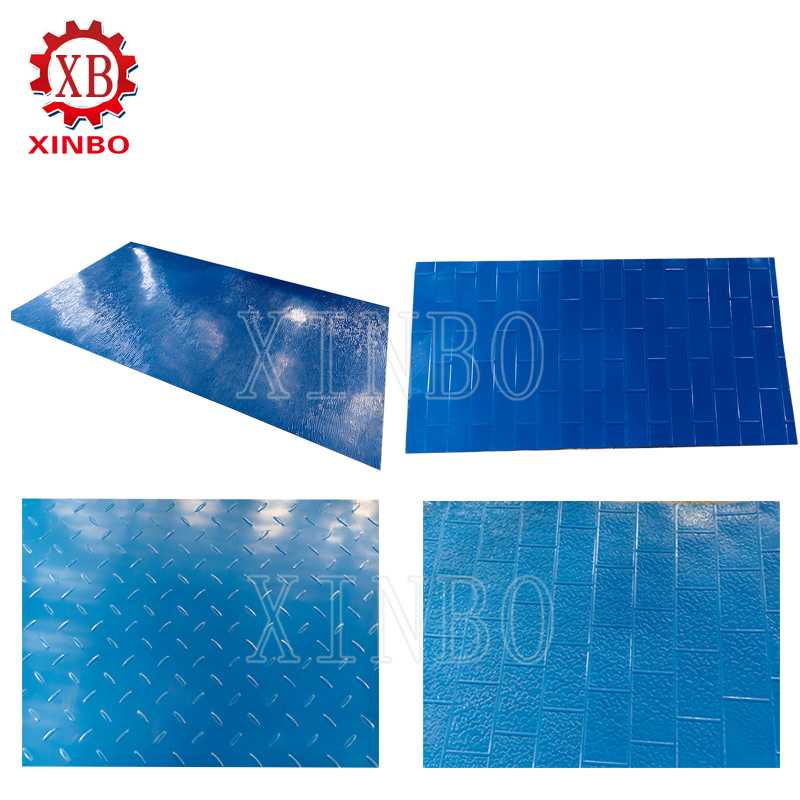
Inspection should cover the complete sheet width and a representative production length. Check pattern clarity, repeat consistency, lateral position, unembossed margins, and the transition at the beginning or end of a piece. Look for double images, weak areas, scratches, roller pickup, coating damage, and contamination.
Measure overall width, cut length, and any thickness or flatness characteristics that matter to the final assembly. A profile gauge, approved master sample, or agreed visual standard can make pattern acceptance more objective. When anti-slip performance is specified, use the required physical test rather than judging safety from appearance alone.
Selecting a Metal Embossing Machine
An effective inquiry should include the material grade, hardness or temper, thickness range, width, starting form, surface finish, target pattern, usable embossed width, required length, production rate, and electrical standard. Provide a drawing or high-resolution pattern reference and state which face is the primary viewing or working surface.
Ask how rollers are manufactured, how the working gap is adjusted, how speed is controlled, and how the sheet is supported at entry and exit. The embossing machine range provides a starting point, but final configuration should be based on the intended sheet and acceptance criteria. Trial material from the planned supplier is preferable to a substitute when pattern depth, flatness, or finish is important.
Hitimisho
Industrial embossing converts flat sheet into patterned plate through controlled entry, continuous pressure between patterned rollers, and careful exit handling. The machine supplies repeatable motion and force, while the rollers define the surface geometry. Material properties and settings determine how faithfully that geometry appears in the sheet.
For elevator floors, truck beds, and other textured panels, the best specification connects the pattern to the finished application’s dimensional, visual, structural, and safety requirements.
Frequently Asked Questions
Does Embossing Add Material to the Sheet
No. Rotary embossing reshapes the existing sheet surface. It does not add a printed layer, although the material may already have a coating or receive a finish later.
Can the Roller Pattern Be Customized
Yes, custom logos and surface patterns are possible when the design can be manufactured into suitable rollers and formed in the chosen sheet. Feasibility should be confirmed from a drawing and sample requirement.
Does an Embossed Pattern Guarantee a Non-Slip Surface
No. Texture can support a slip-resistant design, but performance depends on the complete floor surface and use conditions. Required slip testing and compliance must be specified separately.
What Samples Are Needed Before Ordering
Send representative sheet material and, when possible, an approved embossed sample or a clear pattern drawing. Include the required relief, usable width, flatness, finish, and application tests.
To review a plate-embossing project, contact the Xinbo technical team with your material specification, pattern reference, sheet dimensions, target output, and sample-acceptance criteria.
Posts kuhusiana

Ubora mzuri
XinBo mashine kufanya CO. LTD ni mtengenezaji wa kitaalamu na nje katika roll kuunda mashine,
Tazama zaidi→


 Swahili
 English
 Spanish
 Portuguese
 Arabic
 Russian
 French
 Dutch
 Turkish
 Serbian
 Romanian