Kihispania
 Urusi
Urusi
Double Layer Roll Forming Machine: Specifications, Features & Applications
ya Double safu roll kuunda mashine combines two forming profiles within one integrated structure, so manufacturers can produce more roof and wall panel types without installing two separate lines. This guide explains key double layer roll forming machine specifications, materials, components, automation, profile options, and applications. It also explains how a double layer roofing sheet roll forming machine turns metal coil into finished panels.
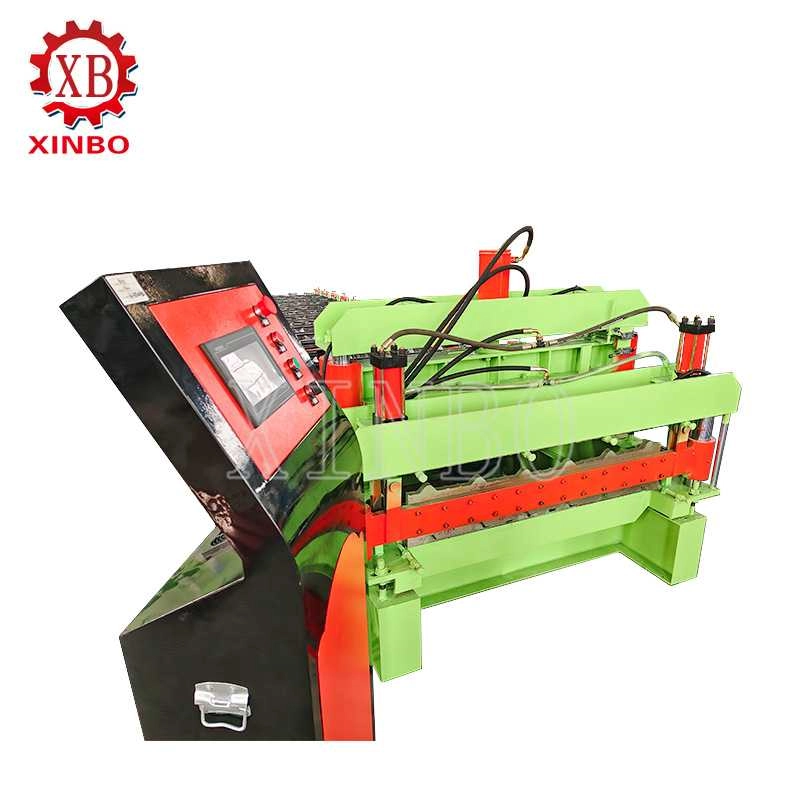
What Is a Double Layer Roll Forming Machine?
A double layer roll forming machine uses upper and lower forming levels for two different profile designs, and each level contains dedicated rollers that progressively shape flat strip.
How Does the Double-Layer Design Work?
The machine usually feeds material through one selected forming path at a time. Successive roller stations apply gradual bends until the sheet reaches its final geometry, while control and cutting systems manage panel length and quantity.
Why Do Manufacturers Use Two Profiles in One Machine?
The structure gives manufacturers two installed profile options while reducing floor-space requirements and avoiding a complete roller change between the two installed products.
How a Double Layer Roll Forming Machine Produces Metal Panels
Coil Loading, Feeding, and Alignment
The decoiler releases the coil, while the feeding guide positions the strip according to coil width, thickness, and the selected profile.
Progressive Roll Forming
The forming section passes the strip through multiple roller stations. Each station changes the sheet gradually, which allows the line to create consistent corrugated, trapezoidal, or ribbed profiles. Roll forming uses successive bending operations rather than creating the complete shape in a single forming step.
Length Measurement, Cutting, and Discharge
An encoder can send measured length data to the PLC, while the cutting system separates the panel at the programmed length before discharge.
Main Components of a Double Layer Roofing Sheet Roll Forming Machine
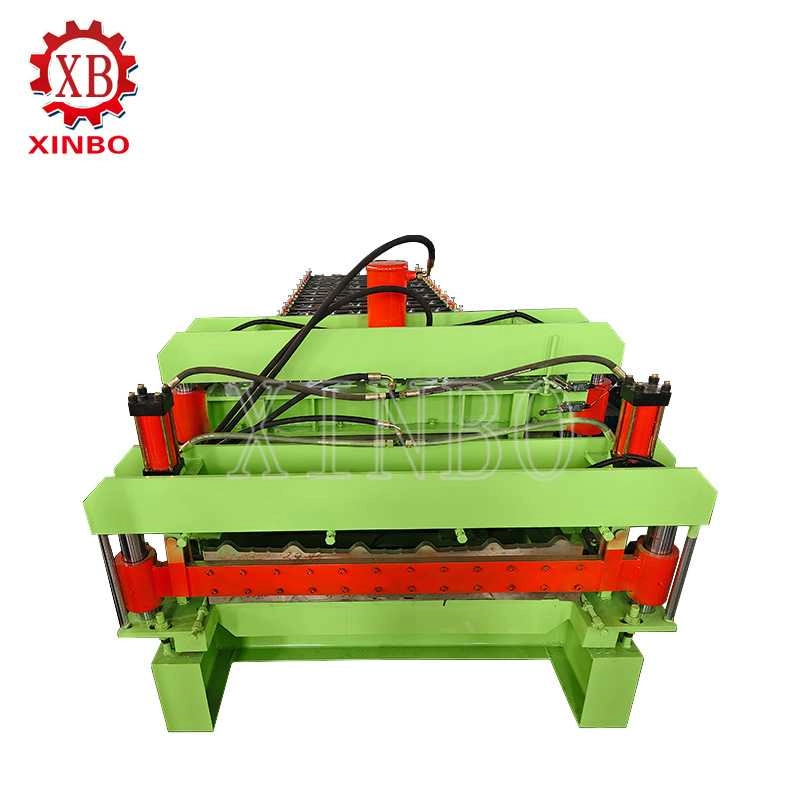
Forming Rollers, Shafts, and Frame
The rollers create the geometry, the shafts transmit forming loads, and the frame keeps the upper and lower stations aligned.
Drive, Cutting, and Control Systems
A configurable line can combine chain transmission, hydraulic profile cutting, encoder measurement, PLC control, push buttons, and a touch screen.
Key Double Layer Roll Forming Machine Specifications
Buyers should compare specifications against their own profile drawings and production targets. One published configuration processes PPGI, GI, and aluminum from 0.28 to 0.8 mm, uses a 1200 mm input width and 1000 mm formed width, and runs at 12–15 m/min.
The same example uses heat-treated 45# steel rollers, 70 mm shafts, 14 forming rows or a profile-specific design, and customized voltage options.
Material Type, Thickness, and Yield Strength
The buyer should specify material type, thickness range, and yield strength because these properties influence forming load and tooling design.
Coil Width and Effective Panel Width
The input coil width and finished effective width differ because ribs, corrugations, overlaps, and profile depth consume strip width. The profile drawing should therefore define both the feed width and usable panel coverage.
Forming Speed and Production Capacity
The line speed does not fully define output. Panel length, cutting frequency, coil changes, and downstream handling also influence hourly production.
Roller Stations, Roller Material, and Shaft Diameter
The panel geometry determines the forming sequence, while roller material, shaft diameter, and frame rigidity support stable forming. A buyer should therefore avoid assuming that a machine with more forming stations is automatically better.
Motor, Transmission, and Electrical Configuration
The motor and transmission should match the forming load, while the buyer should confirm local voltage, frequency, and phase. Published configurations can also provide buyer-specific electrical arrangements.
Features That Matter in Real Production
Two Profiles Without a Full Roller Change
The upper and lower layers can hold different panel geometries, so the operator can switch products without replacing a complete tooling set.
Automated Length and Quantity Control
The PLC can manage target length and batch quantity through encoder-based measurement and automated cutting.
Which Materials Can the Machine Process?
Configurable materials can include pre-painted galvanized steel, galvanized steel, and aluminum. The machine must still be designed for the actual mechanical properties of the selected material.
Why Material Properties Matter
The buyer should provide material grade, coating, thickness, and yield strength because sheet strength affects forming force.
What Panel Profiles Can a Double Layer Machine Produce?
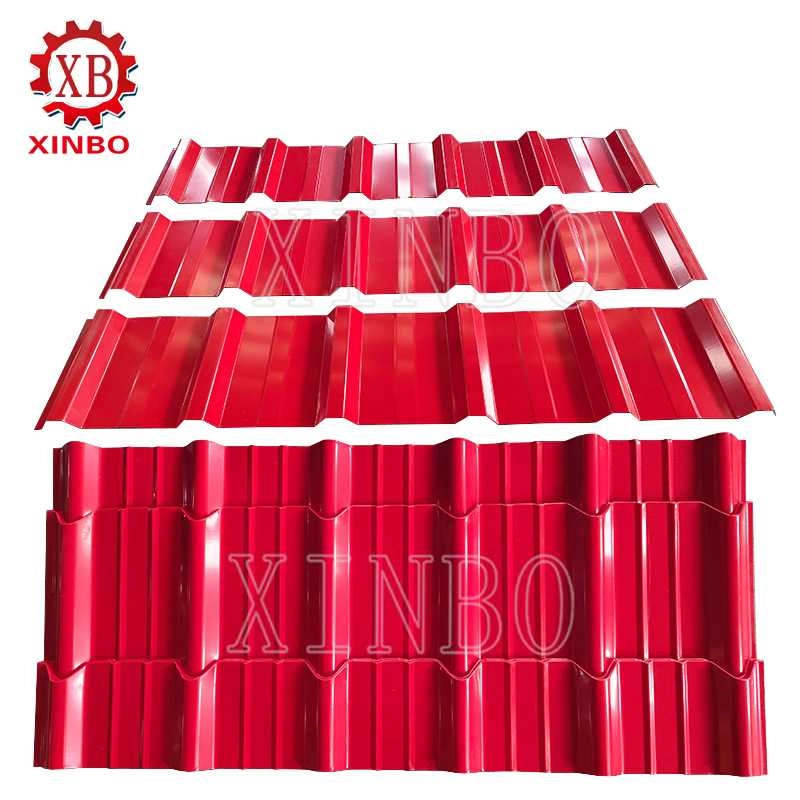
The two layers can be designed for corrugated roofing sheets, trapezoidal panels, ribbed sheets, siding, and wall cladding.
Corrugated and Trapezoidal Profiles
Corrugated profiles use repeated waves, while trapezoidal profiles use defined ribs and flats; each geometry needs dedicated roller and cutting designs.
Customized Roof and Wall Profiles
A profile drawing should identify overall width, effective coverage, rib height, rib spacing, and overlap geometry because regional panel dimensions vary. Customized roll forming systems can be engineered around project-specific profile requirements.
Applications of a Double Layer Roofing Sheet Roll Forming Machine
Industrial, Commercial, and Agricultural Buildings
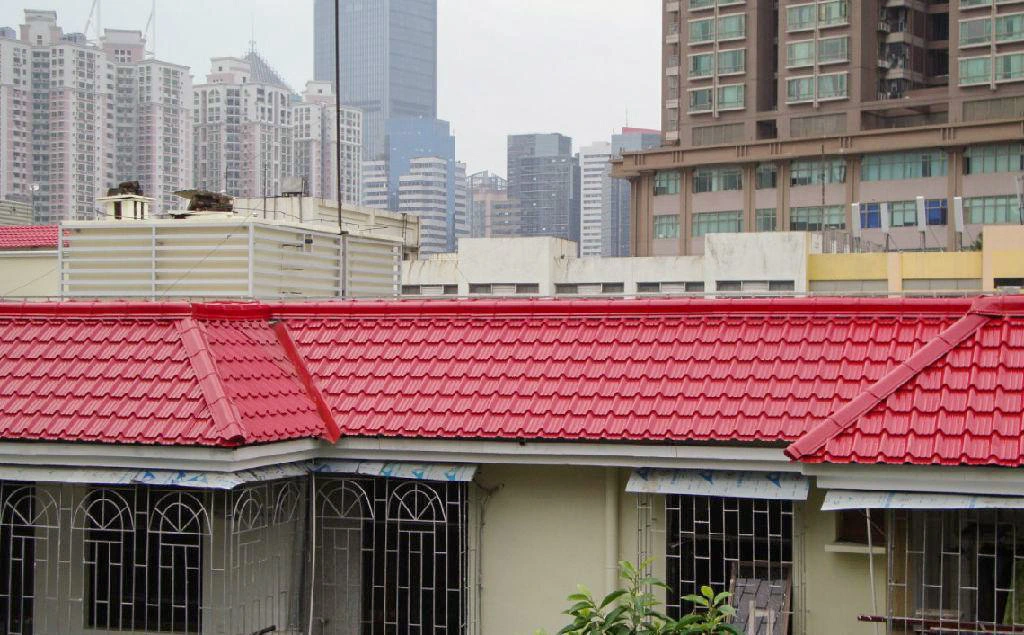
Manufacturers can produce panels for factories, warehouses, commercial buildings, agricultural structures, and light-steel projects when the profile matches the target system. Roll-formed metal panels are widely used in roofing and wall-cladding applications.
Roofing and Wall-Cladding Product Mixes
A factory can pair one roof profile with one wall profile to broaden its product range while controlling equipment footprint.
How Production Speed Translates Into Actual Output
Why Meters per Minute Do Not Tell the Whole Story
Cutting and material handling affect output, and shorter panels require more cuts per linear meter, so equal line speeds can produce different hourly piece counts.
A buyer should therefore evaluate required finished-panel output instead of comparing machines only by their stated meters-per-minute value.
How Profile Design Determines Machine Configuration
Profile Geometry and Material Define the Tooling
Profile height, bend angles, rib spacing, thickness, material strength, and effective width influence roller geometry and forming stations. An engineering review should confirm that both proposed profiles suit the selected double-layer arrangement.
Automation Options for a Double Layer Production Line
PLC, Encoder, and Touch-Screen Control
The encoder can track material travel, the PLC can process length and quantity settings, and the touch screen can accept production targets. A published double-layer configuration combines all three control elements with hydraulic profile cutting.
Double Layer vs. Single Layer Roll Forming Machine
A single-layer machine suits a factory that focuses on one primary profile, while a double-layer machine suits factories that repeatedly produce two profiles.
The Product Mix Should Drive the Decision
The buyer should compare order volume, profile variety, floor space, required speed, and automation before choosing. The production plan should drive the final machine decision rather than the number of available forming layers alone.
How to Choose the Right Double Layer Roll Forming Machine
Confirm the Required Production Data
A buyer should prepare the main production requirements before final machine engineering:
- The buyer should provide dimensioned drawings for both profiles.
- The buyer should specify material type, thickness range, and yield strength.
- The buyer should confirm coil width and effective panel width.
- The buyer should define required speed, finished lengths, and cutting accuracy.
- The buyer should confirm voltage, frequency, phase, and automation needs.
Customized machine projects normally begin with customer requirements and technical drawings before production proceeds.
What Information Should You Send Before Requesting a Quote?
A complete RFQ should include profile drawings plus material, width, thickness, speed, length, electrical, and automation data.
The information allows the engineering team to evaluate tooling, drive requirements, cutting configuration, and controls before the final machine specification is confirmed.
Maswali ya kawaida
Can a Double Layer Roll Forming Machine Produce Two Different Profiles?
Yes, the machine can incorporate two dedicated roller sets, but the buyer should confirm the operating sequence because many arrangements run one selected layer at a time.
What Materials Can the Machine Process?
A configured line can process PPGI, GI, or aluminum when the tooling suits those materials. The buyer should always confirm thickness and material strength.
Can the Two Panel Profiles Be Customized?
Yes, an engineering team can design two profiles from customer drawings after reviewing material, dimensions, speed, and cutting requirements.
Can the Machine Voltage Be Customized?
Yes, the electrical system can be configured for local supply requirements. One published configuration lists 380 V, 50 Hz and also allows buyer-requested voltage.
Get a Custom Double Layer Roll Forming Machine Solution from XINBO
ya XINBO provides customized double layer roll forming machine solutions for roofing and wall panel production. Send us your profile drawings, material, thickness, coil width, required speed, and voltage.
Contact XINBO today to discuss your double layer roofing sheet roll forming machine project and request a customized solution.
Posts kuhusiana

Ubora mzuri
XinBo mashine kufanya CO. LTD ni mtengenezaji wa kitaalamu na nje katika roll kuunda mashine,
Tazama zaidi→


 Swahili
  English
  Spanish
  Portuguese
  Arabic
  Russian
  French
  Dutch
Dutch  Turkish
  Serbian
  Romanian