Kihispania
 Urusi
Urusi
Square Tube Welding Pipe Forming Machine: A Practical Guide to Sizing, Welding and Finishing
ya square tube welding pipe forming machine is a production line for converting metal strip into welded square or rectangular tubing. For a buyer, the central question is not simply whether the line can make a square profile. The real decision is whether the forming, welding, sizing, cutting, and finishing stages can produce the required dimensions consistently for the intended market.
This guide explains how to define the machine correctly, compare welding options, plan finishing requirements, and prepare an RFQ that a manufacturer can quote responsibly. It is intended for procurement managers, production engineers, operations teams, and distributors evaluating a tube mill investment.
Start With the Finished Tube Requirement
Define the size range before requesting a quotation
The first specification should be the finished tube range, not only a general description such as “square pipe.” Provide the minimum and maximum outside dimensions, wall-thickness range, tube length, and whether rectangular profiles are also required.
A line designed for one narrow profile may have a different forming arrangement from a line intended for several sizes. If your product mix includes frequent changes, ask how the rolls, guides, tooling, and sizing stands will be adjusted. Confirm whether changeover requires manual replacement of roll sets or whether selected stations can be adjusted for multiple sizes.
The steel grade and incoming strip width are equally important. Carbon steel, galvanized strip, stainless steel, and other materials may require different forming pressure, welding energy, roll materials, and surface protection. These factors should be confirmed against the machine configuration rather than assumed from a general catalog description.
Separate production targets from marketing speed
Line speed is meaningful only when linked to a specific tube size, wall thickness, material, weld method, and cutting condition. A quoted maximum speed may apply to a light profile, while a heavier section may operate more slowly.
Ask the supplier to state the reference conditions for any speed figure. Also request information about stable operating speed, acceleration and deceleration, scrap during startup, and the time required for size changes. These details affect usable output more than a headline maximum.
Plan the Forming Route
Understand the stages that shape the strip
A typical welded tube line may include decoiling, strip leveling, forming stands, edge preparation, welding, bead treatment, sizing, straightening, cutting, and runout handling. The exact arrangement depends on the profile range and the selected welding process.
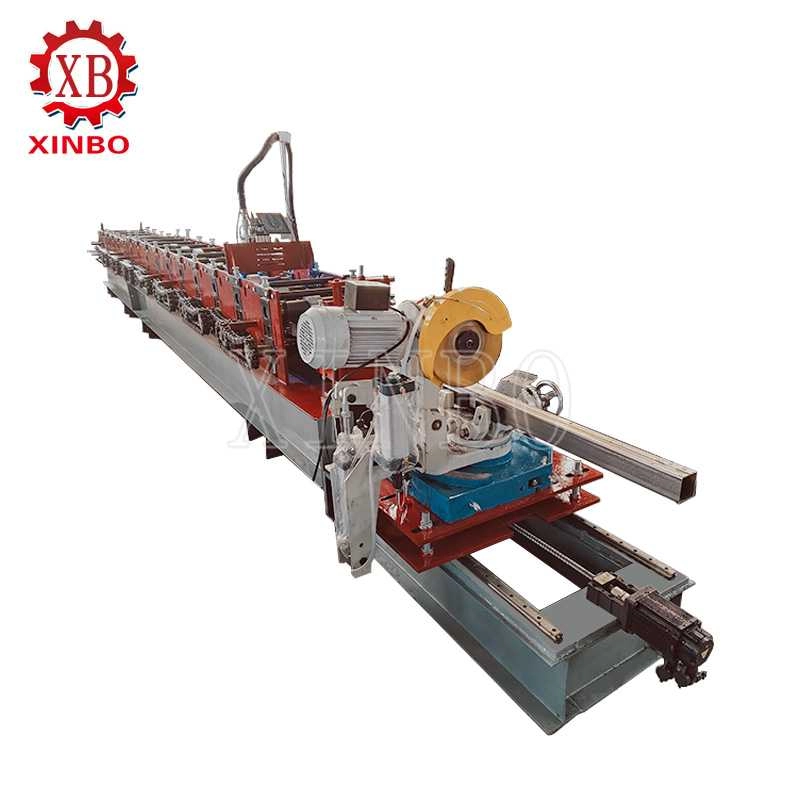
The forming section must gradually bend the strip into a closed shape without excessive edge stress or surface marking. Poorly matched tooling can create twist, open seams, uneven corners, or unstable weld alignment. During technical review, ask for a forming layout or roll-pass explanation showing how the strip reaches the square profile.
Sizing stands then control the final outside dimensions and corner geometry. For structural applications, dimensional repeatability may be more important than raw line speed because downstream fabrication depends on predictable fit-up. Include tolerances, corner-radius expectations, and straightness requirements in the RFQ.
Decide whether one line or several lines is practical
A wide size range can make a universal line attractive, but additional flexibility may increase tooling complexity, changeover time, and maintenance requirements. A dedicated line can be easier to operate when production volume is concentrated on a few standard sizes.
Compare the cost of tooling, floor space, spare parts, labor, and future expansion. Ask whether the machine can be upgraded with additional roll sets, a different welding source, or an expanded sizing section. The best configuration depends on forecast demand rather than on the largest possible product range.
Compare Welding Options
Match welding energy to material and output goals
High-frequency welding is widely used for continuous tube production, while laser welding may be selected when a narrow seam, low heat input, or a clean surface is important. The correct method depends on material, thickness, profile geometry, required throughput, and downstream finishing.
Xinbo’s square pipe product page describes a laser-welding configuration with automated seam tracking and servo cutting. It lists a seam-tracking accuracy of approximately ±0.1 mm and servo-cutting accuracy of approximately ±1–2 mm for the stated configuration. These figures should be verified for the model, material, and tube range included in your quotation.
The same page describes a narrow heat-affected zone and a smooth weld seam that may reduce grinding requirements. Such benefits can be valuable for coated or appearance-sensitive products, but actual results depend on joint preparation, material condition, welding parameters, and operator setup.
Build weld inspection into the acceptance plan
Do not evaluate welding only by looking at the first sample. Request a test procedure covering seam appearance, penetration, dimensional stability, cut length, and repeatability over a representative production run.
If the tubes are structural or pressure-related, identify the applicable customer or industry requirements before ordering. The supplier should confirm which inspections are included, which tests must be performed by the buyer, and how test records will be delivered. A visual inspection alone may not be sufficient for every application.
Design the Finishing Section Around the Customer’s Process
Decide how much weld-bead treatment is required
Some buyers need an as-welded tube, while others require internal or external bead removal, brushing, polishing, or additional surface preparation. The finishing choice affects tooling, line length, consumables, dust control, and maintenance.
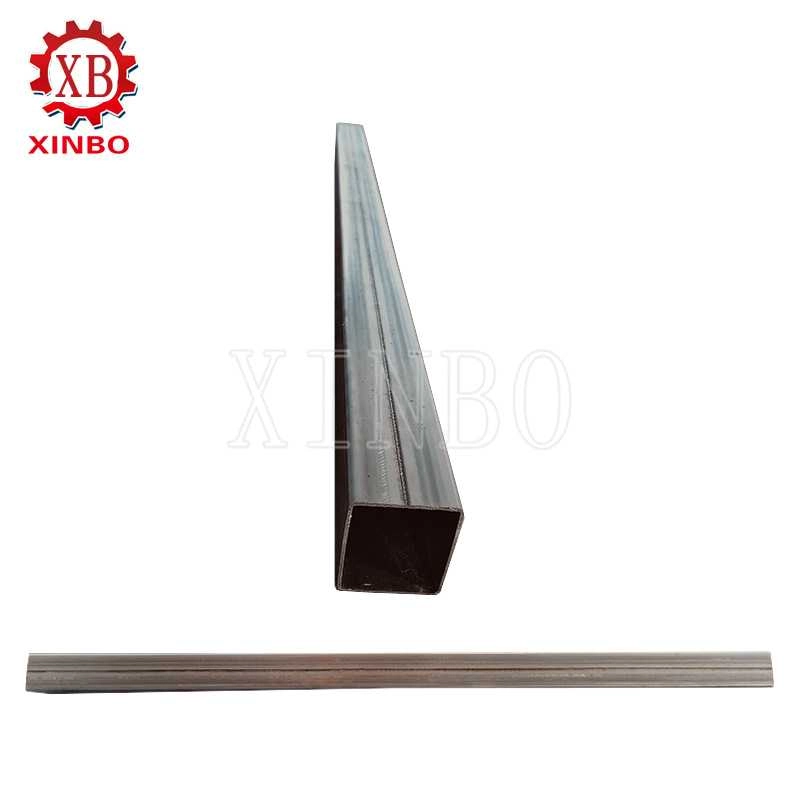
Laser welding can produce a relatively narrow seam, but that does not automatically eliminate every finishing operation. Confirm whether the target product requires grinding, bead shaving, brushing, passivation, coating, or protective film. Define the acceptable surface condition with sample parts or photographs wherever possible.
Protect the surface during sizing and cutting
Galvanized, pre-painted, or polished strip can be damaged by unsuitable guides, excessive roll pressure, or metal contamination. Ask the supplier how contact surfaces are selected and maintained. Confirm whether protective films, cleaning procedures, or dedicated tooling are necessary.
Cutting quality also matters. Burrs, tube deformation, and inconsistent length can create problems during bundling, welding, framing, or installation. Include cut tolerance, end squareness, and acceptable burr limits in the inspection checklist.
Select Controls and Utilities Carefully
Confirm automation and operator responsibilities
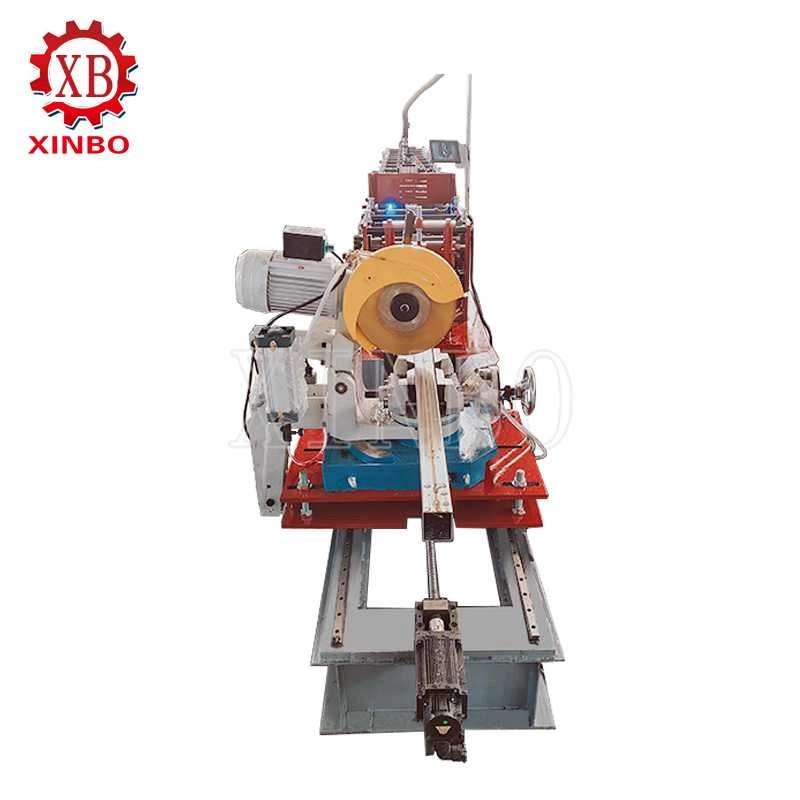
A modern line may use PLC control, servo drives, HMI settings, automatic tracking, and recipe storage. These features can reduce setup errors, but only when the interface matches the operator’s workflow.
Ask for a control description showing which functions are automatic and which require manual adjustment. Clarify how alarms are recorded, how recipes are protected, and whether operating data can be exported for quality records. Verify the language, electrical standard, and documentation format required at your plant.
Check utilities before the machine ships
Prepare a utilities list covering electrical capacity, compressed air, cooling water, extraction, floor loading, and material-handling equipment. Welding equipment may have different power and cooling requirements from the forming section.
The plant layout should include coil loading, safe access to maintenance points, finished-tube storage, and space for tooling changes. A line that fits physically may still be difficult to operate if access, lifting, or material flow was not considered early.
Evaluate the Supplier Before Comparing Price
Review engineering and configuration control
A responsible supplier should be able to convert your drawings and production requirements into a controlled technical proposal. Review the roll layout, electrical list, component schedule, spare-parts list, and acceptance criteria before comparing quotations.
Xinbo presents itself as a metal-forming machine manufacturer with in-house engineering and CNC workshop capabilities. Its service description also outlines a process covering demand communication, technical drawings, production, quality inspection, shipment, and after-sales support. Ask for the specific documents and responsibilities that apply to your project.
Examine inspection and after-sales arrangements
Confirm how many factory inspections are included, who approves trial samples, and what evidence is supplied before shipment. Xinbo states that its machines are inspected at multiple stages, including finished-machine checks, operational testing, and pre-loading inspection. Request the inspection checklist and clarify whether customer or third-party attendance is available.
Warranty boundaries should be written clearly. Ask which parts are covered, how remote troubleshooting works, what response channel is used, and whether recommended consumables and spare parts are available. Also confirm installation support, training scope, and the buyer’s responsibility for commissioning conditions.
Prepare a Complete RFQ
A useful RFQ should include:
- Finished tube shapes, outside dimensions, corner radii, and tolerances.
- Material grade, yield-strength range, coil width, thickness, coating, and surface condition.
- Required tube lengths, cutting tolerance, production quantity, duty cycle, and shift pattern.
- Welding method preference, weld-bead requirements, inspection method, and applicable standards.
- Available plant utilities, electrical requirements, cooling conditions, and installation constraints.
- Delivery location, packaging expectations, training needs, documentation language, and target schedule.
- Drawings or sample tubes representing the most important production sizes.
The more complete this information is, the less likely the quotation will rely on assumptions that later lead to substitution, change orders, or performance disputes.
Calculate Total Cost of Ownership
The purchase price is only one part of the investment. Include tooling, welding consumables, spare rolls, cutting blades, energy, cooling, labor, maintenance, installation, training, inspection, packaging, freight, and downtime during changeover.
Ask suppliers to separate included and optional items. A lower initial price may exclude tooling for your full size range or omit automation needed for your labor model. Conversely, a more advanced configuration may be unnecessary if your production is stable and your finishing requirements are limited.
Use a simple internal model based on expected sellable output, contribution margin, operating shifts, scrap, labor, maintenance, and financing cost. Keep the model variable until production samples and a final technical specification are approved.
Implement the Line With a Controlled Acceptance Test
Before shipment, agree on the trial material, profile sizes, run length, inspection points, and documentation. During commissioning, record setup values and sample measurements for each priority size.
Acceptance should cover forming stability, weld quality, tube dimensions, straightness, cut length, surface condition, alarms, safety functions, and operator training. Retain approved samples and test records as the baseline for future service discussions.
For a project requiring tailored drawings or container planning, Xinbo’s ODM service can be reviewed during the engineering stage. The buyer should still approve the final layout, utility list, and acceptance criteria before production begins.
Hitimisho
Choosing a square tube welding pipe forming machine is a configuration decision, not a simple equipment-price comparison. Start with the finished tube range, then align the forming route, welding method, sizing accuracy, finishing operations, controls, utilities, and inspection plan.
A clear RFQ gives engineering and procurement teams a common basis for comparing offers. When your dimensions, material, output, weld, and surface requirements are ready, contact Xinbo’s technical team for a project-specific fit review and quotation based on documented requirements.
FAQs
What materials can a square tube welding pipe forming machine process?
The suitable material depends on the forming rolls, welding source, thickness, strip condition, and machine configuration. Confirm each material grade with the supplier before ordering.
Is laser welding necessary for every square tube application?
No. Laser welding may be useful for selected surface, heat-input, or precision requirements, while other welding methods may be more appropriate for different materials and production conditions.
How do I choose the correct machine size?
Define the smallest and largest tube dimensions, wall thickness, material, length, quantity, and required tolerances. The supplier can then recommend a forming and sizing configuration.
What should be included in the factory acceptance test?
Include representative materials and sizes, weld quality, dimensions, straightness, cut accuracy, surface condition, safety functions, documentation, and operator training.
Posts kuhusiana

Ubora mzuri
XinBo mashine kufanya CO. LTD ni mtengenezaji wa kitaalamu na nje katika roll kuunda mashine,
Tazama zaidi→


 Swahili
  English
  Spanish
  Portuguese
  Arabic
  Russian
  French
  Dutch
Dutch  Turkish
  Serbian
  Romanian