İspanyolca
 Rusya

C/Z Purlin Roll Forming Machine Quotation Checklist: 12 Inputs That Change the Final Price
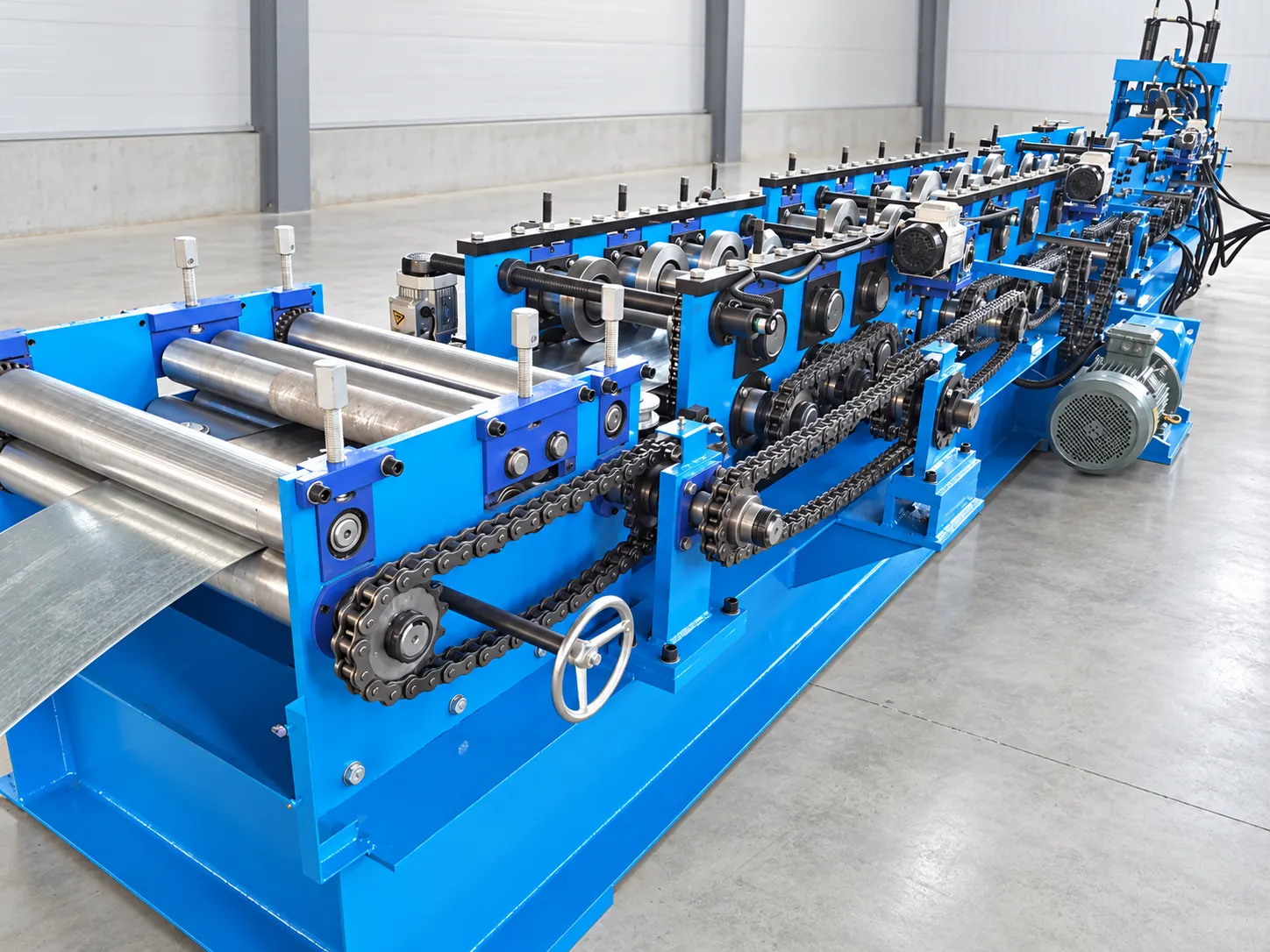
The final price of a C/Z purlin roll forming machine is not determined by profile width alone. It changes with the section geometry, steel strength, thickness range, hole pattern, target output, changeover system, cutoff method, electrical standard, coil-handling equipment and shipping scope. A useful quotation therefore begins with a controlled technical baseline—not a request for the cheapest machine in a broad size range.
For buyers, the goal is comparability. Every supplier should quote the same finished section, material and operating duty. The following 12 inputs turn a general inquiry into an RFQ that Xinbo or another qualified manufacturer can engineer, price and review without relying on hidden assumptions.
Start With a Comparable Technical Baseline
Review the available C, U, Z and Omega purlin machine range to identify the closest line concept, but do not treat a catalog model as the final specification. Two lines can cover similar nominal sizes while using different drives, punching systems, changeover methods or material limits.
Ask every bidder to state inclusions, exclusions and performance conditions in writing. The quoted speed should be tied to a defined profile and thickness; dimensional tolerance should be tied to an approved drawing; and any punching or cutting rate should be stated as part of the production cycle. This prevents a high no-load speed from being compared with a lower but realistic finished-part output.
The 12 Inputs That Change the Quotation
- Finished profile drawing. Provide a dimensioned C and/or Z section showing web, flange, lip, radii and orientation. Mark which dimensions are fixed and which must adjust. A supplier cannot define tooling, roll passes or size-change travel accurately from a product photo or a simple range such as “C100–300.”
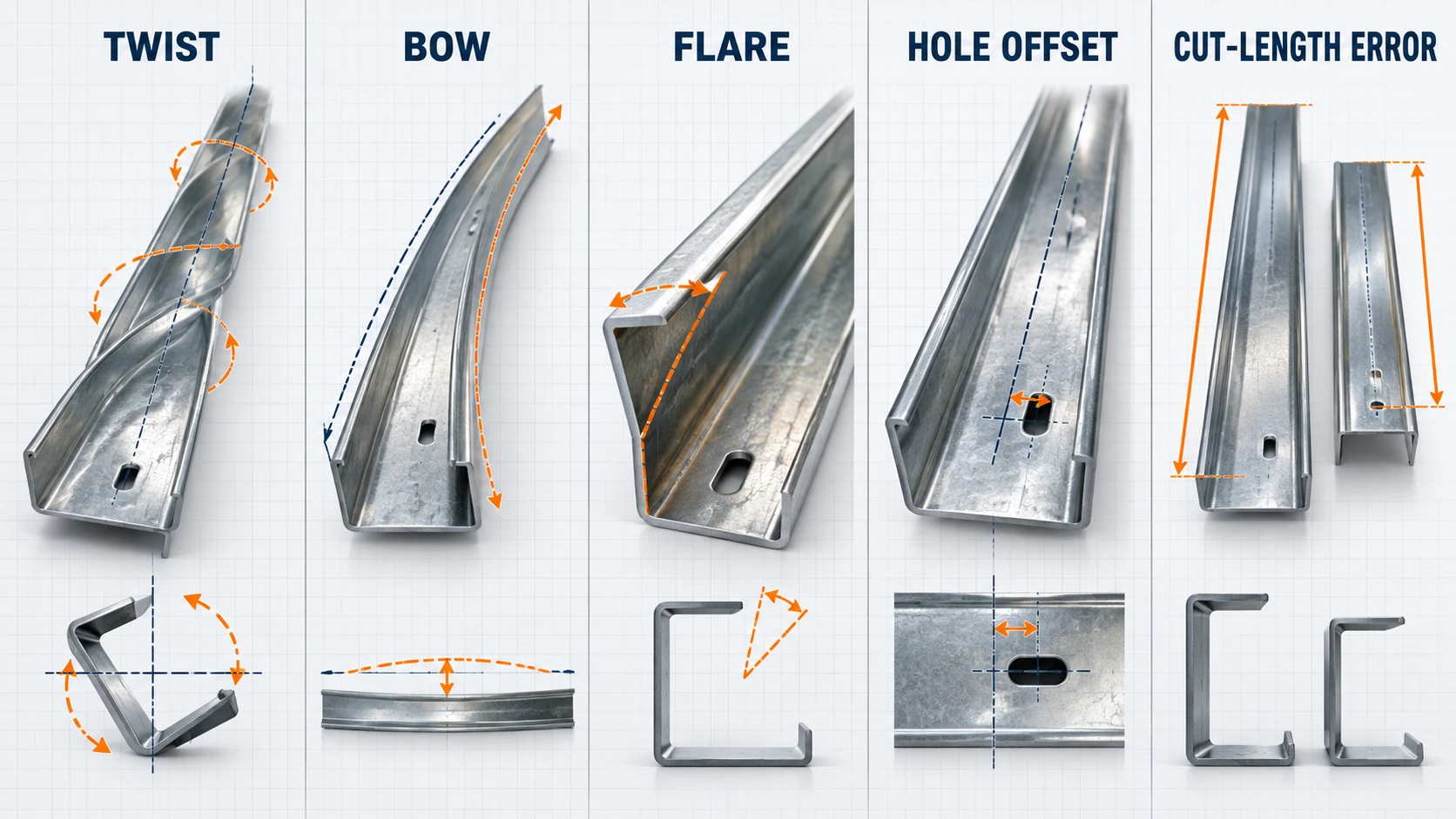
- Finished-part tolerances. State the acceptable tolerance for width, height, lip, straightness, twist, hole position and cut length. Tighter limits may require more precise guides, additional correction, better measuring hardware and a clearer acceptance method. Include how and where each dimension will be measured.
- Material type and coating. Identify galvanized, prepainted, black steel or another material, plus coating or surface requirements. Surface sensitivity can affect roller finish, guide design and handling. Also give coil width, expected width tolerance and whether more than one feed width will be used.
- Yield strength. Specify the grade and minimum/typical yield strength, not only “mild steel.” Higher-strength strip can increase forming load and springback, influencing the forming sequence, shaft and frame design, drive power and correction strategy. Send a material standard or mill certificate when available.
- Thickness range. Give the true minimum and maximum thickness for each profile family. A wide range is not free: the roll gap, pass design and drive must remain stable at both extremes. If most production uses one thickness, identify it so the line can be optimized around the real duty.
- Punching drawing. Supply hole shape, diameter, quantity, slot direction, spacing and reference datums. Mark which patterns repeat and which are recipe-driven. The punch count and minimum pitch determine press capacity, tooling, controls and whether the requested speed remains possible during a punched production cycle.
- Production speed basis. Define output as good profiles per shift or finished meters per minute at a named thickness and hole pattern. Xinbo’s PLC-controlled CZ purlin linedescribes servo-driven switching, hydraulic or servo punching and flying cutting; each selected operation affects achievable cycle time.
- Changeover method. State the expected batch size and change frequency. Dedicated tooling, manual spacer adjustment, semi-automatic positioning and automatic width/height adjustment have different costs and downtime. Xinbo’s automatic interchangeable C/Z purlin roll forming machineis presented as changing sizes without replacing forming rollers, which suits mixed-size production.
- Cutting solution. Choose the finished-end requirement and discuss stop-to-cut versus flying cutoff, as well as pre-cut or post-cut logic where applicable. Blade material, die support, burr direction, profile distortion and acceptable line stoppage all matter. A faster cutoff is valuable only if it holds length and end geometry.
- Electrical standard and controls. Give site voltage, frequency, phase, control voltage, plug or cabinet requirements and preferred HMI language. Identify required recipe storage, remote support, safety interfaces and plant communication. Electrical conversion, certified components and regional documentation can change both price and delivery scope.
- Decoiler and coil data. Specify maximum coil weight, outer diameter, inner diameter, width and loading method. A 3-ton manual decoiler is a different package from a 5-ton powered or hydraulic unit with a coil car. The feed arrangement must also match the line’s speed and strip stability requirements.
- Packing and transport scope. State the destination, Incoterm, discharge constraints and whether container loading, export packing, seaworthy protection, insurance or local delivery is required. Machine dimensions, weight and disassembly plan influence container selection, lifting points, reassembly work and freight—not just the ex-works machine price.
How to Compare Quotations
Use published machine data as a reference point, then require confirmation for the selected build. On Xinbo’s automatic interchangeable model page, the stated customary thickness is 1.5–3.0 mm with customization available; productivity is listed at 0–15 m/min; the electrical example is 380 V, 50 Hz, three phase with customization; and the shown coil-bearing option is 3–5 tons. The page also lists a guide, leveler, hydraulic punching, hydraulic cutting and computer control. These are model-page specifications, not universal promises for every profile or cycle.
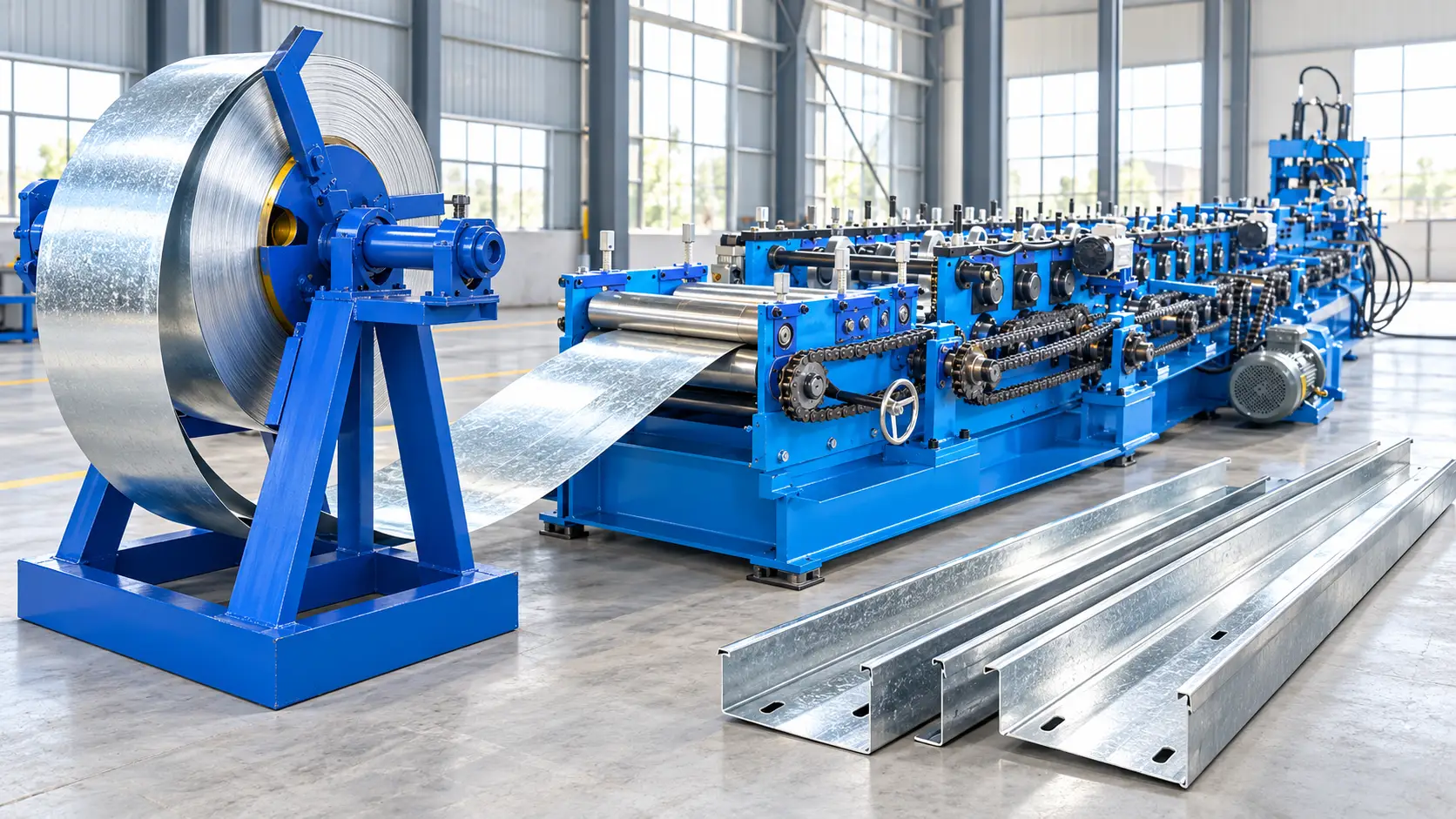
Create a comparison sheet with one row for each input and separate columns for the base machine, options, exclusions, acceptance criteria, lead time, installation and training. Ask suppliers to flag deviations from the RFQ instead of silently pricing a different configuration. A technically lower offer may be more expensive after missing punching dies, coil handling, runout support, commissioning or export packing are added.
A Practical RFQ Package
A complete package does not need to be long. It should be unambiguous and revision-controlled. Include:
- PDF and preferably CAD profile drawings, with finished dimensions and tolerances;
- material grade, yield strength, coating, thickness range and coil dimensions;
- punching and cut-length drawings, plus representative production recipes;
- required output by profile, thickness and hole pattern;
- changeover frequency, voltage, controls, decoiler and receiving requirements; and
- destination, Incoterm, packing standard, site limitations and acceptance plan.
If any item is unknown, label it as open rather than allowing each bidder to make a different assumption. A short technical review before quotation is usually the fastest way to expose conflicts between speed, punching density, tolerance and budget.
Sonuç
A reliable C/Z purlin machine quotation is the price of a defined production system. Lock the profile, steel, operations, output, utilities and logistics before comparing totals. The best commercial decision is the configuration that produces acceptable parts at the required cycle—not the offer with the shortest specification sheet.
Frequently Asked Questions
Can I request a quote with only the C/Z size range?
You can obtain a preliminary budget, but it will contain assumptions. A firm technical quotation needs finished profile dimensions, material and thickness, tolerances, punching, speed and changeover requirements.
Why does yield strength affect the machine price?
Yield strength influences forming force, springback and correction. The manufacturer may need to revise the pass design, drive, shafts, frame or power reserve to hold the same section and tolerance.
Is the highest line speed always the best choice?
No. Compare finished output while punching and cutting the specified part. No-load speed or forming-only speed can overstate practical production when the hole pattern is dense or batches change frequently.
What should be agreed before shipment?
Agree the drawing revision, test material, sample length, hole and cut tolerances, speed condition, included tooling, electrical standard, packing method and evidence required for factory acceptance.
To receive a configuration-specific proposal, send Xinbo your profile and punching drawings, steel grade, thickness range, output target, electrical supply, coil data and delivery destination, then request a configuration-specific quotation.
İlgili Yazılar

İyi kaliteli
XinBo makine yapma CO. LTD rulo şekillendirme makinesinde profesyonel bir üretici ve ihracatçıdır,
Daha Fazlasını Görüntüle→


 Turkish
 English
 Spanish
 Portuguese
 Arabic
 Russian
 French
 Dutch
 Swahili
 Serbian
 Romanian