 Spanish
 Russia
Good quality
XinBo machine making CO. LTD is a professional manufacturer and exporter in roll forming machine,
VIEW MORE→

A light gauge C purlin forming machine converts thin steel strip into accurate C- and U-shaped channels through a continuous process. A C channel forming machine for ceiling profiles can combine guided feeding, progressive roll forming, length measurement, and hydraulic cutting. A pre-painted steel C channel production line can also produce visible decorative profiles when the tooling protects the coated surface.
The supplied images show forming stations, hydraulic cutting, coated channels, and a linear ceiling application. This article therefore focuses on light-gauge ceiling profiles rather than heavy structural roof purlins.
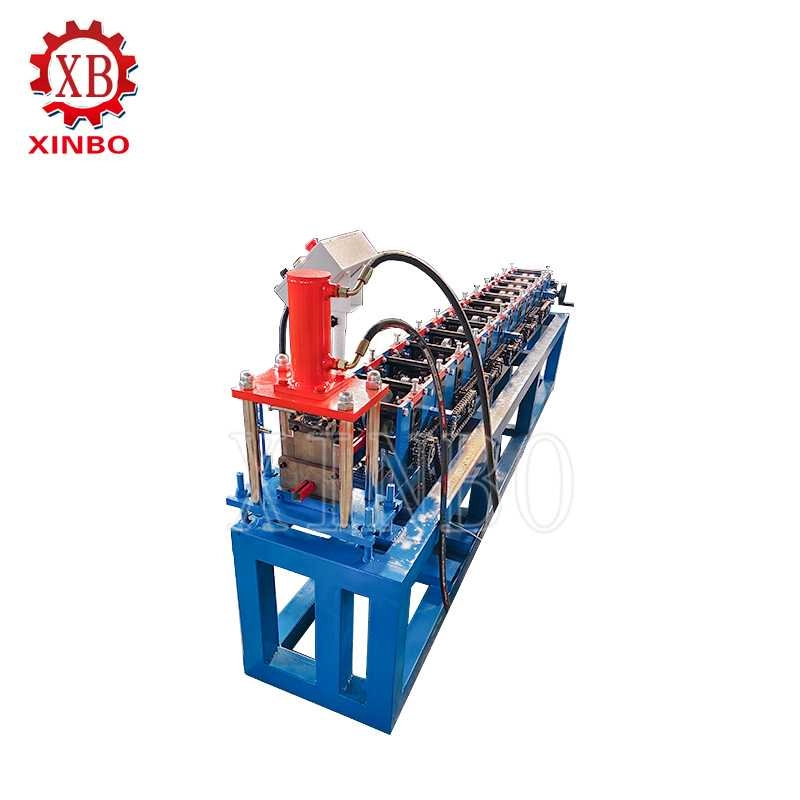
The machine forms flat steel strip into a profile with a web, flanges, and optional lips. The approved drawing determines every width, height, radius, and bend angle, so one fixed roller set cannot form every profile.
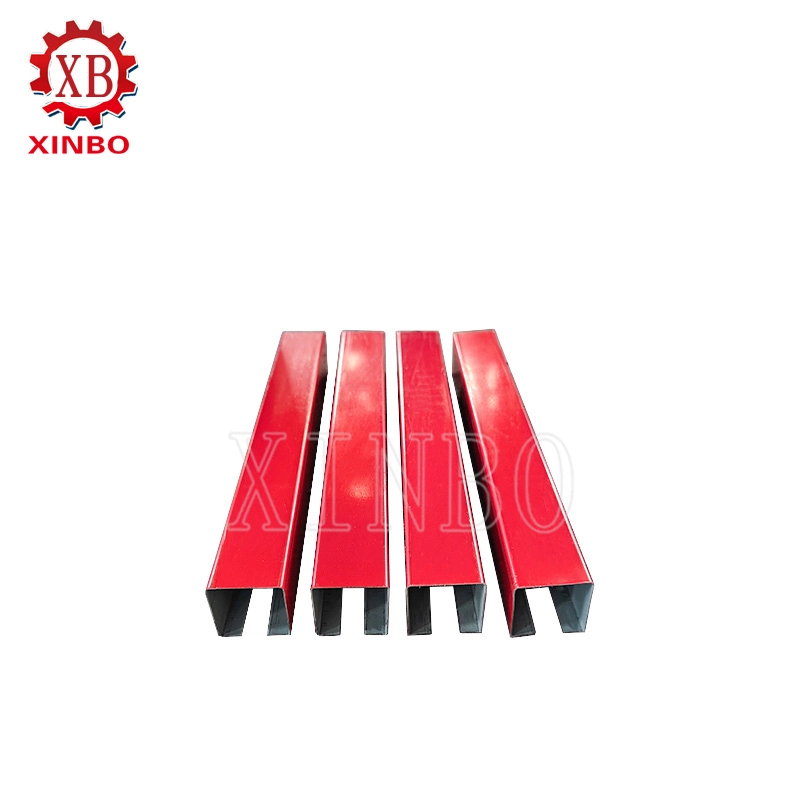
The pictured red products resemble coated light-gauge channels for ceiling and interior assemblies. Industry standards distinguish nonstructural cold-formed framing from structural framing, so buyers must define the final application before approving the profile.
The guiding section centers the steel strip before the first roller station. Each station performs part of the required bend until the material reaches its final cross-section.
Research describes roll forming as a progressive process. The pass design must consider material thickness, strength, web width, flange length, bend increments, and stand spacing because these factors influence springback, bow, twist, and dimensional quality.
The hydraulic unit shown in the machine photographs cuts each channel to its specified length. The final control functions depend on the agreed machine configuration.
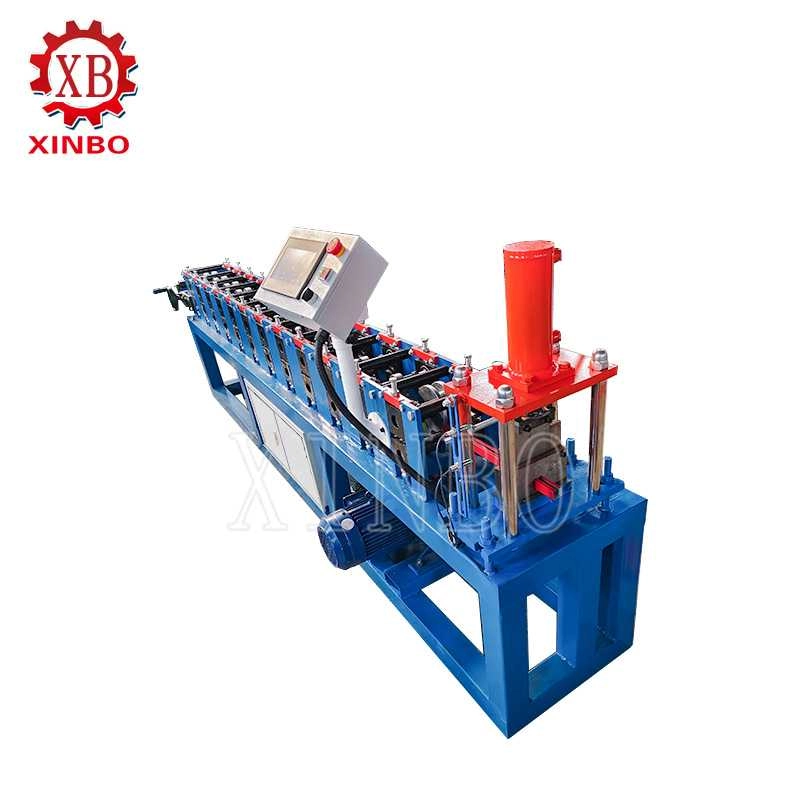
Continuous feeding removes many separate loading, positioning, bending, and transfer steps. The integrated process supports larger production batches through a predictable workflow.
The manufacturer should verify every production-speed claim through testing with the buyer’s actual material and profile design.
A planned roller sequence helps the line maintain the web, flanges, lips, and bend angles. Consistent sections can fit carriers, clips, connectors, and adjacent profiles more reliably.
Material variation and springback can still affect the finished dimensions. The technical agreement should therefore define measurable tolerances instead of promising zero deviation.
Consistent lengths help factories prepare uniform bundles for modular ceiling layouts. Accurate cutting can reduce separate sawing, manual trimming, sorting, and replacement of incorrectly sized pieces.
The final length tolerance depends on the measuring method, cutting unit, material behavior, and machine adjustment. Buyers should verify the result by inspecting an approved sample.
Roll forming changes the strip geometry mainly through controlled bending, so the process does not remove large areas of metal to create the channel.
Stable forming and accurate cutting can reduce rejected profiles, short unusable pieces, and excessive trimming. Manufacturers should describe this advantage as lower material waste rather than zero waste.
The production team does not need to move every profile between independent bending and cutting stations. Fewer transfers can simplify production control and reduce material-handling time.
A trained operator must still supervise feeding, forming, cutting, and product collection. Automation coordinates the workflow, but automation does not replace qualified production control.
Industry guidance confirms that pre-painted metal can be formed when the coating, substrate, tooling clearance, machine alignment, and profile geometry remain compatible. The guidance recommends multi-stage forming for demanding bends because gradual deformation can help protect coating adhesion.
Smooth rollers and clean contact surfaces can reduce scratches and pressure marks. The production line must match the strip thickness, coating system, dimensional fit, and bend severity.
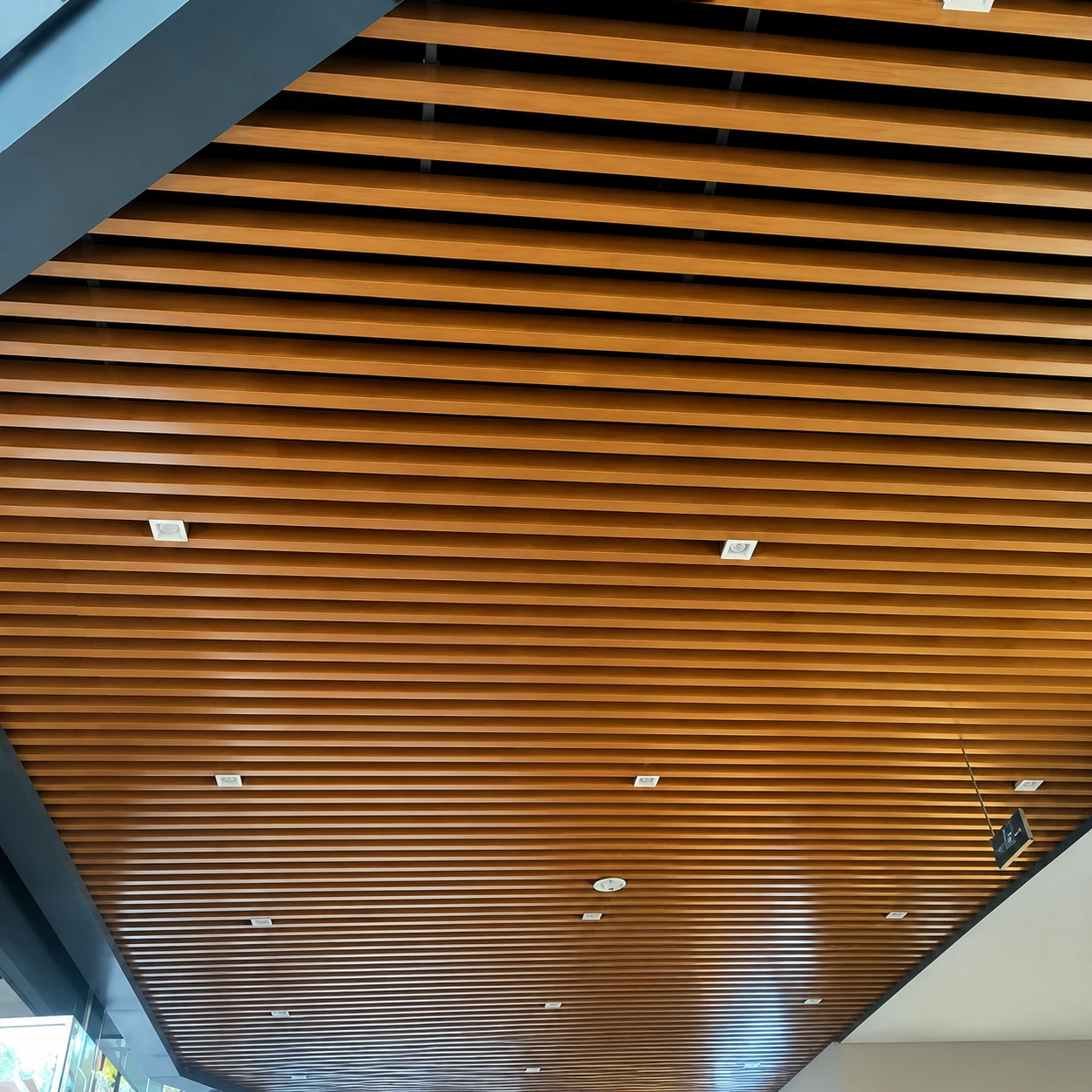
Matching widths, depths, angles, and lengths help installers maintain regular spacing across a linear ceiling. Straight profiles also support the parallel visual pattern shown in the supplied application image.
Accurate sections can improve compatibility with specified carriers, clips, and connecting components. The project designer must still verify every connection and performance requirement.
Buyers should provide the complete profile section, material thickness, steel strength, coating, tolerances, and finished length. The supplier can then develop the roller sequence and cutting solution around the actual product.
Visible ceiling strips, concealed carriers, perimeter channels, and support profiles may require different tooling. One unchanged roller setup cannot reliably produce unrelated sections.
A repeatable line allows the production team to compare each batch with an approved sample. The inspection process should cover profile width, flange height, lip dimensions, length, straightness, twist, cut quality, and surface condition.
Consistent profiles are easier to count, bundle, label, and dispatch. Clear production-batch separation also helps factories manage different lengths, colors, and order quantities.
The line can reduce separate operations, manual transfers, rework, rejected lengths, and post-forming finishing. Pre-painted strip can also remove a separate painting and drying stage when the selected material meets the product requirements.
Buyers should calculate the cost per accepted channel instead of comparing machine prices alone. The calculation should include material yield, labor, output, rejection rate, tooling, shipping, and installation.
The pictured configuration is best positioned for linear ceiling channels, suspended-ceiling carriers, perimeter channels, decorative interior profiles, and other narrow light-gauge sections.
The machine can support another application only when the profile drawing, material range, roller design, cutting system, and required performance match that product.
A useful machine inquiry should include the following details:
The buyer should establish measurable factory-acceptance criteria before shipment. The agreed criteria should identify the test material, accepted sample, inspection method, line scope, and required documentation.
Each quotation should identify the feeding equipment, guiding section, roller stations, drive system, controls, cutting unit, and discharge arrangement. A lower price offers little value when the line cannot process the required material or maintain the approved section.
Buyers should prioritize sample quality, documented specifications, inspection records, included tooling, shipment scope, and technical support.
This machine is not the same as a typical heavy structural purlin machine. The pictured equipment focuses on narrow light-gauge channels for ceiling and interior applications, while a structural purlin line requires different sections, thicknesses, forming forces, and engineering criteria.
The machine can form pre-painted steel when the substrate, coating flexibility, roller finish, tooling clearance, and bend design remain compatible. Buyers should test the intended material before approving the machine.
One machine can produce both profiles only when its tooling and adjustment design support both approved sections. A fixed roller set cannot automatically produce every C- and U-shaped profile.
The supplier needs the profile drawing, material specification, thickness range, coil width, finished lengths, expected output, electrical standard, and auxiliary equipment requirements.
XINBO provides customized roll-forming equipment based on each buyer’s profile drawing, material specifications, and production requirements. The company’s service process includes technical planning, production inspection, shipment coordination, and after-sales support.
Send XINBO your profile drawing, material type, thickness range, required lengths, output target, and local voltage to request a tailored machine proposal.

XinBo machine making CO. LTD is a professional manufacturer and exporter in roll forming machine,
VIEW MORE→



 English
  Spanish
  Portuguese
  Arabic
  Russian
  French
  Dutch
Dutch  Turkish
  Swahili
  Serbian
  Romanian