 Spanish
 Russia
Good quality
XinBo machine making CO. LTD is a professional manufacturer and exporter in roll forming machine,
VIEW MORE→

A door frame roll forming machine converts metal coil into frame or guide-rail profiles through progressive bending, optional punching, length control, and cutting. Buyers who manufacture roller shutter side tracks should evaluate the equipment as a roller shutter guide rail roll forming machine, not as a shutter slat machine. A properly specified automatic door frame roll forming line can combine coil handling, forming, cutting, control, and product collection.
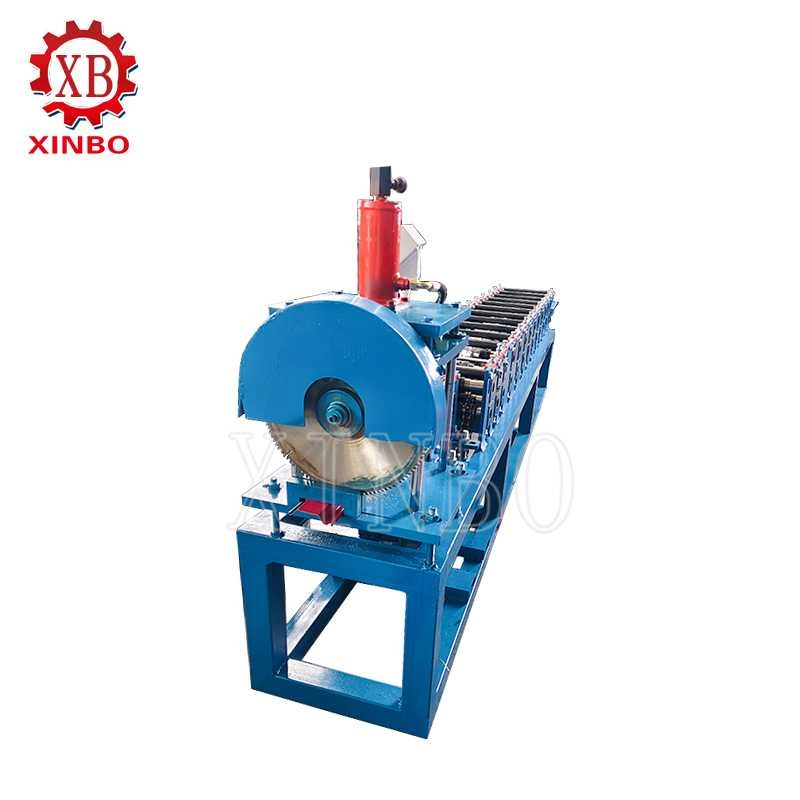
A door frame roll forming machine feeds flat metal strip through successive roller stations. Each station makes an incremental bend until the strip reaches the required constant cross-section. This process supports repeat production of long metal profiles.
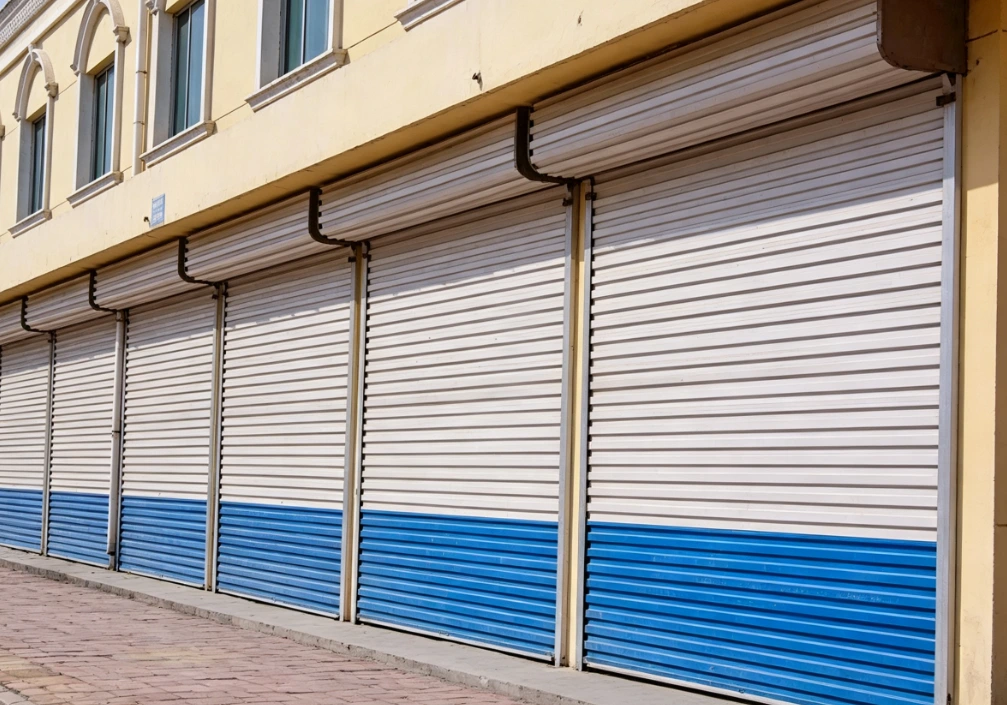
A roller shutter guide rail forms the side channel that guides and retains the moving shutter curtain. A shutter slat forms part of the moving curtain itself.
These products normally require different strip widths, roller tooling, forming sequences, and punching arrangements. The equipment should therefore be specified according to the exact finished component.
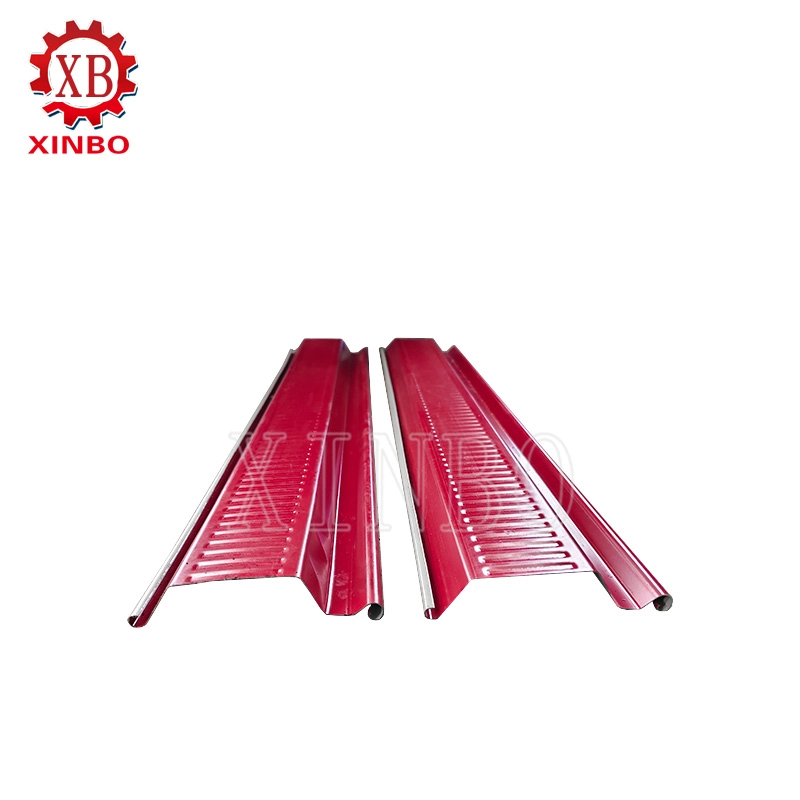
The machine can be engineered for smooth guide rails, perforated side tracks, curled-edge profiles, mounting flanges, and related frame sections.
The supplier must design the tooling around the approved profile drawing, material properties, hole pattern, and dimensional tolerances. Official product information confirms that formed widths and input widths can be customized according to customer requirements.
A typical production sequence includes:
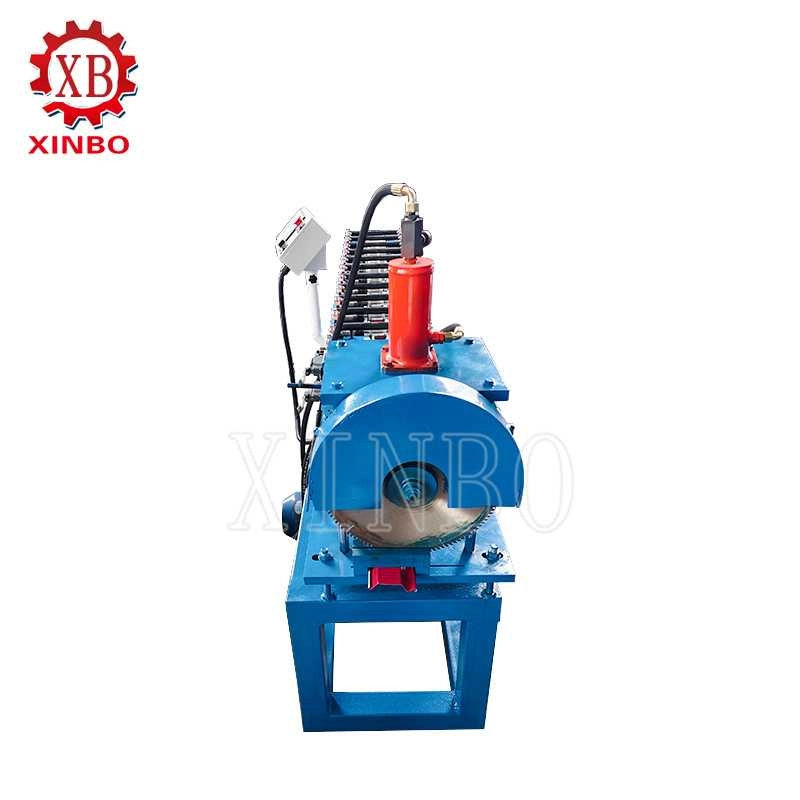
A production line can include optional punching, automatic cutting, computerized control, and receiving tables according to the required manufacturing process.
The roll flower shows the profile shape after each forming pass. The tooling designer uses this sequence to distribute bending across the forming stations.
An unsuitable forming sequence can increase longitudinal strain and contribute to bow, twist, flare, cross bow, or dimensional error. Research also shows that roll-flower design and roll-gap selection can affect the final quality of a cold-formed profile.
Pre-punching locates holes while the metal strip remains flat. However, later forming operations can distort holes that are positioned near highly strained areas.
Post-punching can reduce some deformation risks, but the shaped profile may require more complicated dies and support fixtures. The buyer should specify the hole shape, pitch, edge distance, end distance, and permitted ovality before tooling design begins.
The final configuration should match the profile, production volume, factory layout, and required automation level. Every machine module should support a specific production requirement.
The decoiler supports the coil and releases the strip at a controlled rate. The entry guide keeps the strip aligned with the forming centerline.
A leveling unit can improve feeding stability when coil curvature or material flatness affects the forming process.
The punching unit can create mounting holes, elongated slots, notches, or repeated perforations. The forming mill carries the shafts and rollers that gradually create the profile.
Calibration or straightening rollers can correct the guide opening, overall width, bow, and twist before the cutting operation.
An encoder can send length feedback to the control system, while the cutting unit separates each completed profile. A control interface can manage product length, batch quantity, and production commands.
Hydraulic profile cutting and saw cutting suit different profile geometries and burr requirements. The buyer should assess actual cut samples before approving a cutting method.
A reliable quotation requires more than a machine photograph. The supplier needs enough information to calculate the tooling layout, punching cycle, cutting method, and expected production capacity.
The buyer should provide a dimensioned cross-section that identifies every flange, bend angle, radius, return, curled edge, and channel opening.
The buyer should also provide:
The buyer should identify the material type, grade, thickness, yield strength, coating, strip width, coil size, and surface requirement. Material thickness and roll-gap settings can influence forming force, longitudinal strain, and finished-profile quality.
The buyer should also state the product lengths, daily quantity, annual volume, profile count, and changeover frequency. The supplier needs the punching density and cutting frequency to calculate realistic output.
The buyer should start with the finished product and work backward to the equipment configuration. The buyer should not select a machine only because a quotation lists more forming stations or a higher nominal speed.
A fixed-profile machine usually provides straightforward setup for repeated production. A multi-profile solution may use adjustable guides, spacers, changeable dies, replacement rollers, or tooling cassettes.
The supplier must confirm the permitted profile family before production. Some machines can produce two related sizes, but that capability does not mean that one machine can produce every door-frame profile.
Nominal speed describes the movement of the metal strip. Actual output describes the number of acceptable finished profiles.
Punching cycles, cutting cycles, coil changes, inspection time, profile length, and product collection can reduce practical output. The buyer should request a cycle calculation based on the real drawing and punching pattern.
The buyer should choose the automation level according to batch size, labor availability, profile variety, and downstream handling.
The buyer should also reserve enough space for coil loading, operator access, finished-profile support, electrical equipment, and machine unloading.
Roll-formed sections can develop bow, twist, flare, edge wave, springback, surface marks, and dimensional variation. Research connects several of these defects with longitudinal strain, roll-flower design, roll gap, material behavior, and station geometry.
The buyer should measure the critical widths, depths, channel openings, bend angles, profile length, straightness, and twist. The buyer should also inspect coated surfaces for scratches, pressure marks, and coating damage.
The buyer should verify the hole size, hole pitch, edge distance, ovality, and burr height. The buyer should inspect every cut end for length errors, deformation, sharp edges, and squareness.
The factory acceptance test should use the buyer’s actual material whenever possible. The test should include continuous production because a longer run can reveal dimensional drift, feeding problems, punching variation, and cutting inconsistency.
The buyer and supplier should agree on the test duration, production quantity, product lengths, hole patterns, measuring methods, and acceptance limits. The supplier should provide samples, measurement records, photographs, videos, and a signed test report.
The final price depends on profile complexity, material strength, thickness range, forming design, punching requirements, cutting method, automation level, and multi-profile capability.
The buyer should compare every quotation against the same signed drawing and technical scope. A quotation with a different punching system, cutting method, or tooling scope does not represent an equal comparison.
The buyer should also include packaging, freight, import charges, unloading, installation, commissioning, training, trial material, and additional tooling in the project budget.
One machine can produce related sizes when the tooling and adjustment method are specifically designed for those profiles. The buyer must submit every required drawing before the supplier confirms the production range.
The line can include automatic punching when the buyer defines the complete hole pattern and tolerance. A dense perforation pattern may reduce the actual production speed because the punching cycle can become the limiting operation.
The machine can be designed for galvanized steel, pre-painted steel, or aluminum. However, the permitted material and thickness range remains specific to each machine design.
No single cutting system is best for every profile. The buyer should compare cut quality, profile deformation, burr size, cutting speed, tooling cost, noise, and finished-section geometry.
XINBO has operated as a metal-shaping and roll-forming equipment manufacturer in China since 2014. XINBO offers door frame and shutter door machinery, customized technical drawings, in-house manufacturing, staged quality inspections, logistics follow-up, and after-sales support.
Buyers can submit a profile drawing, material specification, thickness range, hole layout, production target, factory voltage, and delivery destination to request a customized machine proposal and quotation. Contact XINBO today to discuss your roller shutter guide rail production requirements with the technical team.

XinBo machine making CO. LTD is a professional manufacturer and exporter in roll forming machine,
VIEW MORE→



 English
  Spanish
  Portuguese
  Arabic
  Russian
  French
  Dutch
Dutch  Turkish
  Swahili
  Serbian
  Romanian