 Spanish
 Russia
Good quality
XinBo machine making CO. LTD is a professional manufacturer and exporter in roll forming machine,
VIEW MORE→

A combined leveling shearing machine helps a factory turn metal coils into flat, accurate, cut-to-length sheets. An automatic cut to length leveling shearing machine should match the material range, production speed, sheet size, and accuracy requirements. This guide explains how to choose a sheet metal leveling and shearing machine for practical factory production.
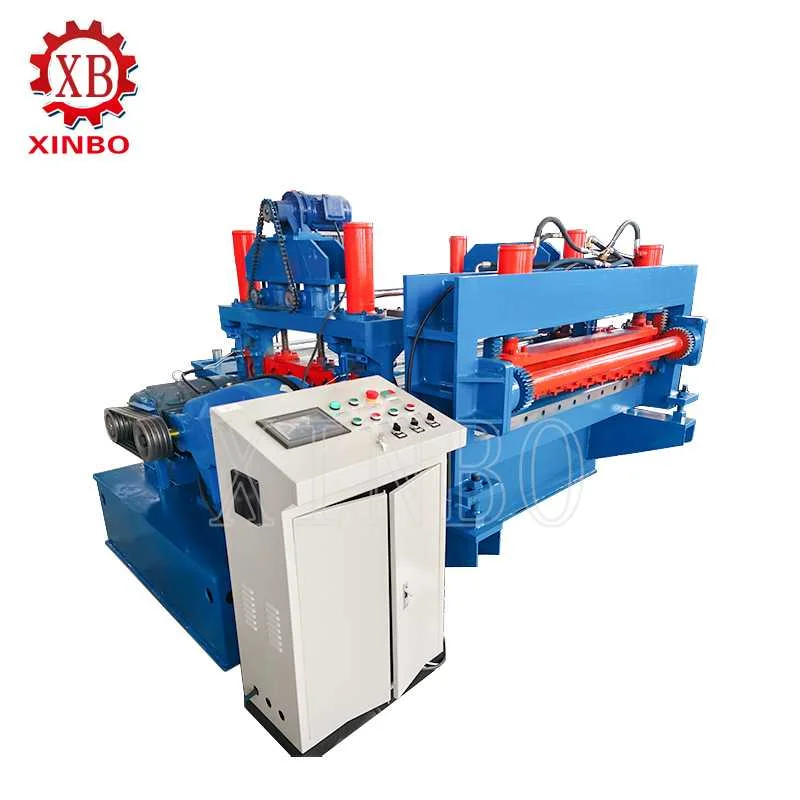
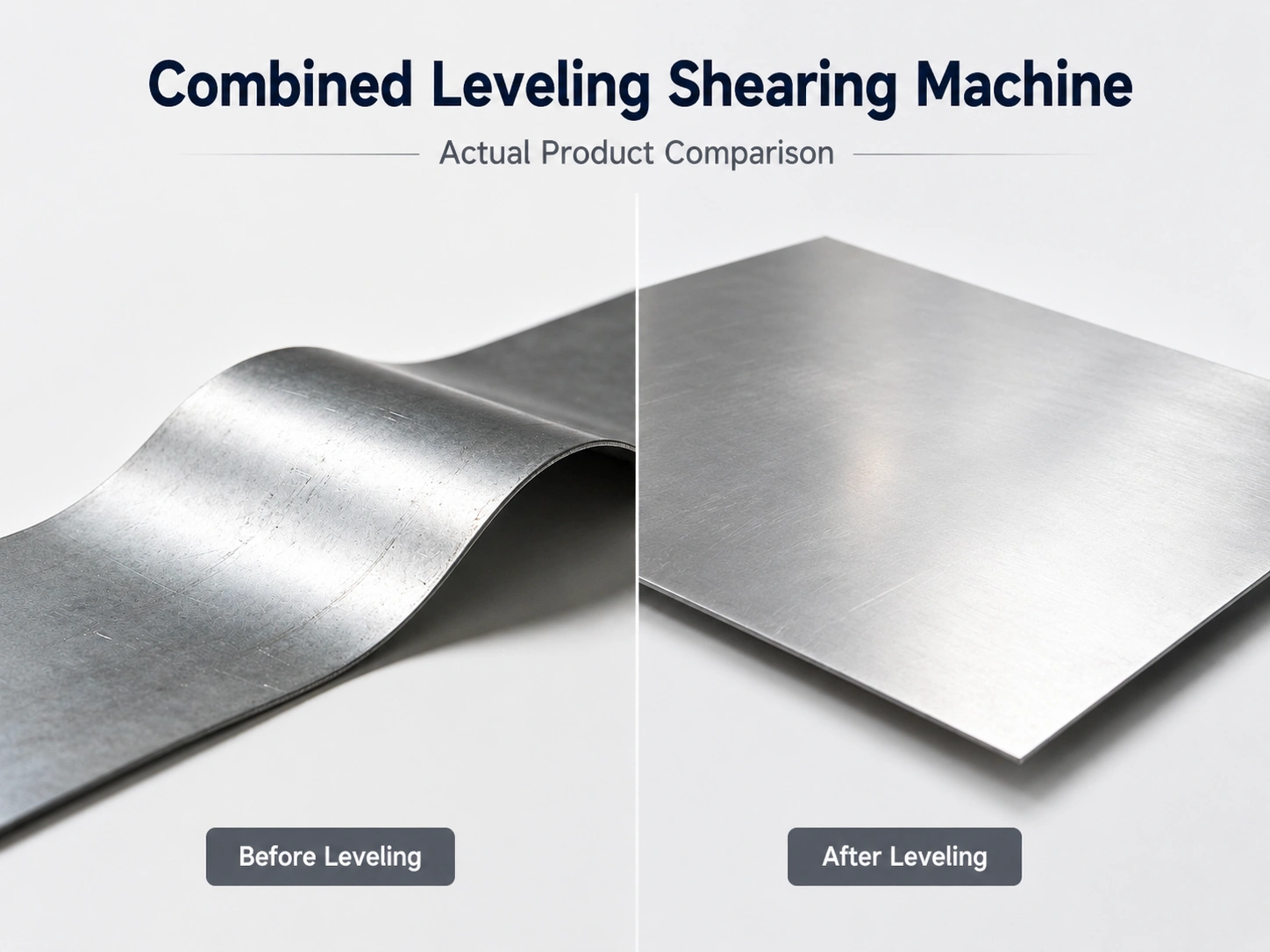
A combined leveling shearing machine consists of a line of a sheet leveling machine and a fixed-length shearing machine. The leveling machine releases coil set, waves and uneven sheet surface, and the shearing machine cuts the leveled sheet into any required length.
Decoiler unfolds the coil. Leveling rollers straighten the steel sheet. Steel sheet feeding system pushes the steel sheet forward. Control system sets the cutting length. Steel shear cuts the steel sheet. Steel sheet receiving table collects cut steel sheets.
When choosing a machine, it also determines how flat a sheet will be, how accurately it will be cut to length, how much labor it will save, and how production will be run. Do not choose a machine solely on the basis of its motor power, physical size, or cost.
Flat sheets are easier to bend, to form, to weld, to assemble and in production generally. Poor flatness can cause problems in later production such as gaps and deformation, leading to reject parts.
Cutting accuracy is determined by the amount of stable feed, precise measurement, strong shearing and straight machine alignment. A small error in the length of cut can be disastrous on a factory that makes a lot of identical parts.
Material data is typically the first bit of information that one needs to acquire a machine. Thus, prior to contacting a supplier, one must have complete specifications of the material that is to be used.
It is important to note at the buyer’s risk whether a factory produces galvanized steel, carbon steel, color-coated steel, aluminum, stainless steel or some other material. The strength, surface and leveling characteristics of these various materials can be very different.
Kindly also inform us the minimum and maximum thicknesses of the material so we can calculate the best roller diameter and provide you the proper analysis of leveling force, shearing force, required motor power and frame design.
The machine has to be able to process the complete production program and not only samples of a common thickness.
This can include information around the maximum width of a coil that the machine can hold, the minimum working width, the required cut sheet width and the material strength. Information around width will often give the buyer an idea of the required length of the rollers, the feeding stability, the cutting force required and the floor space required for the machine.
The finished sheet requirement should be used to determine the equipment to be used. This is a list to determine the finished sheet length, tolerance, flatness, edges and receiving method.
The buyer should confirm the shortest and longest sheet length. Short sheets may require faster shearing response, while long sheets may require better feeding stability and more receiving space.
When the cutting edge leaves the workpiece, it should immediately go to the next production step. It must not leave any workpiece edges with burrs or edge distortions, and it must not produce any material waste.
A machine should match daily output, shift schedule, sheet length, and batch size. A high maximum speed is not enough if the machine cannot run stably under real load.
Line speed refers to the speed at which material is processed on the production line. It is better to test the line at a constant working speed rather than just at peak.
Cuts per minute is a critical measurement when producing short width sheets. Cuts per minute are less relevant when producing longer length sheets as then receiving space and accurate feeding becomes more critical.
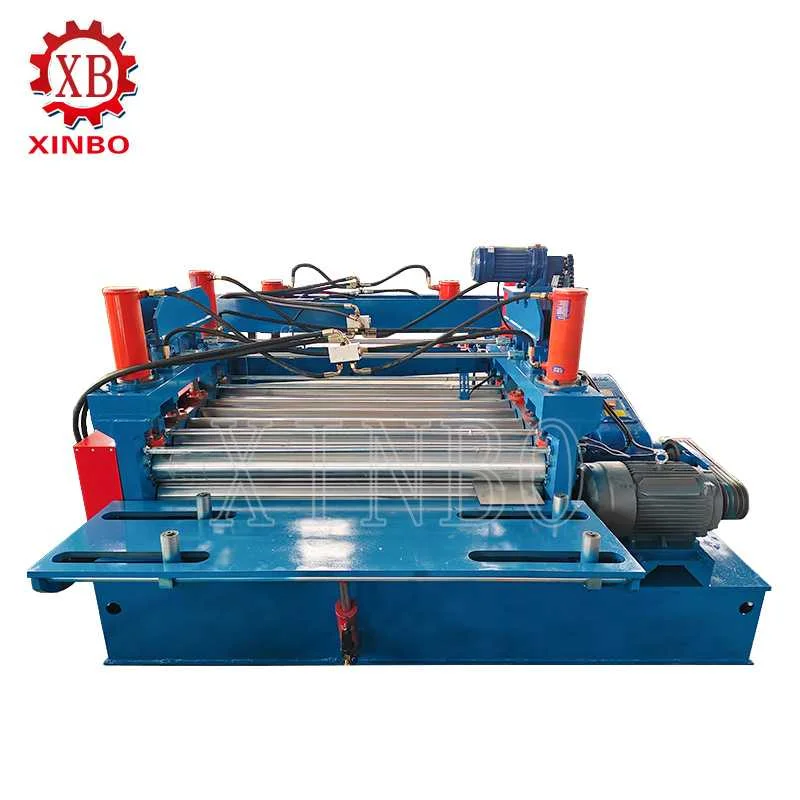
The leveling system is key to the flatness quality. The buyer should check out the number of rollers, the diameter of the rollers, the spacing of the rollers, the support and the frame.
The design of the rollers will be determined by the required thickness and flatness. Small roller spacings are required for high flatness production, while larger rollers are required for wider straightening production.
The machine frame must remain stable when leveling or shearing. A weak structure can affect cutting accuracy and leveling quality when working with larger or thicker work pieces.
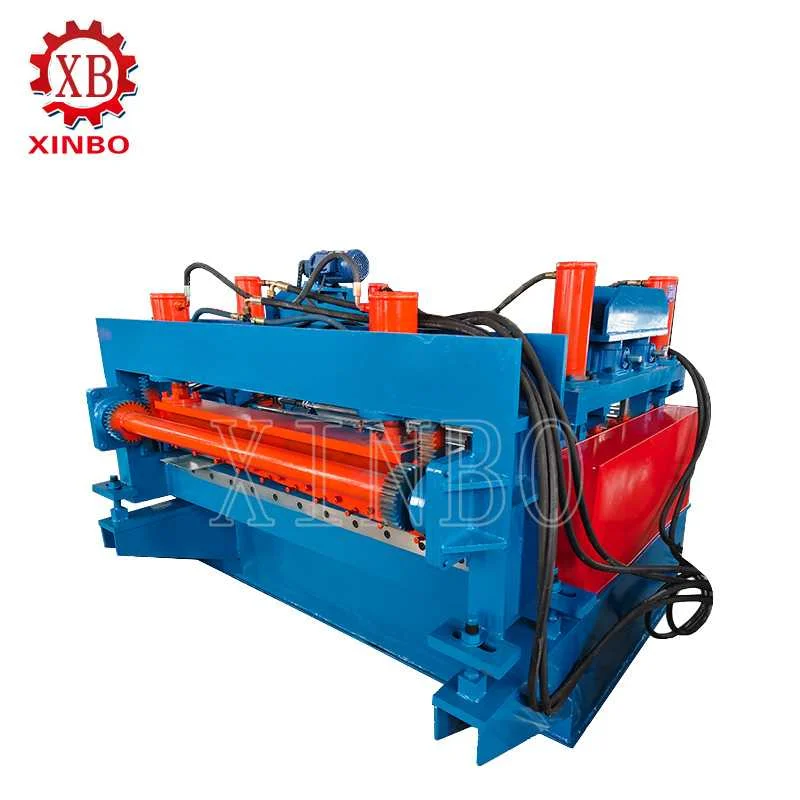
Feeding and measurement systems have a direct influence on the cut-to-length accuracy. The clear control system prevents errors made by the operator.
The sheet must be moved smoothly by the feeding system without sliding. Stabilizing the feeding process will result in low length errors and high repeatability.
The control interface allows the operator to set up the following parameters: sheet length, cutting quantity, cutting speed and batch information. The buyer must also confirm voltage and required language before ordering.
The level of automation that is appropriate is equal to the output you need, the labor cost, the skill of the operator, and your budget.
For low volume work, a simple configuration can be sufficient to meet the output and cutting requirements. A semi-automatic configuration is even better as it eliminates the need for manual measuring and increases the precision of the cutting process. An automatic configuration includes features such as automatic feeding, setting of length, cutting and receiving of cut parts.
The factory layout will also affect the real efficiency of your machine. As a buyer, you should check the machine footprint, the coil loading area, the finished sheet receiving area and the space required for the operator.
When designing the coil loading area one needs to bear in mind the material handling in the factory. Does one have a crane, or does one use forklifts. How far can one store the coils, what is the longest sheet dimension and how high can one stack the coils.
A clear checklist should be prepared by the buyer prior to requesting a quotation.
· Confirm material, thickness range, width range, coil weight, tensile, surface etc. with buyer.
· Confirm if the machine needs to process different materials.
· Sheets lengths, tolerance, daily production etc to confirm as per order specification. Line speed, production in batch sizes, voltage used in plant, space occupied in factory.
· Simple, semi-automatic or fully automatic operation? The buyer must decide.
It would be better if Buyer provides details such as material type, thickness range, width range, coil weight, sheet length, tolerance, voltage, required factory space and Buyer’s target output per day.
A machine can process various materials only when the leveling system, the feeding system, the shearing system and the frame structure of the machine are matching the material ranges.
Our pricing can vary based on working width, thickness capacity, roller configuration, shearing force, control system, automation level, customized options and requirements for shipping.
XINBO provides metal shaping machine solutions, including cutting machines, slitting lines, decoilers, and related metal forming equipment. XINBO can communicate with buyers about material specifications, technical drawings, production requirements, quality inspection, shipping, and customized machine solutions based on coil width, thickness range, finished sheet length, and output target. Contact XINBO today to share your project requirements, get professional technical support, and request a customized quotation for your metal shaping machine solution.

XinBo machine making CO. LTD is a professional manufacturer and exporter in roll forming machine,
VIEW MORE→



 English
  Spanish
  Portuguese
  Arabic
  Russian
  French
  Dutch
Dutch  Turkish
  Swahili
  Serbian
  Romanian